- Fungi Including Lichens
- ›Basidiomycete Fungi
- ›Higher Basidiomycetes
- ›Mushrooms, Bracket Fungi, Puffballs, and Allies
- ›Shelf Fungi
- ›Bracket Fungi
- ›Ganoderma
- ›Ganoderma
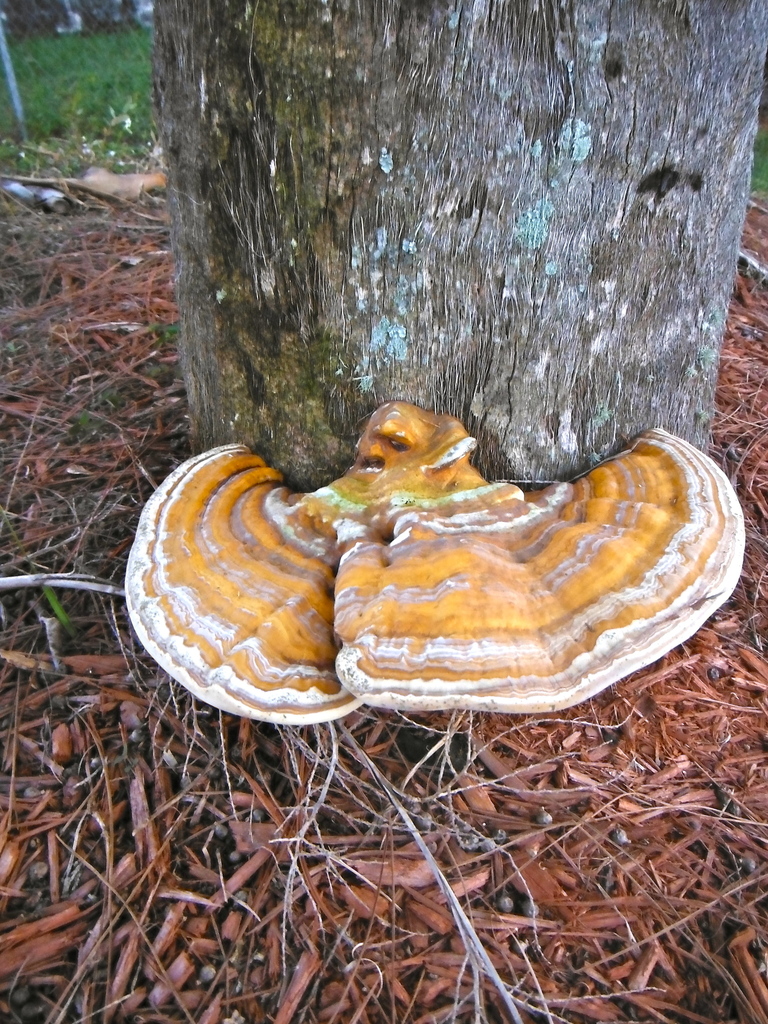
Ganoderma zonatum
Ganoderma zonatum is a plant pathogen that infects the palm species causing butt rot. It is a fungus that infects the bottom 122–152 centimeters (4–5 feet) of the plant also rotting the roots. It has been known to be in both natural and planted environments and in the majority of cases only in palms.
From the article Ganoderma zonatum on Wikipedia (CC BY-SA), quoted section by section
What it does
The fungus is spread between the plants due to the spores produced in the basidiocarp. The spores land on the soil and germinate. The hyphae then grow over the plant roots and up into the woody trunk. The fungus damages the palm trunk closest to the soil first, expands in diameter and moves up the center of the trunk causing a cone like shape of infected trunk. When the basidiocarp emerges it is at the highest point when the fungus will internally grow.
Wikipedia: “Life cycle”
Where it lives
Recorded sightings
—
geo-referenced records in GBIF, from museums, herbaria and field observers.
Drag the globe to turn it. Dots are where records exist, not a range map; darker means more records.
In the stacks
Searching the stacks…
Every page naming Ganoderma zonatum in the Biodiversity Heritage Library →
This page is assembled live from iNaturalist, GBIF, Wikipedia, the Source Library and the Internet Archive. It is not yet part of the hand-edited codex. iNaturalist taxon 525033.