- Plants
- ›Vascular Plants
- ›conifers
- ›conifers
- ›cypress family
- ›cypress-pines, incense-cedars, and allies
- ›Callitris
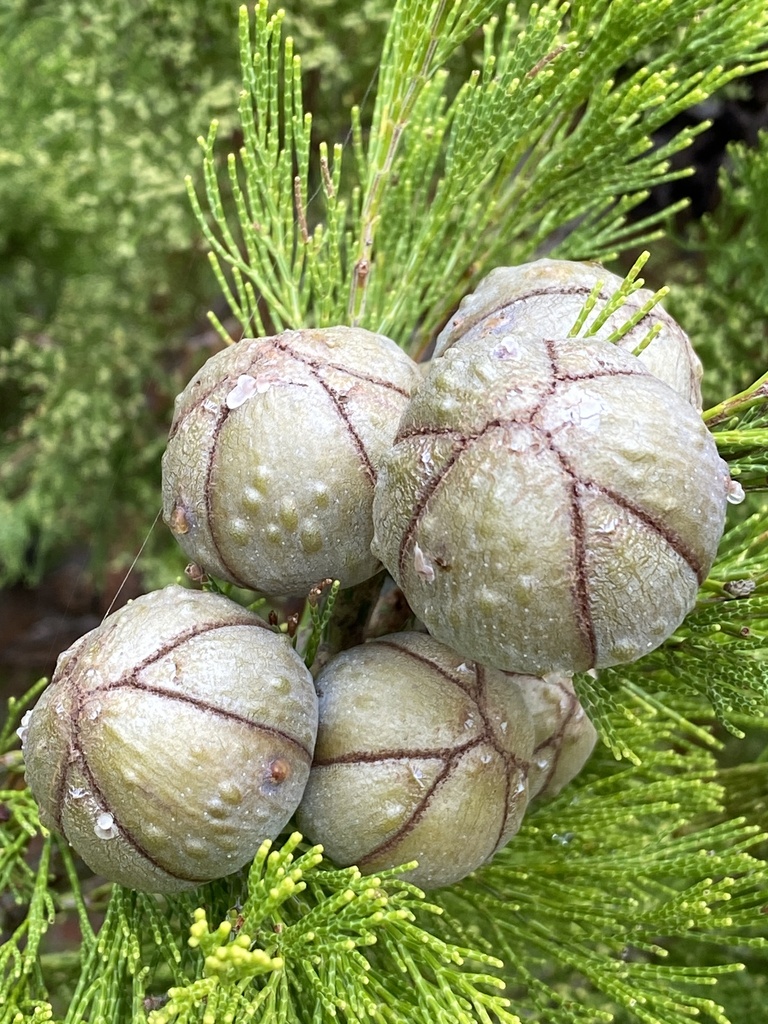
Slender Cypress-pine
Callitris gracilis
Callitris preissii is a species of conifer in the cypress family, Cupressaceae, endemic to Rottnest Island in Australia. Common names include Rottnest Island pine, Murray pine, maroong, southern cypress pine, and slender cypress pine. The Noongar peoples call the tree marro.
From the article Callitris preissii on Wikipedia (CC BY-SA), quoted section by section
Description
It can have a tree or shrub-like habit, typically growing to a height of 1 to 9 metres (3 to 30 ft) and a width of up to 6 m (20 ft). It is relatively slow growing. The crown is made up fine, dense foliage. The leaf is rounded on the dorsal side and the cones often have a width of over 2 cm (0.8 in) with scales that do not separate from the base. It starts producing brown-yellow-orange cones between October and January. The root system is generally moderate to deep or shallow and spreading. It is reasonably long lived, usually to over 15 years of age.
Range & habitat
It is endemic to the Swan Coastal Plain, Rottnest Island and Garden Island but has become naturalised elsewhere and now has a scattered distribution throughout the Mid West, Wheatbelt, Peel, Great Southern and Goldfields-Esperance regions where it is found on plains, slopes, the margins of salt lakes and among granite outcrops growing in sandy, loamy or clay soils.
Wikipedia: “Distribution”
At the table
The plant makes a good windbreak or functions as a shelterbelt or shade for stock. The trunks make ideal fence posts and it has good ornamental attributes. The plant's pollen has value for apiculture. In urban areas it makes a good ornamental plant, or a free street tree, and is suitable as a screen or hedge.
== References ==
Wikipedia: “Uses”
Where it lives
Recorded sightings
—
geo-referenced records in GBIF, from museums, herbaria and field observers.
Drag the globe to turn it. Dots are where records exist, not a range map; darker means more records.
In the stacks
Searching the stacks…
Every page naming Callitris gracilis in the Biodiversity Heritage Library →
This page is assembled live from iNaturalist, GBIF, Wikipedia, the Source Library and the Internet Archive. It is not yet part of the hand-edited codex. iNaturalist taxon 526730.