- Animals
- ›Arthropods
- ›Hexapods
- ›Insects
- ›Winged and Once-winged Insects
- ›Flies
- ›Brachyceran Flies
- ›Cyclorrhaphan Flies
- ›Schizophoran Flies
- ›Calyptrate Flies
- ›Bot Flies, Blow Flies, and Allies

Flesh Flies and Satellite Flies
Sarcophagidae
Sarcophagidae (from Ancient Greek σάρξ sárx 'flesh' and φαγεῖν phageîn 'to eat') are a family of flies commonly known as flesh flies. They differ from most flies in that they are ovoviviparous, opportunistically depositing hatched or hatching maggots instead of eggs on carrion, dung, decaying material, or open wounds of mammals, hence their common name. Some flesh fly larvae are internal parasites of other insects such as Orthoptera, and some, in particular the Miltogramminae, are kleptoparasites of solitary Hymenoptera. The adults mostly feed on fluids from animal bodies, nectar, sweet foods, fluids from animal waste and other organic substances. Juveniles need protein to develop and may be laid on carrion, dung or sweet plant foods (including fruit, nuts, and artificial foodstuffs).
3 branches of this family, most-observed first
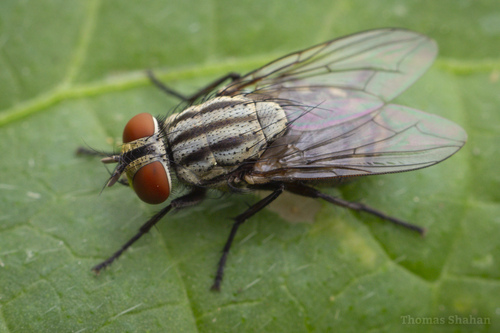
Typical Flesh Flies
subfamilySarcophaginae
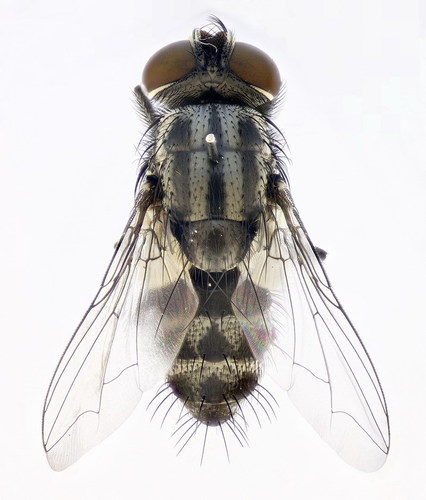
Satellite Flies
subfamilyMiltogramminae
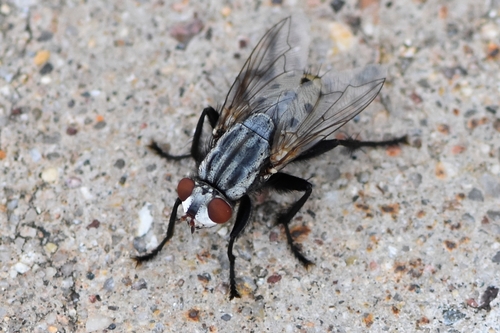
Paramacronychiinae
subfamilyParamacronychiinae
Where it lives
Recorded sightings
—
geo-referenced records in GBIF, from museums, herbaria and field observers.
Drag the globe to turn it. Dots are where records exist, not a range map; darker means more records.
In the stacks
Searching the stacks…
Every page naming Sarcophagidae in the Biodiversity Heritage Library →
This page is assembled live from iNaturalist, GBIF, Wikipedia, the Source Library and the Internet Archive. It is not yet part of the hand-edited codex. iNaturalist taxon 52910.