- Plants
- ›Vascular Plants
- ›flowering plants
- ›Dicots
- ›Mustards, Capers, and Allies
- ›mustard family
- ›Brassicoideae
- ›Brassicodae
- ›Brassiceae
- ›Hirschfeldia
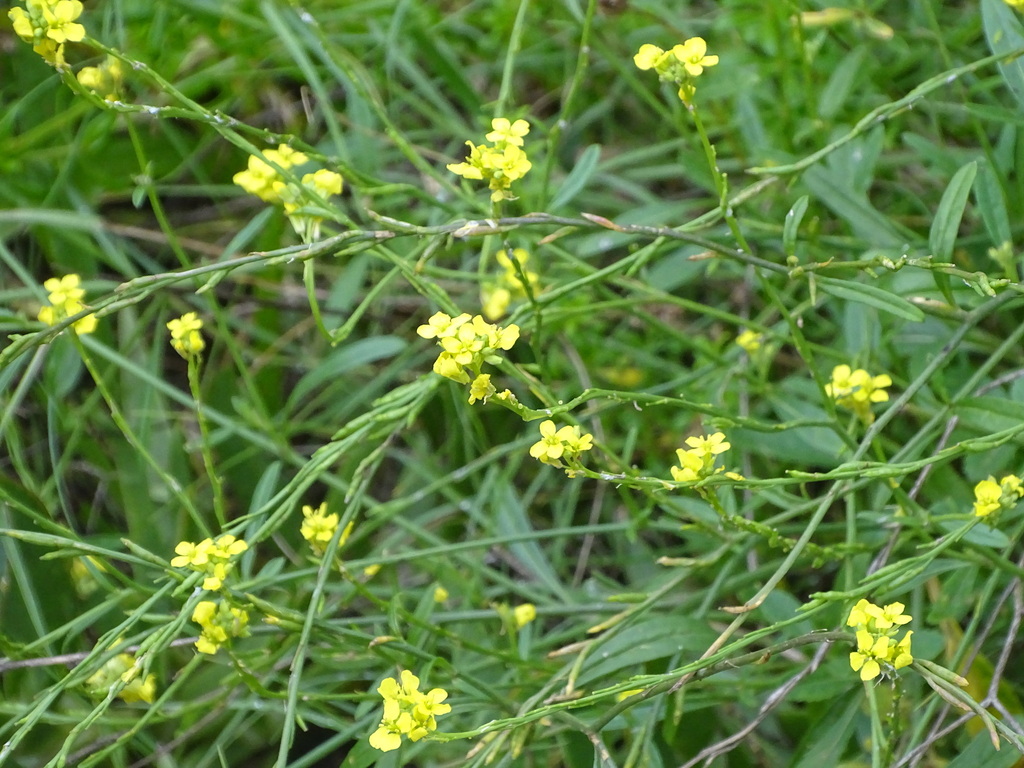
Shortpod Mustard
Hirschfeldia incana
Hirschfeldia incana (formerly Brassica geniculata) is a species of flowering plant in the mustard family known by many common names, including shortpod mustard, buchanweed, hoary mustard and Mediterranean mustard. It is the only species in the monotypic genus Hirschfeldia, which is closely related to Brassica. The species is native to the Mediterranean Basin but it can be found in many parts of the world as an introduced species and often a very abundant noxious weed. This mustard is very similar in appearance to black mustard, but is generally shorter. It forms a wide basal rosette of lobed leaves which lie flat on the ground, and it keeps its leaves while flowering. Its stem and foliage have soft white hairs. Unlike black mustard, H. incana is a perennial plant.
Its leaves are edible and traditionally were used in some areas as a leaf vegetable.
Where it lives
Recorded sightings
—
geo-referenced records in GBIF, from museums, herbaria and field observers.
Drag the globe to turn it. Dots are where records exist, not a range map; darker means more records.
In the stacks
Searching the stacks…
Every page naming Hirschfeldia incana in the Biodiversity Heritage Library →
This page is assembled live from iNaturalist, GBIF, Wikipedia, the Source Library and the Internet Archive. It is not yet part of the hand-edited codex. iNaturalist taxon 53097.