 NL·0225
Herbarium of the Nature Library
- Name
- Harpia harpyja
- Family
- Accipitridae
- Native to
- Southern Mexico (now very rare) through Central America to eastern Bolivia, Brazil and north-eastern Argentina
- Habitat
- Tropical lowland rainforest
On eBird ↗
Harpy Eagle
Live sightings near you, the range map, bar charts of when it is seen, and Macaulay Library photos and recordings.
Harpy eagle
Harpia harpyja
Also calledÁguila arpía (Spanish) · Gavião-real (Portuguese) · Uiraçu (Portuguese, from Tupi)
The most powerful raptor of the Americas, a rainforest eagle that snatches sloths and monkeys from the canopy. Its hind talons are as long as a grizzly bear's claws, and a pair raises a single chick only every two to three years.
The harpy eagle is a large neotropical species of eagle. It is also called the American harpy eagle to distinguish it from the Papuan eagle, which is sometimes known as the New Guinea harpy eagle or Papuan harpy eagle. It is the largest bird of prey throughout its range, and among the largest extant species of eagles in the world. It usually inhabits tropical lowland rainforests in the upper (emergent) canopy layer. Destruction of its natural habitat has caused it to vanish from many parts of its former range, and it is nearly extirpated from much of Central America. It is the only member of the genus Harpia, which, together with Harpyopsis, Macheiramphus and Morphnus, forms the subfamily Harpiinae. Wikipedia
What it can do
- iHind talons can reach about 12–13 cm
- iiCarries prey such as sloths weighing several kilograms
- iiiManoeuvres through dense canopy on short, broad wings rather than soaring high
- ivNests in giant emergent trees such as kapok (Ceiba) and Brazil nut
In the field
Field marks
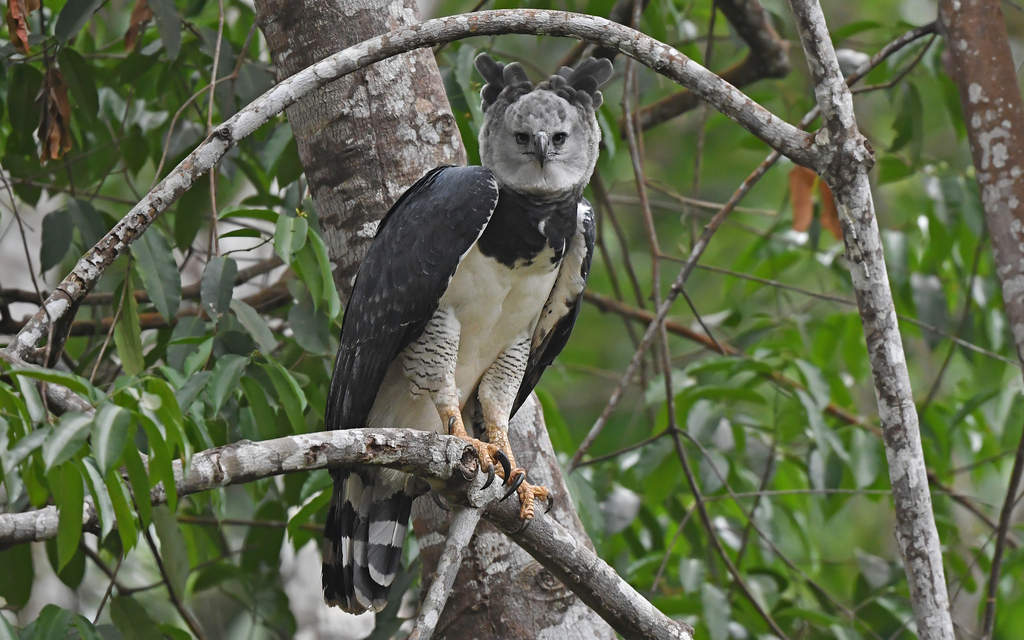
- aPale grey head with a split, double crest
- bBroad black band across the chest
- cWhite underparts with barred thighs and enormous yellow feet
- dShort, broad wings and long, banded tail
- Voice
- A long, wailing scream 'wheeeee-oo', especially from young birds begging at the nest.
- Not to be confused with
- Crested Eagle is smaller and slimmer with a single crest and lighter feet. Juvenile Harpies are whitish and can be confused with juvenile Crested Eagles; check size and leg thickness.
- Where to see it
- Darién (Panama), Tambopata (Peru), Alta Floresta (Brazil) and Iwokrama (Guyana), usually at known nest trees with local guides.
- When
- Resident year-round
Listen
Looking for field recordings…
Life & habits
- Diet
- Mainly sloths and monkeys; also opossums, porcupines, macaws and iguanas
- Habitat
- Large tracts of undisturbed lowland tropical forest
- Size
- 89–105 cm; wingspan 176–224 cm; females 6–9 kg, males 4–5 kg
The single chick depends on its parents for over a year after fledging.
Where it lives
Recorded sightings
—
geo-referenced records in GBIF, from museums, herbaria and field observers.
Native range
Southern Mexico (now very rare) through Central America to eastern Bolivia, Brazil and north-eastern Argentina
Drag the globe to turn it. Dots are where records exist, not a range map; darker means more records.
In the stacks
Searching the stacks…
Every page naming Harpia harpyja in the Biodiversity Heritage Library →
Marginalia
Named after the harpies, the bird-bodied spirits of Greek myth, it is Panama's national bird and appears on Panama's coat of arms.
Curiosity
Its facial disc of feathers may help funnel sound to its ears, like an owl's.
Kinship


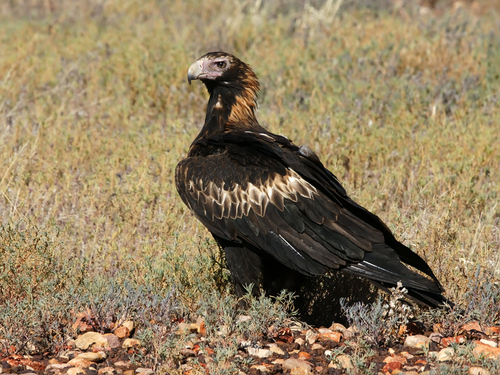


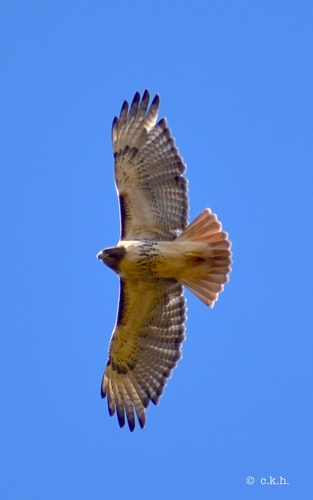
Photographs: iNaturalist contributors under the licences shown. Records: GBIF.org. Historical plates: Source Library (CC BY-SA 4.0; originals public domain). Summary text: Nature Library editors and Wikipedia (CC BY-SA). Medicinal and edibility notes are historical and educational, not advice. iNaturalist taxon 5321.