- Fungi Including Lichens
- ›Ascomycete Fungi
- ›Sac Fungi and Lichens
- ›Sordariomycetes
- ›Hypocreomycetidae
- ›Hypocreales
- ›Nectriaceae
- ›Neonectria
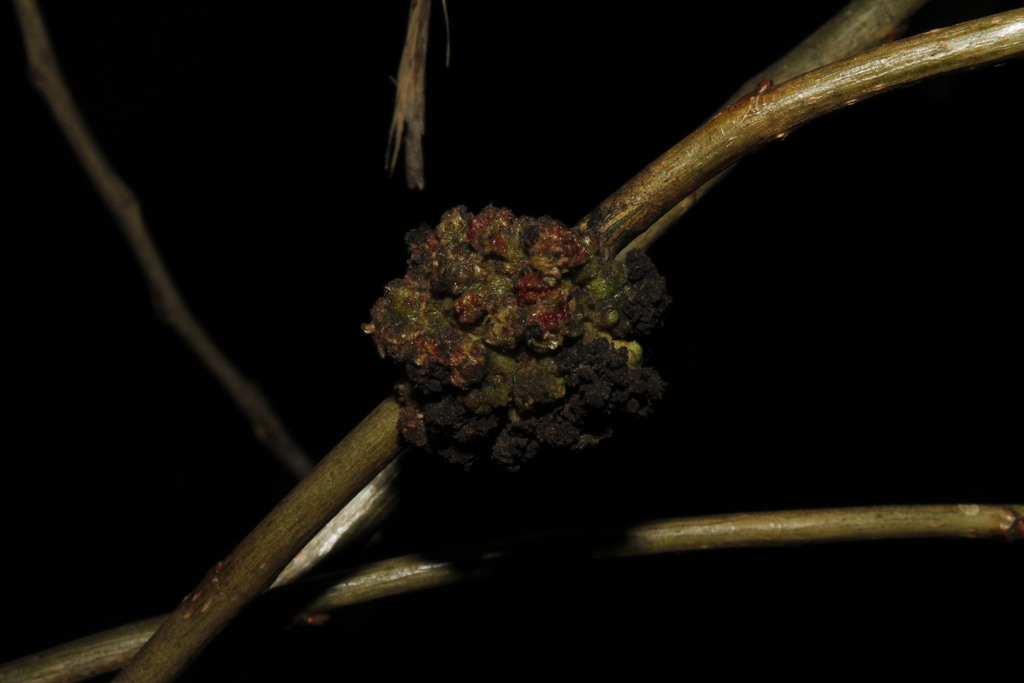
Apple Canker
Neonectria ditissima
Neonectria ditissima (syn. Neonectria galligena) is a fungal plant pathogen. It causes cankers that can kill branches of trees by choking them off. Apple and beech trees are two susceptible species.
From the article Neonectria ditissima on Wikipedia (CC BY-SA), quoted section by section
Range & habitat
Neonectria ditissima host range encompass a variety of hardwood tree species such as, Fagus, Populus, Salix, Betula and Acer species. These tree species population are present in both America and Europe. Phylogenetic studies have revealed genetic divergence among both populations, at specific loci (ß-tubulin, RPB2). However, due to high levels of within-population diversity of the American populations, it has been hypothesized that America is N. ditissima place of origin.
Wikipedia: “Host range”
In human culture
Multiple cultural techniques can manage the spread of N. ditissima. To minimize the number of wounds the pathogen can enter through, select trees that are well adapted to the local climate. In certain areas, trees must be able to resist damage due to environmental stresses such as cold temperatures. If cankers are present, it is important to prune out the damaged tissue in dry conditions. Dry conditions are unfavorable to the pathogen because it prohibits the development of fruiting structures and spore dispersal. It is essential to disinfect the equipment before and after pruning to prevent the spread of the pathogen to uninfected trees. Cankered prunings must be removed from the area and burned to eliminate the risk of continuing spore production. It is crucial to limit the use of high nitrogen, especially in manure, because it encourages and facilitates N. ditissima.
Wikipedia: “Cultural control”
Where it lives
Recorded sightings
—
geo-referenced records in GBIF, from museums, herbaria and field observers.
Drag the globe to turn it. Dots are where records exist, not a range map; darker means more records.
In the stacks
Searching the stacks…
Every page naming Neonectria ditissima in the Biodiversity Heritage Library →
This page is assembled live from iNaturalist, GBIF, Wikipedia, the Source Library and the Internet Archive. It is not yet part of the hand-edited codex. iNaturalist taxon 533972.