 NL·0426
Herbarium of the Nature Library
- Name
- Naja naja
- Family
- Elapidae
- Native to
- Indian subcontinent: Pakistan, India, Nepal, Bhutan, Bangladesh and Sri Lanka
- Habitat
- Tropical dry forest, Farmland, Grassland, Villages and towns
Spectacled cobra
Naja naja
Also calledIndian cobra · Nag / Naag (Hindi, Urdu) · Nalla pambu (Tamil) · Gokhra (Bengali) · Naya (Sinhala)
The hooded snake of Indian temples and street performances, and one of the 'Big Four' species responsible for most snakebite deaths in South Asia. When alarmed it rears up and spreads a hood marked on the back with a pale spectacle-shaped pattern.
The Indian cobra, also known commonly as the spectacled cobra, Asian cobra, or binocellate cobra, is a species of cobra, a venomous snake in the family Elapidae. The species is native to the Indian subcontinent, and is a member of the "Big Four" species that are responsible for the most snakebite cases in Sri Lanka and India. Wikipedia
What it can do
- iSpreads a hood by swinging its long front ribs outward
- iiVenom is mainly neurotoxic and can paralyse breathing muscles; it also causes painful swelling and tissue death around the bite
- iiiDoes well in rice fields and villages, where it hunts rats and toads
- ivFemales guard their clutch of eggs until hatching
In the field
Field marks
- aHood with a pale 'spectacle' (two linked rings) on the back; some snakes lack the mark
- bSmooth, glossy scales; colour from yellowish or brown to almost black
- cDark band and paired spots across the throat, visible when the hood is up
- dMedium-sized head barely wider than the neck; round pupils
- Not to be confused with
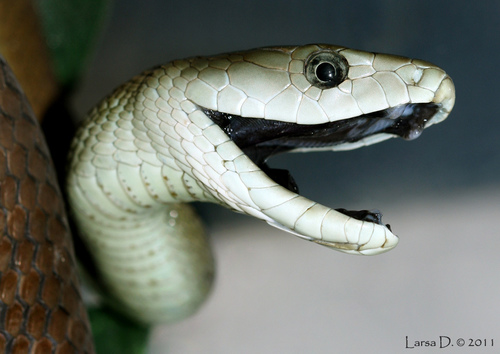
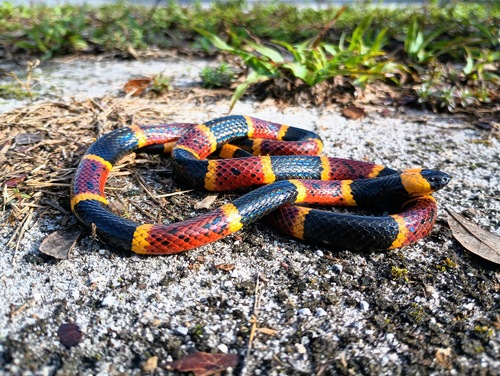
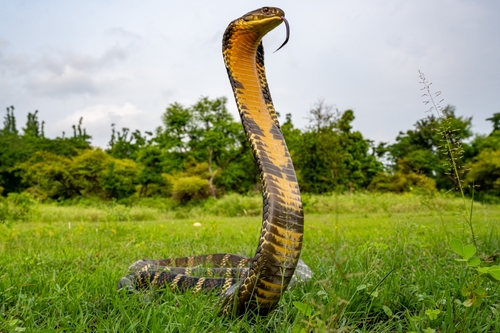
- Most often confused with the harmless Indian rat snake (Ptyas mucosa). The rat snake cannot spread a hood, has very large eyes, and its long thin tail has dark crossbars or a net pattern. When provoked it puffs out its throat, which can look like a narrow hood. The monocled cobra (Naja kaouthia) of eastern India and Bangladesh has a single ring on the hood instead of spectacles. The king cobra (Ophiophagus) is much larger, often banded, and has a narrower hood. If a snake hoods, treat it as a cobra.
- Where to see it
- Common throughout lowland India and Sri Lanka in farmland and villages; often seen at dusk around rice fields and rat-infested buildings
- When
- Resident; most active in the hot season and the monsoon, when rats and frogs are plentiful
Life & habits
- Diet
- Rodents, toads, frogs, lizards, birds and their eggs, other snakes
- Habitat
- Plains, farmland, scrub, forest edge and human settlements, from sea level into the hills
- Size
- Usually 1–1.5 m; exceptionally over 2 m
- Lifespan
- ~20 years or more in captivity
Raises its front third, spreads its hood and hisses loudly when cornered, but would rather escape. A bite is a medical emergency: keep the person still and calm, take off rings and tight items, keep the bitten limb still, and get them quickly to a hospital that has polyvalent antivenom. Do not cut, suck, apply a tourniquet, use ice or rely on traditional healers, because these delays cost lives.
Where it lives
Recorded sightings
—
geo-referenced records in GBIF, from museums, herbaria and field observers.
Native range
Indian subcontinent: Pakistan, India, Nepal, Bhutan, Bangladesh and Sri Lanka
Drag the globe to turn it. Dots are where records exist, not a range map; darker means more records.
In the old herbals & bestiaries
No plate in the Source Library names this exact species, so these show its closest relatives as the old naturalists drew them: same genus, or the same kind of animal. Click a plate to read the page it came from, with translation.


In the stacks
Searching the stacks…
Every page naming Naja naja in the Biodiversity Heritage Library →
Marginalia
Cobras are worshipped at Nag Panchami, and the serpent Vasuki coils around Shiva's neck. Rudyard Kipling's 'Rikki-Tikki-Tavi' (1894) made the cobra pair Nag and Nagaina famous. India's Wildlife Protection Act (1972) made it illegal to keep cobras for snake charming.
Curiosity
A cobra cannot hear the snake charmer's pungi as music. It sways because it is following the moving instrument.
Kinship



Fact-checked: 1 correction made to this sheet. Photographs: iNaturalist contributors under the licences shown. Records: GBIF.org. Historical plates: Source Library (CC BY-SA 4.0; originals public domain). Summary text: Nature Library editors and Wikipedia (CC BY-SA). Medicinal and edibility notes are historical and educational, not advice. iNaturalist taxon 53492.