- Fungi Including Lichens
- ›Basidiomycete Fungi
- ›Higher Basidiomycetes
- ›Mushrooms, Bracket Fungi, Puffballs, and Allies
- ›Hymenochaetales
- ›Hymenochaetaceae
- ›Inonotus
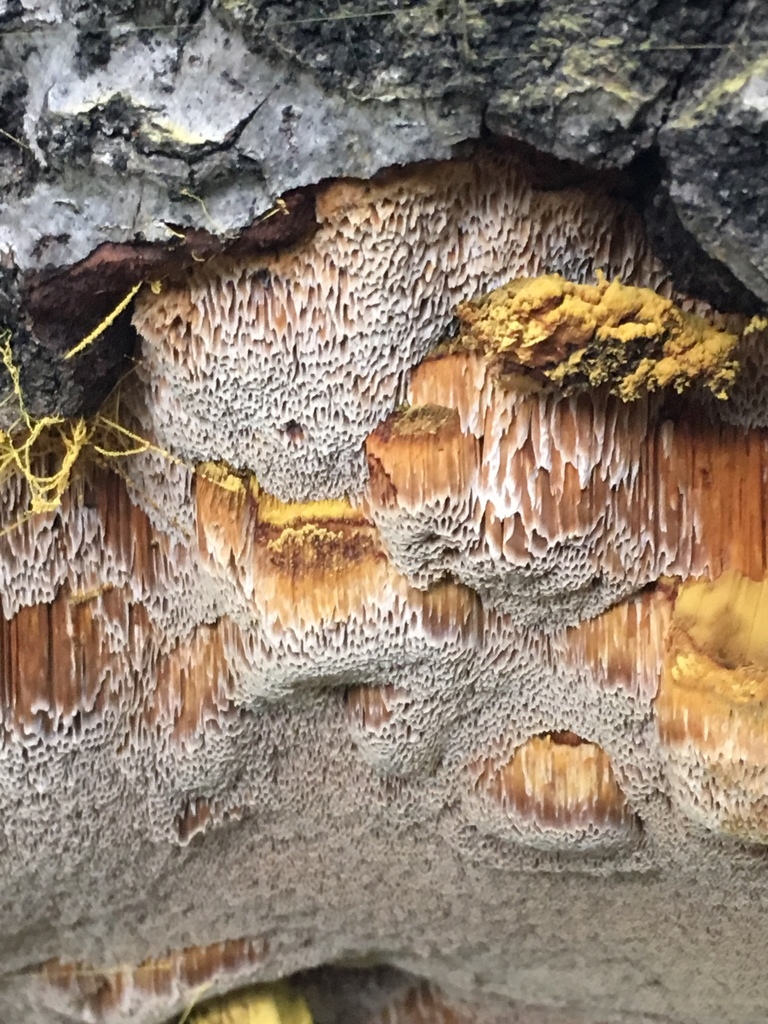
Inonotus andersonii
Inonotus andersonii, also known as oak canker-rot and heart rot, is a species of resupinate polypore fungus that forms fruiting bodies underneath tree bark. I. andersonii induces canker rot in oak, hickory, cottonwood, and willow trees.
I. andersonii is "a true pathogen of living trees with a pronounced specificity for oak, [that] exhibits annual, widely effused fruitbodies, monomitic hyphal system, and broadly ellipsoid, yellowish, thick-walled basidiospores." Inonotus andersonii and similar canker rots are serious pathogens of California oaks and are associated with oak decline, failure, and mortality in many California oak woodlands.
Where it lives
Recorded sightings
—
geo-referenced records in GBIF, from museums, herbaria and field observers.
Drag the globe to turn it. Dots are where records exist, not a range map; darker means more records.
In the stacks
Searching the stacks…
Every page naming Inonotus andersonii in the Biodiversity Heritage Library →
This page is assembled live from iNaturalist, GBIF, Wikipedia, the Source Library and the Internet Archive. It is not yet part of the hand-edited codex. iNaturalist taxon 537039.