- Animals
- ›Arthropods
- ›Hexapods
- ›Insects
- ›Winged and Once-winged Insects
- ›True Bugs, Hoppers, Aphids, and allies
- ›True Bugs
- ›Cimicomorph Bugs
- ›Miroidea
- ›Plant Bugs
- ›Mirinae
- ›Stenodemini
- ›Notostira
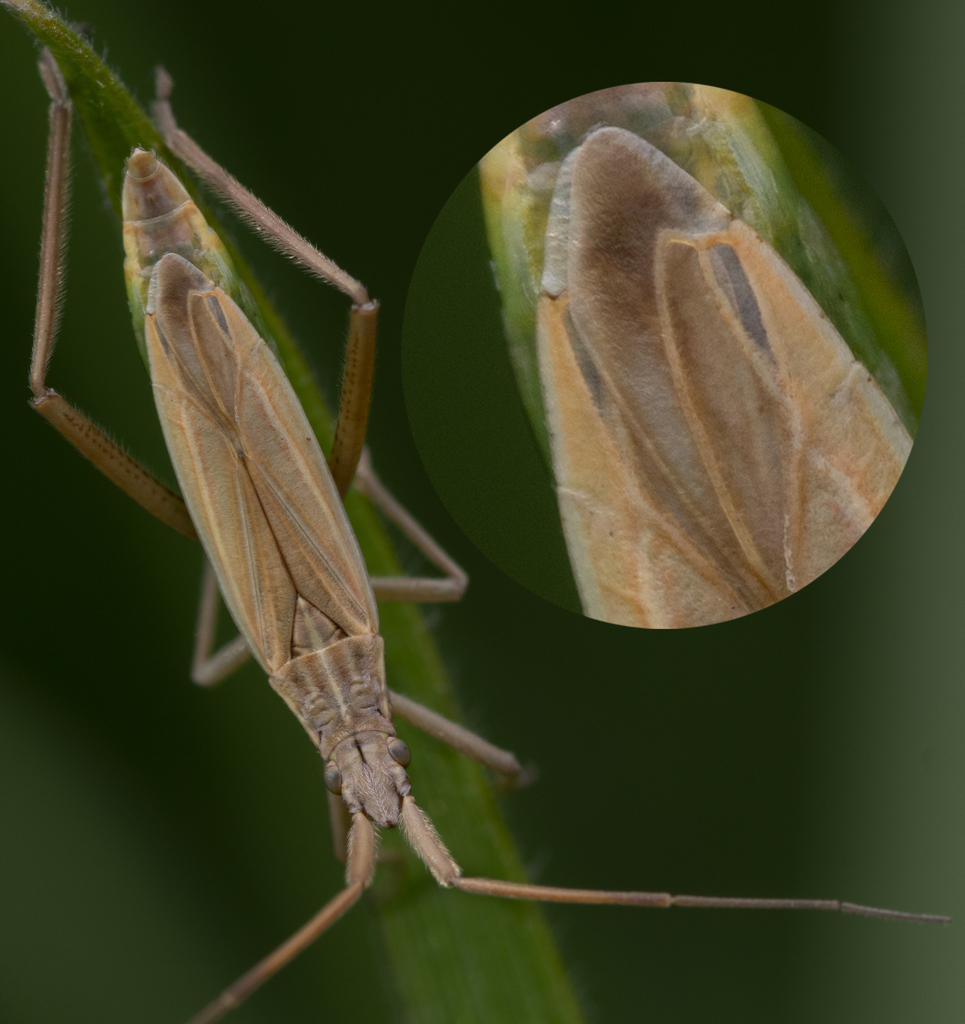
elongated grass bug
Notostira elongata
Notostira elongata is a species of bugs from a Miridae family, subfamily Mirinae. It is found everywhere in Europe except for Albania, Andorra, Bosnia and Herzegovina, various islands (except Britain I., where it is abundant).
From the article Notostira elongata on Wikipedia (CC BY-SA), quoted section by section
Description
Adult size is 7.5–8.0 millimetres (0.30–0.31 in). The species have longitudinal furrow between the eyes, and are yellowish-green. The pronotum is unpunctured and smooth (in comparison with the similar-looking Stenodema species often found in the same region and habitats which have pitted pronotums), with dense dark hairs on both the first antennal segment and the rear tibiae.
What it does
The species live two generations. The females change colour in fall, by becoming pinker, and larger. Both male and female species mate during winter, following by an egg development in spring.
== References ==
Wikipedia: “Ecology”
Listen
Looking for field recordings…
Where it lives
Recorded sightings
—
geo-referenced records in GBIF, from museums, herbaria and field observers.
Drag the globe to turn it. Dots are where records exist, not a range map; darker means more records.
In the stacks
Searching the stacks…
Every page naming Notostira elongata in the Biodiversity Heritage Library →
This page is assembled live from iNaturalist, GBIF, Wikipedia, the Source Library and the Internet Archive. It is not yet part of the hand-edited codex. iNaturalist taxon 538928.