- Plants
- ›Vascular Plants
- ›flowering plants
- ›Dicots
- ›carrots, ivies, and allies
- ›carrot family
- ›Apioideae
- ›Aciphylleae
- ›Aciphylla
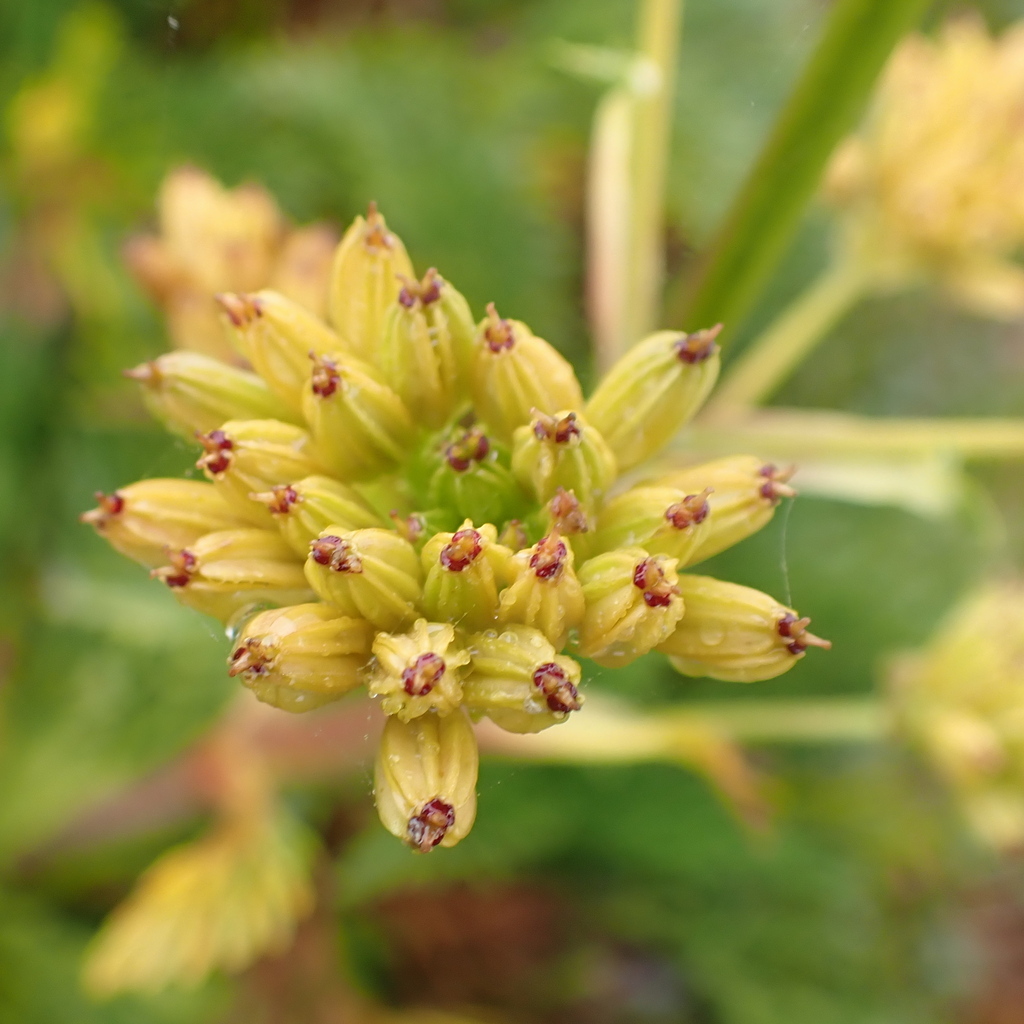
mountain celery
Aciphylla glacialis
Aciphylla glacialis, commonly known as snow aciphyll or mountain celery, is a tufted perennial plant that is found in mountainous regions of south-eastern Australia. The species was first formally described in 1855 by Victorian Government Botanist Ferdinand von Mueller as Gingidium glaciale. In 1867 the species was transferred to the genus Aciphylla and given its current name by English botanist George Bentham in Flora Australiensis. It occurs in Victoria and New South Wales.
From the article Aciphylla glacialis on Wikipedia (CC BY-SA), quoted section by section
Description
It is stout, with a robust root, and reaches 25–60 cm high. Its leaves are stiff, 10–30 cm long, and 4–9 cm wide. It flowers in the summer to produce 2.5–3 mm diameter blooms. Its fruit are 5.5–10.5 mm long and 2–3 mm wide.
Range & habitat
It is native to the temperate regions of New South Wales and Victoria. It is common in tussock grassland and tall herbfields in alpine to subalpine regions. It is occasionally found in snow-gum woodland. It is eaten by grazing animals, and so rare in farmed areas.
Wikipedia: “Distribution”
Where it lives
Recorded sightings
—
geo-referenced records in GBIF, from museums, herbaria and field observers.
Drag the globe to turn it. Dots are where records exist, not a range map; darker means more records.
In the stacks
Searching the stacks…
Every page naming Aciphylla glacialis in the Biodiversity Heritage Library →
This page is assembled live from iNaturalist, GBIF, Wikipedia, the Source Library and the Internet Archive. It is not yet part of the hand-edited codex. iNaturalist taxon 541375.