- Fungi Including Lichens
- ›Basidiomycete Fungi
- ›Higher Basidiomycetes
- ›Mushrooms, Bracket Fungi, Puffballs, and Allies
- ›Agaricomycetidae
- ›boletes and allies
- ›boletes
- ›Leccinoideae
- ›Leccinum
- ›Leccinum
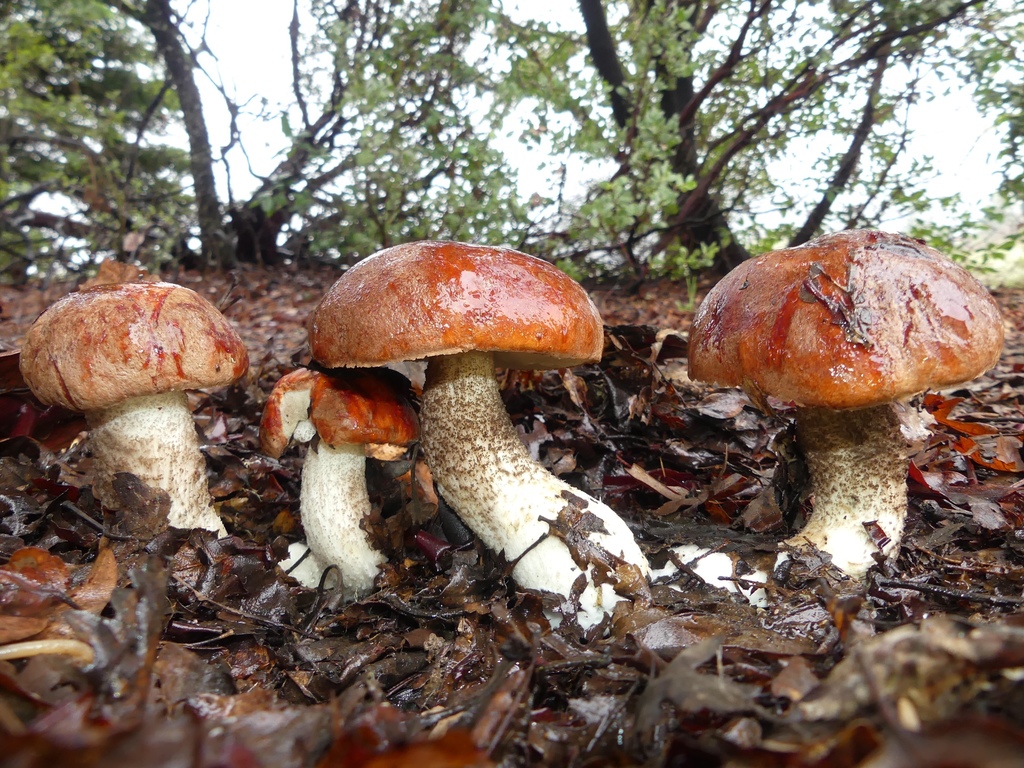
Manzanita bolete
Leccinum manzanitae
Leccinum manzanitae is an edible species of bolete fungus in the family Boletaceae. Described as new to science in 1971, it is commonly known as the manzanita bolete for its usual mycorrhizal association with manzanita trees. Its fruit bodies (mushrooms) have sticky reddish to brown caps up to 20 cm (7.9 in), and its stipes are up to 16 cm (6.3 in) long and 3.5 cm (1.4 in) thick. They have a whitish background color punctuated with small black scales known as...
Where it lives
Recorded sightings
—
geo-referenced records in GBIF, from museums, herbaria and field observers.
Drag the globe to turn it. Dots are where records exist, not a range map; darker means more records.
In the stacks
Searching the stacks…
Every page naming Leccinum manzanitae in the Biodiversity Heritage Library →
This page is assembled live from iNaturalist, GBIF, Wikipedia, the Source Library and the Internet Archive. It is not yet part of the hand-edited codex. iNaturalist taxon 54204.