- Fungi Including Lichens
- ›Basidiomycete Fungi
- ›Higher Basidiomycetes
- ›Mushrooms, Bracket Fungi, Puffballs, and Allies
- ›Agaricomycetidae
- ›Common Gilled Mushrooms and Allies
- ›Pluteineae
- ›amanita mushrooms and allies
- ›Amaniteae
- ›Amanita
- ›Amanita
- ›Amanita
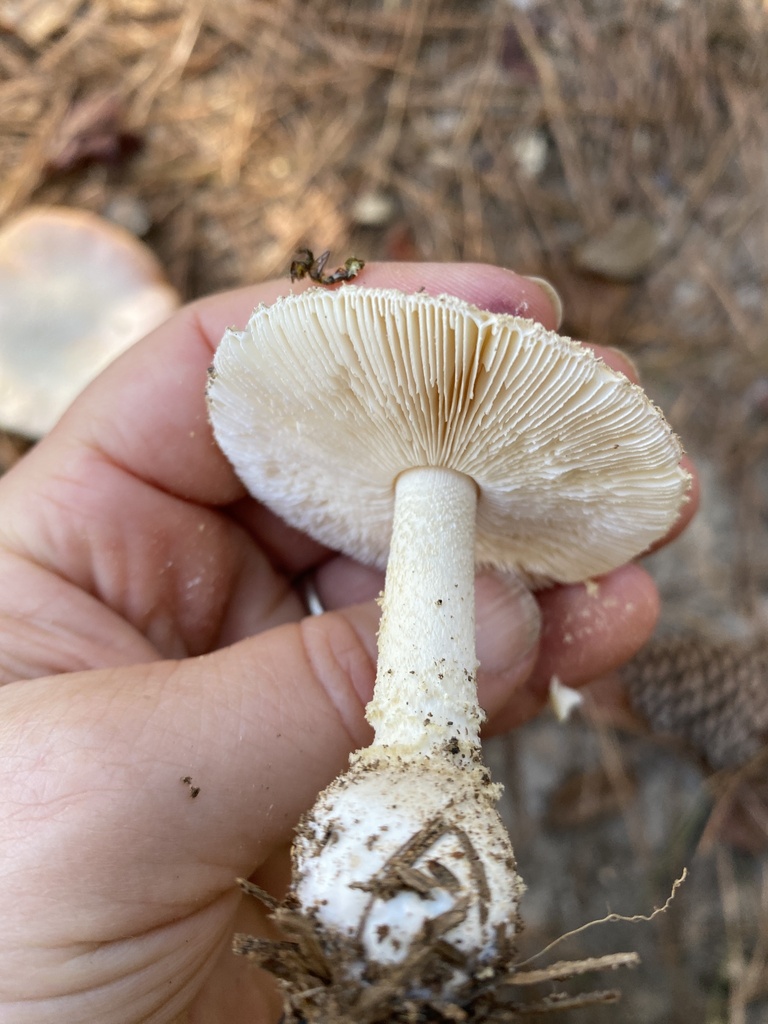
Poison Champagne Amanita
Amanita crenulata
Amanita crenulata, also known as the poison champagne amanita, is a species of fungus that is very common in the Northeast United States.
From the article Amanita crenulata on Wikipedia (CC BY-SA), quoted section by section
Description
Cap: 2 – 9 cm wide, hemispheric at first, then becoming flatter. Pale tan, sometimes grayish or yellowish. The volva is distributed over the wide cap as powdery, somewhat paler warts. The color of the warts lends the mushroom the name "champagne." Gills: narrowly adnate, close to subcrowded, and white to cream. The short gills are truncate to subtruncate or (occasionally) subattenuate. Stipe: The stipe is 17 - 100 × 3.5 - 16 mm and has a skirt-like annulus that is often quickly lost or left in torn fragments on the pileus margin. The notable bulb usually bears a distinct ring of champagne volval powder on its "shoulder." Odour: Not distinct. It is an ectomycorrhizal fungus, living in root symbiosis with a tree.
Where it lives
Recorded sightings
—
geo-referenced records in GBIF, from museums, herbaria and field observers.
Drag the globe to turn it. Dots are where records exist, not a range map; darker means more records.
In the stacks
Searching the stacks…
Every page naming Amanita crenulata in the Biodiversity Heritage Library →
This page is assembled live from iNaturalist, GBIF, Wikipedia, the Source Library and the Internet Archive. It is not yet part of the hand-edited codex. iNaturalist taxon 543032.