- Animals
- ›Arthropods
- ›Hexapods
- ›Insects
- ›Winged and Once-winged Insects
- ›Ants, Bees, Wasps, and Sawflies
- ›Narrow-waisted Wasps, Ants, and Bees
- ›Ants, Bees, and Stinging Wasps
- ›Bees and Apoid Wasps
- ›Bees
- ›Plasterer Bees
- ›Hylaeinae
- ›Hylaeus
- ›Prosopisteron
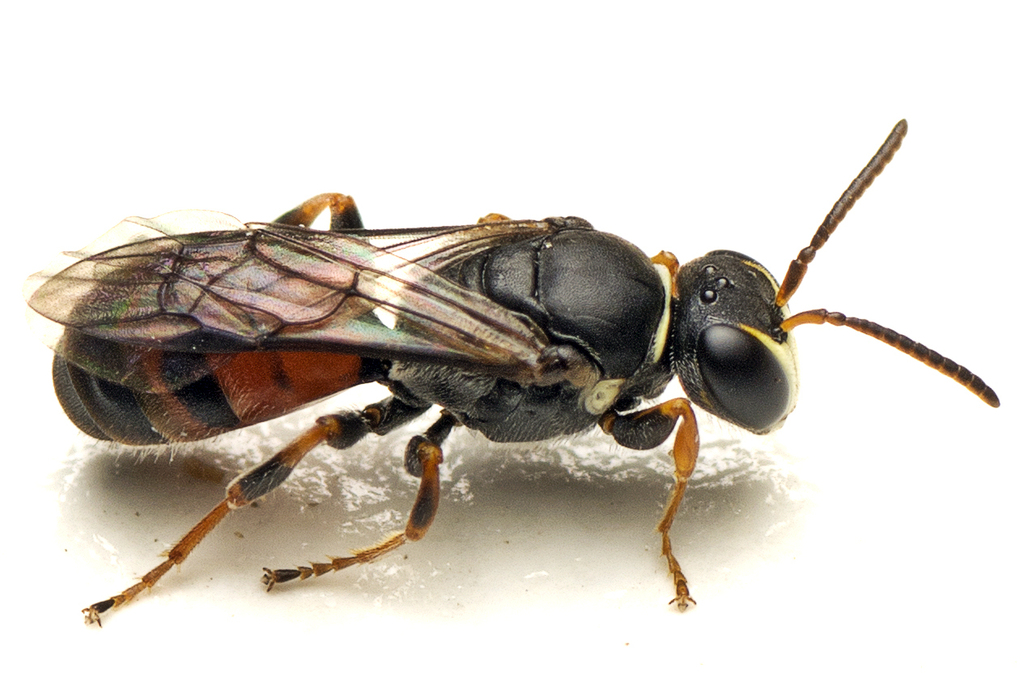
Littler's Masked Bee
Hylaeus littleri
Hylaeus littleri, or Hylaeus (Prosopisteron) littleri, also known as Littler's masked bee, is a species of bee in the family Colletidae and subfamily Hylaeinae. It is endemic to Australia. It was described by British-American entomologist Theodore Dru Alison Cockerell in 1918.
From the article Hylaeus littleri on Wikipedia (CC BY-SA), quoted section by section
Description
Male body length is 5.5 mm. Integumental colouration is mainly black, with yellow and bright ferruginous markings.
Range & habitat
The species occurs in south-eastern Australia. The type locality is George Town, Tasmania. It has also been recorded from Mount Magnificent in the Mount Lofty Ranges of South Australia.
Wikipedia: “Distribution and habitat”
What it does
The adults are flying mellivores. Flowering plants visited by the bees include Banksia species.
== References ==
Wikipedia: “Behaviour”
Listen
Looking for field recordings…
Where it lives
Recorded sightings
—
geo-referenced records in GBIF, from museums, herbaria and field observers.
Drag the globe to turn it. Dots are where records exist, not a range map; darker means more records.
In the stacks
Searching the stacks…
Every page naming Hylaeus littleri in the Biodiversity Heritage Library →
This page is assembled live from iNaturalist, GBIF, Wikipedia, the Source Library and the Internet Archive. It is not yet part of the hand-edited codex. iNaturalist taxon 544366.