- Fungi Including Lichens
- ›Ascomycete Fungi
- ›Sac Fungi and Lichens
- ›Common Lichens
- ›Shield Lichens, Sunburst Lichens, Rosette Lichens, and Allies
- ›shield lichens, rim lichens, and allies
- ›spindles and structured lichens
- ›Cladonia
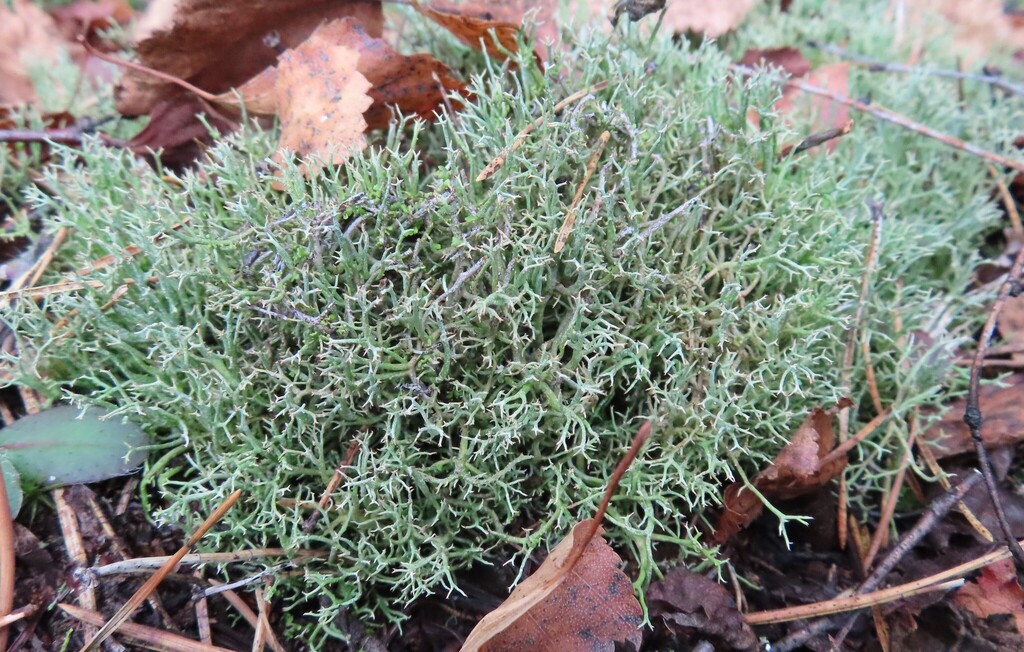
many-forked cladonia
Cladonia furcata
Cladonia furcata or the many-forked cup lichen is a species of cup lichen in the family Cladoniaceae. It has an intermediate to tolerant air pollution sensitivity. Extracts of this species have been shown to kill leukemia cells in vitro, and may have possible value in the treatment of cancer.
From the article Cladonia furcata on Wikipedia (CC BY-SA), quoted section by section
Description
Like most other lichens in the genus Cladonia, the fruiting body of C. furcata is made of a flattened primary thallus and a secondary upright stalk that forms the secondary thallus. The secondary thallus – the podetium – is extensively branched, and may reach up to 10 centimetres (4 in) tall. The podetia ranges in color from grayish or pale green to brown. The axil, the inner junction of a branchlet with a branch or with another branchlet, is open, with inrolled branches, and frequently with a longitudinal groove that extends down the podetium from the axil. The fertile (reproductive) branches of this lichen are more or less flattened, and often grooved. C. furcata does not have the vegetative reproductive structures soredia and isidia, but instead has apothecia—cup-like ascocarps that contain asci on which ascospores are borne. The apothecia are brown, small, and borne at the end of the branches.
Range & habitat
Cladonia furcata is most commonly found in forests near coastlines, at low to mid elevations. It may be found growing on moss, humus, and soil, more rarely on rotten wood or at the base of trees. In Nepal, Cladonia furcata has been reported from 1,700 to 3,900 m elevation in a compilation of published records. In North America, it is found from Alaska to California, and is very common in the west Cascade Range.
Wikipedia: “Habitat and distribution”
Where it lives
Recorded sightings
—
geo-referenced records in GBIF, from museums, herbaria and field observers.
Drag the globe to turn it. Dots are where records exist, not a range map; darker means more records.
In the stacks
Searching the stacks…
Every page naming Cladonia furcata in the Biodiversity Heritage Library →
This page is assembled live from iNaturalist, GBIF, Wikipedia, the Source Library and the Internet Archive. It is not yet part of the hand-edited codex. iNaturalist taxon 54607.