- Plants
- ›Vascular Plants
- ›flowering plants
- ›Dicots
- ›laurels, spicebushes, and allies
- ›monimia family
- ›Laureliopsis
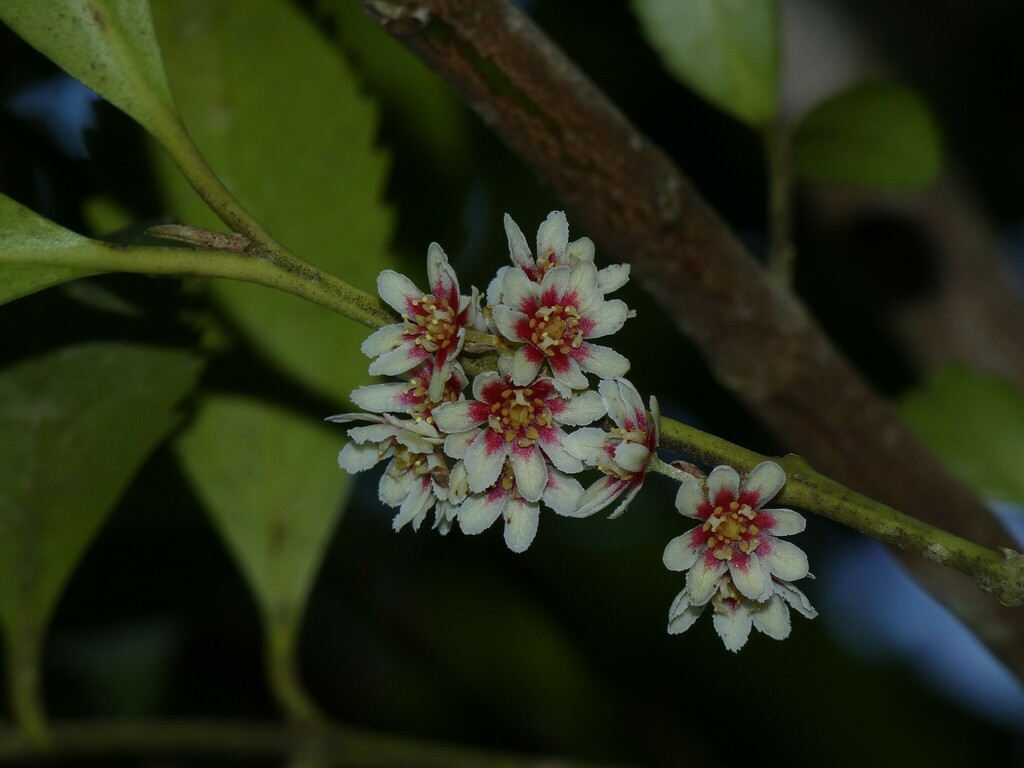
Laureliopsis philippiana
Laureliopsis is a genus of flowering plants with just one species, Laureliopsis philippiana, known as tepa and wawán, endemic to Chile and the narrow neighboring strip of Argentina (35 to 45°S). In Chile it is found from Maule to Aysén. It grows on humid and deep soils.
From the article Laureliopsis on Wikipedia (CC BY-SA), quoted section by section
Description
Laureliopsis philippiana is an evergreen tree up to 30 m (100 ft) tall and 1.4 m (55 in) in diameter, with thin bark, and aromatic wood, and a superficial resemblance to Bay Laurel. The leaves are aromatic, oblong, attenuate at the base, 4.9 long and 1.5–4 cm wide, glossy, leathery, the midrib with yellow hairs, the edges are heavily toothed in the two upper thirds, every tooth ends in a small point. The flowers are hermaphrodite or unisexual, they are small about 5–6 mm long, reddish-green, arranged in racemes, the peduncles are hairy about 2–3 mm long, flowers with bell-shaped perianth split in 7-9 petals more or less equal, hairy outside, 4 stamens and 8-20 staminodes, several carpels, the style is feathery with terminal stigma. The fruit is an achene almost oval, crowned by the perianth, about 1-1.3 cm long, formed by the perigonium that wraps several carpels, hairy, dark brown, spindle-shaped seeds, about 0.8-1.2 cm long, with the style covered by hairs about 5–6 mm long.
At the table
The wood is used in construction, however it rots when exposed to outdoors moisture. It has been planted in Spain.
Wikipedia: “Uses”
In human culture
The name Laureliopsis indicates the superficial similarity of the plant to Laurelia. Phillippiana honors Rudolph Amandus Philippi, a German-Chilean naturalist.
Wikipedia: “Etymology”
Where it lives
Recorded sightings
—
geo-referenced records in GBIF, from museums, herbaria and field observers.
Drag the globe to turn it. Dots are where records exist, not a range map; darker means more records.
In the stacks
Searching the stacks…
Every page naming Laureliopsis philippiana in the Biodiversity Heritage Library →
This page is assembled live from iNaturalist, GBIF, Wikipedia, the Source Library and the Internet Archive. It is not yet part of the hand-edited codex. iNaturalist taxon 548692.