- Plants
- ›Vascular Plants
- ›flowering plants
- ›Dicots
- ›Heathers, Balsams, Primroses, and Allies
- ›heath family
- ›madrones, bearberries, and allies
- ›Arctostaphylos
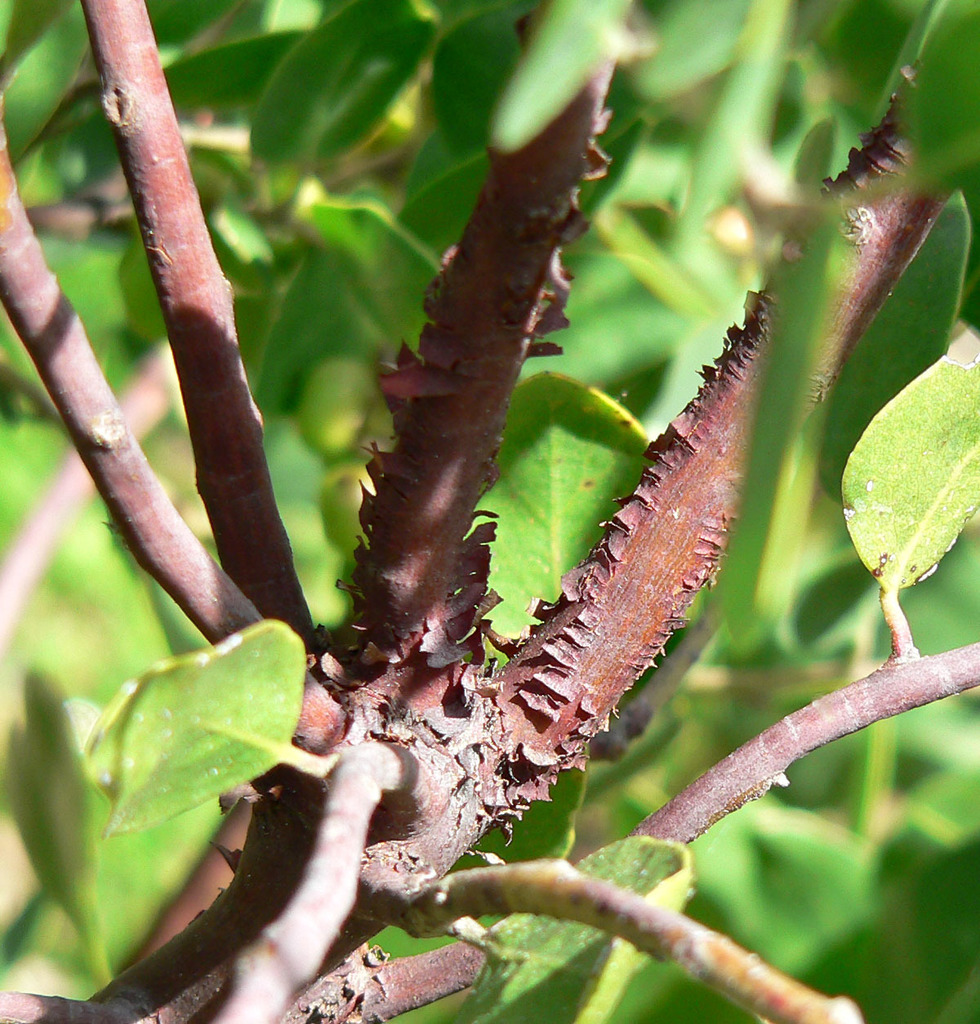
Common Manzanita
Arctostaphylos manzanita
One of many species of manzanita, Arctostaphylos manzanita has the common names common manzanita and whiteleaf manzanita.
Arctostaphylos manzanita is endemic to California, where it can be found in the Coast Ranges and Sierra Nevada foothills. It is common on chaparral slopes and low-elevation coniferous forest ecosystems.
From the article Arctostaphylos manzanita on Wikipedia (CC BY-SA), quoted section by section
Description
The Arctostaphylos manzanita leaves are bright shiny green, wedge-shaped and pointed. The small white flowers, only a quarter inch long, are cup-shaped and hang upside down. The fruits are berries which are white when new and turn red-brown as the summer wears on. The bark on the long, crooked branches is reddish, making the shrub easily identifiable as a manzanita. It grows into a twisted tree about 15 feet tall. Like other manzanitas, this species has a hard, attractive wood that has proved useful for making tools and as firewood. The fruit is edible and has a pleasant tartness, but the seeds cause gastrointestinal upset if eaten in large quantities. It has historically been brewed into a cider, including by Native Americans. They are also consumed by bears and chipmunks.
Where it lives
Recorded sightings
—
geo-referenced records in GBIF, from museums, herbaria and field observers.
Drag the globe to turn it. Dots are where records exist, not a range map; darker means more records.
In the stacks
Searching the stacks…
Every page naming Arctostaphylos manzanita in the Biodiversity Heritage Library →
This page is assembled live from iNaturalist, GBIF, Wikipedia, the Source Library and the Internet Archive. It is not yet part of the hand-edited codex. iNaturalist taxon 55137.