- Animals
- ›Arthropods
- ›Hexapods
- ›Insects
- ›Winged and Once-winged Insects
- ›Beetles
- ›Water, Rove, Scarab, Long-horned, Leaf, and Snout Beetles
- ›Cucujiform Beetles
- ›Darkling Beetles and Allies
- ›Darkling Beetles
- ›Stenochiinae
- ›Cnodalonini
- ›Upis
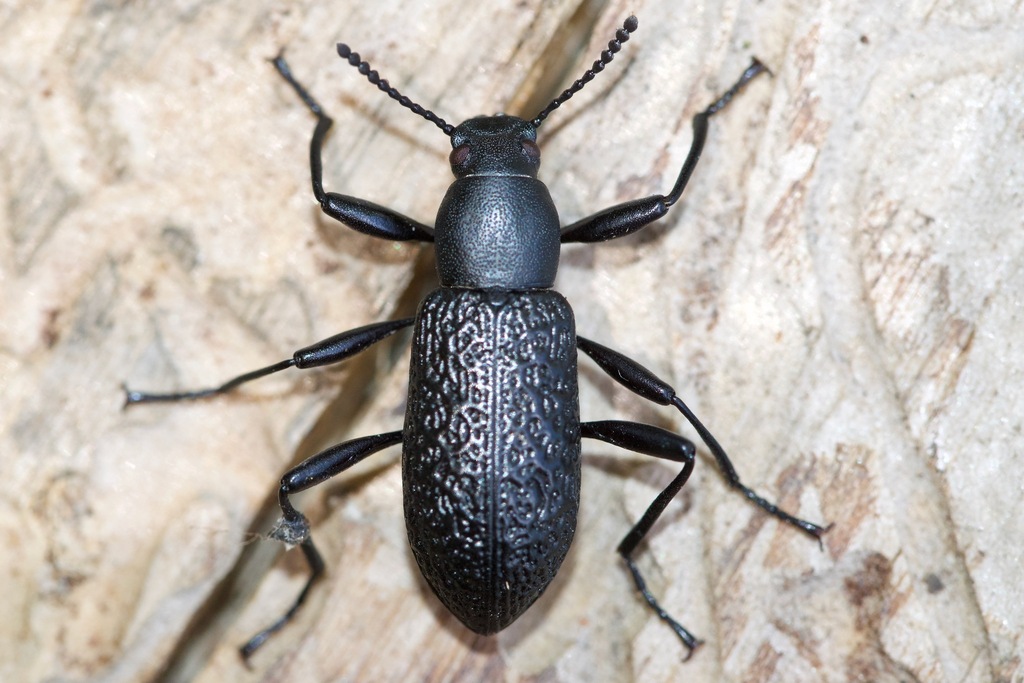
Roughened Darkling Beetle
Upis ceramboides
Upis ceramboides is a species of beetle, one of many wood-living insects that benefit from forest fires. It often occurs in quantities below the bark on the fire-damaged birches, but can sometimes be seen on other deciduous trees such as willow and aspen. The larvae thrive in the inner bark which is rich in mycelia, and in the sapwood. They develop into pupae during the summer months under the bark, and they develop over two or three years. The following spring they reproduce themselves.
It has over the years have disappeared from southern Sweden and is now only locally in the Norrland coast (Västerbotten and Norrbotten) as well as Canada and Alaska. The reason for the species' decline is probably the lack of fire-damaged forests and birch, and the modern forestry practices. Upis ceramboides is considered "vulnerable" in terms of species survival. In Vindeln municipality it is called köksskörven, because it occurs indoors when burning firewood in winter.
Listen
Looking for field recordings…
Where it lives
Recorded sightings
—
geo-referenced records in GBIF, from museums, herbaria and field observers.
Drag the globe to turn it. Dots are where records exist, not a range map; darker means more records.
In the stacks
Searching the stacks…
Every page naming Upis ceramboides in the Biodiversity Heritage Library →
This page is assembled live from iNaturalist, GBIF, Wikipedia, the Source Library and the Internet Archive. It is not yet part of the hand-edited codex. iNaturalist taxon 55219.