- Animals
- ›Arthropods
- ›Hexapods
- ›Insects
- ›Winged and Once-winged Insects
- ›True Bugs, Hoppers, Aphids, and allies
- ›Plant-parasitic Hemipterans
- ›Aphids and Allies
- ›Aphidoidea
- ›Aphids
- ›Aphidinae
- ›Macrosiphini
- ›Dysaphis
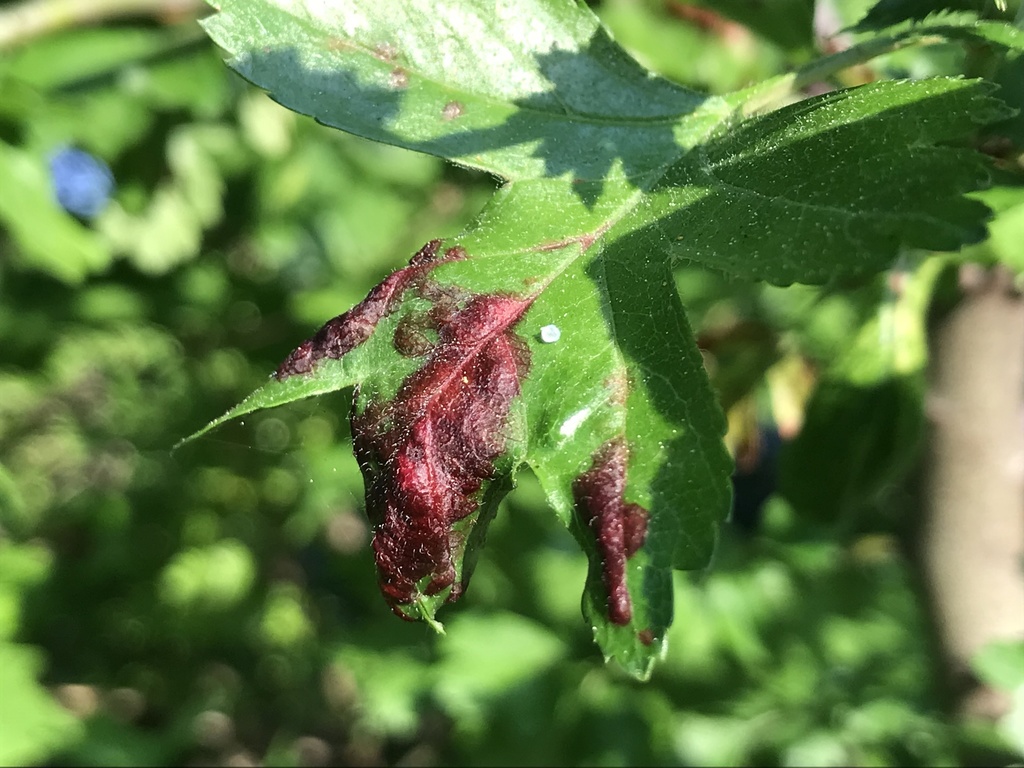
hawthorn-carrot aphid
Dysaphis crataegi
The hawthorn-carrot aphid, (Dysaphis crataegi), also known as Dysaphis (Dysaphis) crataegi, is an aphid in the superfamily Aphidoidea in the order Hemiptera. It is a true bug and sucks sap from plants.
From the article Dysaphis crataegi on Wikipedia (CC BY-SA), quoted section by section
Description
On the primary host, these aphids are about 2 mm (0.08 in) long, with short antennae and short siphunculi, greenish-grey and dusted with wax particles. On the secondary host, wingless viviparous females are greenish-grey or yellowish-grey, again dusted with fine wax particles. Winged viviparous females are greyish-red with black markings. Egg-laying females are reddish-brown and winged males are reddish with black markings.
What it does
The hawthorn-carrot aphid migrates to its primary host in late summer and forms red, curling galls on its leaves. The following spring, females move to its secondary host, an umbellifer in the family Apiaceae, and produce live offspring, When these nymphs are sufficiently mature, they produce further live young. Most offspring are wingless, but some winged females are produced which are able to colonize new secondary hosts. In late summer winged females and males are produced and migrate to hawthorn trees. These aphids are attended by ants on both their primary and secondary hosts.
Wikipedia: “Ecology”
Listen
Looking for field recordings…
Where it lives
Recorded sightings
—
geo-referenced records in GBIF, from museums, herbaria and field observers.
Drag the globe to turn it. Dots are where records exist, not a range map; darker means more records.
In the stacks
Searching the stacks…
Every page naming Dysaphis crataegi in the Biodiversity Heritage Library →
This page is assembled live from iNaturalist, GBIF, Wikipedia, the Source Library and the Internet Archive. It is not yet part of the hand-edited codex. iNaturalist taxon 554444.