- Plants
- ›Vascular Plants
- ›flowering plants
- ›Dicots
- ›Sunflowers, Bellflowers, Fanflowers, and Allies
- ›Sunflowers, Daisies, Asters, and Allies
- ›Asteroideae
- ›groundsels and allies
- ›Tussilagininae
- ›Petasites
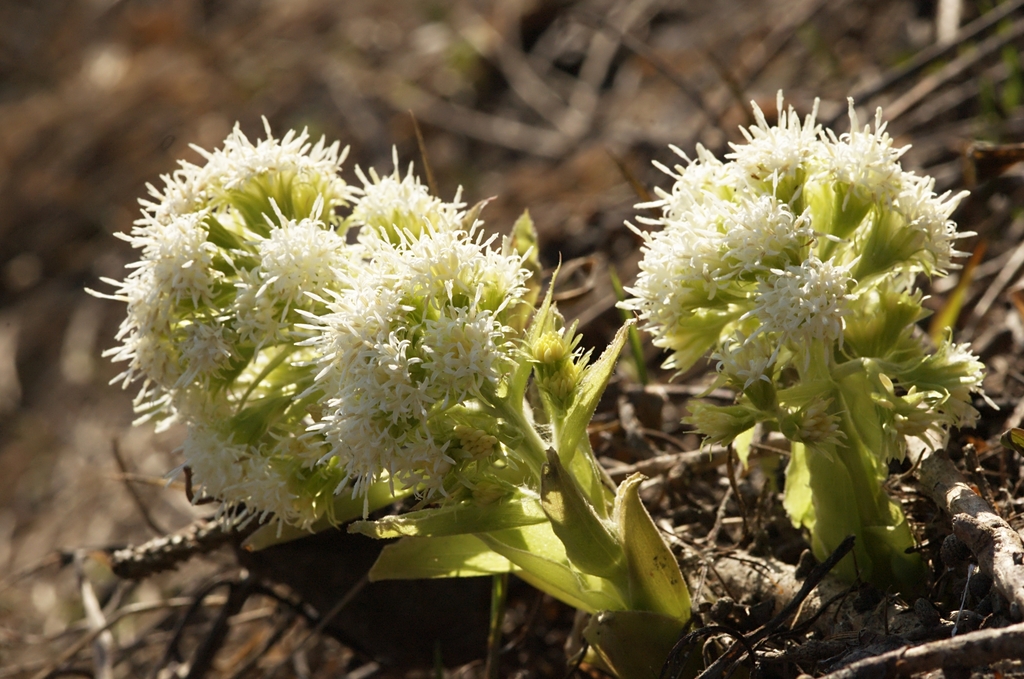
White Butterbur
Petasites albus
Petasites albus, the white butterbur, is a flowering plant species in the daisy family Asteraceae. It is native to central Europe and the Caucasus.
From the article Petasites albus on Wikipedia (CC BY-SA), quoted section by section
Description
Petasites albus is a perennial rhizomatous herb, with large suborbicular (almost round) leaves covered with lax cottony hairs. The flower heads are compact racemes of composite flowers or capitula with white ligules. They are dioecious, the male plants often more common than the females, as in the British range.
Range & habitat
The native range of Petasites albus is the mountains of central Europe and the Caucasus. It was first recorded in Sweden in Skåne in 1737 (Nordstedt 1920). In the British Isles it is a neophyte, introduced by the 17th century and naturalized in Yorkshire by 1843, but now predominantly distributed in North-east Scotland.
Wikipedia: “Distribution”
Where it lives
Recorded sightings
—
geo-referenced records in GBIF, from museums, herbaria and field observers.
Drag the globe to turn it. Dots are where records exist, not a range map; darker means more records.
In the stacks
Searching the stacks…
Every page naming Petasites albus in the Biodiversity Heritage Library →
This page is assembled live from iNaturalist, GBIF, Wikipedia, the Source Library and the Internet Archive. It is not yet part of the hand-edited codex. iNaturalist taxon 55763.