- Plants
- ›Vascular Plants
- ›flowering plants
- ›Dicots
- ›Legumes, Milkworts, and Allies
- ›Legumes
- ›Acacias, Mimosas, Mesquites, and Allies
- ›Vachellia
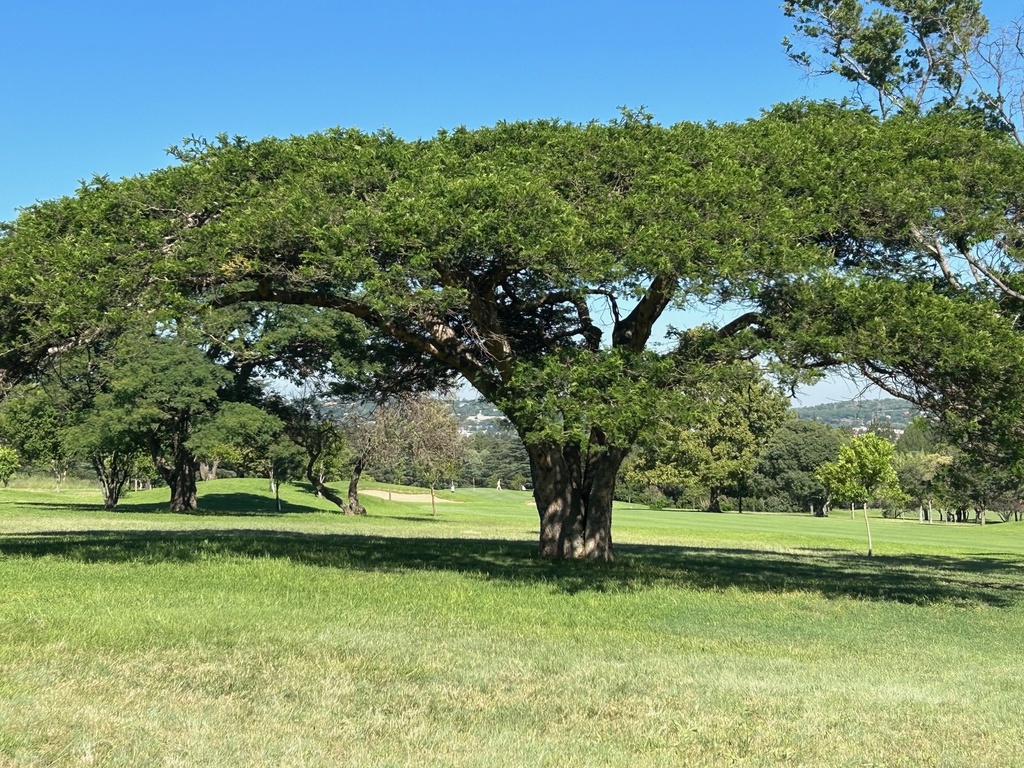
Paperbark Thorn
Vachellia sieberiana
Vachellia sieberiana, until recently known as Acacia sieberiana and commonly known as the paperbark thorn or paperbark acacia, is a tree native to Africa and introduced into Pakistan. It is used in many areas for various purposes. The tree varies from 3 to 25 m in height, with a trunk diameter of 0.6 to 1.8 m. It is not listed as being a threatened species.
From the article Vachellia sieberiana on Wikipedia (CC BY-SA), quoted section by section
What it does
This tree is widespread in its natural habitat and is not threatened. It is browsed upon by livestock and game such as elephant and giraffe.
Wikipedia: “Ecology and conservation”
At the table
Vachellia sieberiana is valued largely as a source of forage, medicine and wood. The inner bark is a source of fibre purposes such as stringing beads. The gum is edible and both livestock and game animals browse the tree and feed on the dropped pods, spreading viable seeds in their dung. The flowers of the tree make good forage for bees and bee hives are put directly in the trees to exploit the resource. The leaves of the tree commonly release toxic chemical compounds when the tree has been heavily browsed, some of the compounds may release hydrogen cyanide when ingested, which may be lethal to cattle. The fallen pods and foliage can provide lifesaving forage during dry times of the year. The gum of the tree is used as food, as an adhesive, and as an ingredient in making ink.
Traditional medicinal uses. In Africa, the bark or root is used to treat urinary tract inflammation. The bark has astringent properties and it is used to treat colds, cough, and childhood fever. According to the World AgroForestry Centre,
"A decoction of the root is taken as remedy for stomach-ache. The bark, leaves and gums are used to treat tapeworm, bilharzia, haemorrhage, orchitis, colds, diarrhoea, gonorrhoea, kidney problems, syphilis, ophthalmia, rheumatism and disorders of the circulatory system. It is also used as an astringent. …
Wikipedia: “Uses”
Where it lives
Recorded sightings
—
geo-referenced records in GBIF, from museums, herbaria and field observers.
Drag the globe to turn it. Dots are where records exist, not a range map; darker means more records.
In the stacks
Searching the stacks…
Every page naming Vachellia sieberiana in the Biodiversity Heritage Library →
This page is assembled live from iNaturalist, GBIF, Wikipedia, the Source Library and the Internet Archive. It is not yet part of the hand-edited codex. iNaturalist taxon 559085.