- Plants
- ›Vascular Plants
- ›flowering plants
- ›Dicots
- ›Legumes, Milkworts, and Allies
- ›Legumes
- ›Faboideae
- ›Robinieae
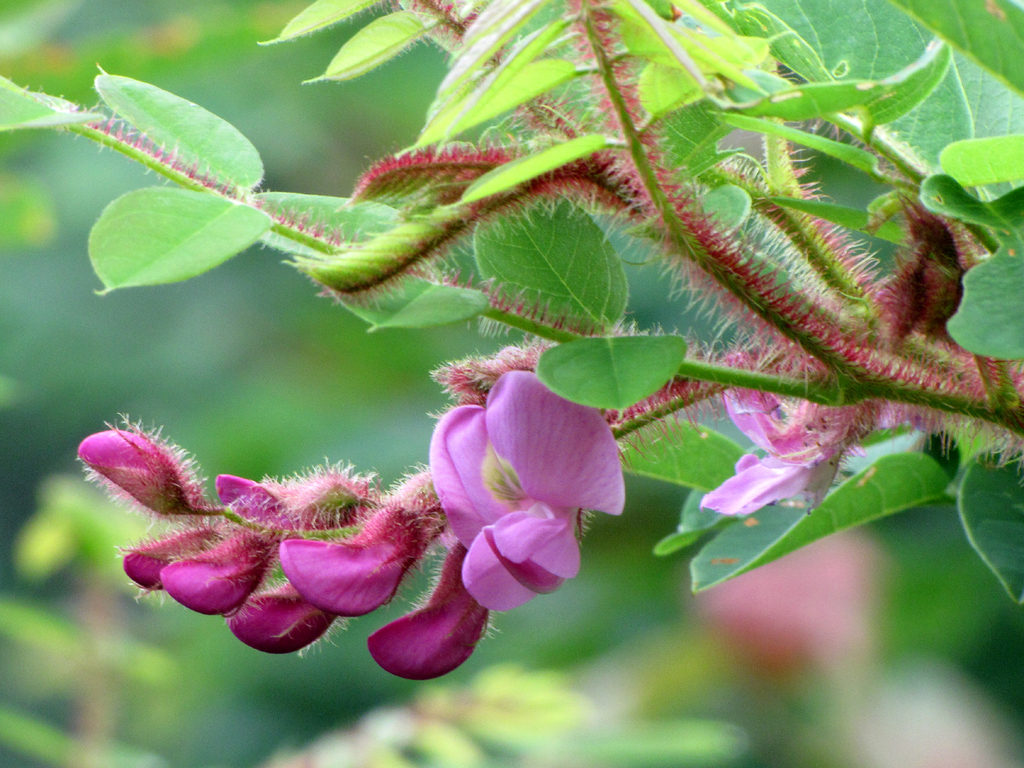
Locust Trees
Robinia
Robinia is a genus of flowering plants in the family Fabaceae, tribe Robinieae, native to North America. Commonly known as locusts, they are deciduous trees and shrubs growing 4–25 metres (13–82 ft) tall. The leaves are pinnate with 7–21 oval leaflets. The flowers are white or pink, in usually pendulous racemes. Many species have thorny shoots, and several have sticky hairs on the shoots.
The genus is named after the royal French gardeners Jean Robin and his son Vespasien Robin, who introduced the plant to Europe in 1601.
8 branches of this genus, most-observed first
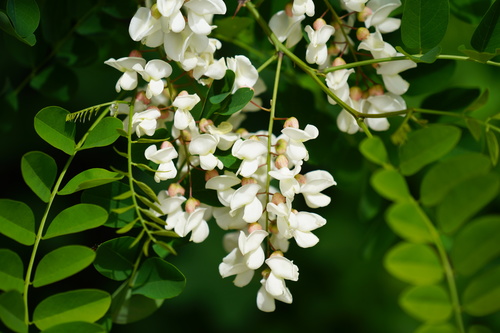
black locust
speciesRobinia pseudoacacia
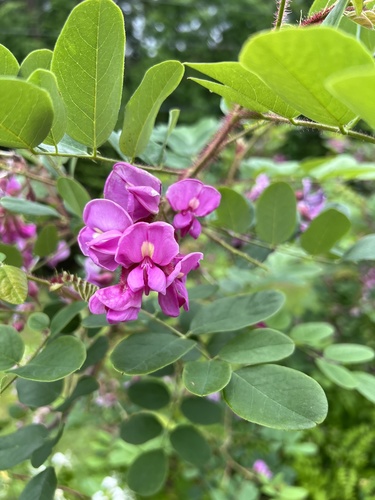
Bristly locust
speciesRobinia hispida
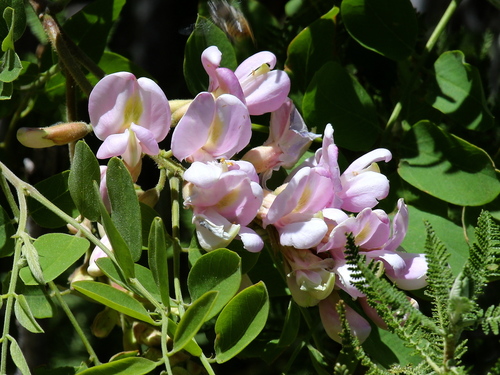
New Mexico locust
speciesRobinia neomexicana
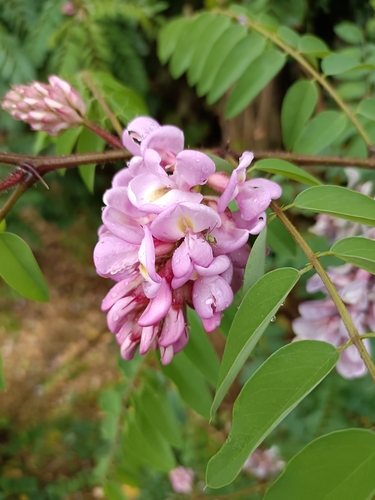
Clammy Locust
speciesRobinia viscosa

Idaho Locust
hybridRobinia × ambigua
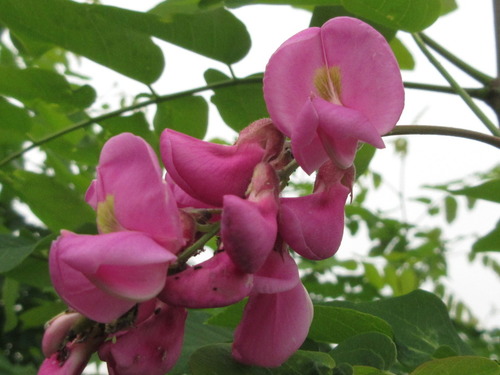
Robinia × margaretta
hybridRobinia × margaretta
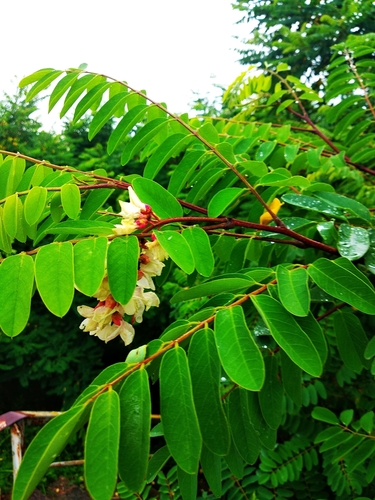
Robinia luxurians
speciesRobinia luxurians
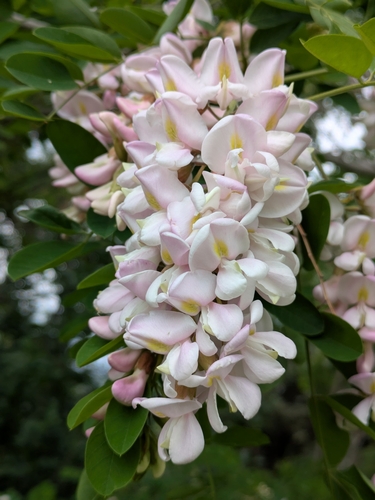
Robinia × holdtii
hybridRobinia × holdtii
Where it lives
Recorded sightings
—
geo-referenced records in GBIF, from museums, herbaria and field observers.
Drag the globe to turn it. Dots are where records exist, not a range map; darker means more records.
In the stacks
Searching the stacks…
Every page naming Robinia in the Biodiversity Heritage Library →
This page is assembled live from iNaturalist, GBIF, Wikipedia, the Source Library and the Internet Archive. It is not yet part of the hand-edited codex. iNaturalist taxon 56089.