- Plants
- ›Vascular Plants
- ›flowering plants
- ›monocots
- ›lilies, supplejacks, and allies
- ›lily family
- ›true lily subfamily
- ›true lilies and allies
- ›Lilium
- ›Leucolirion
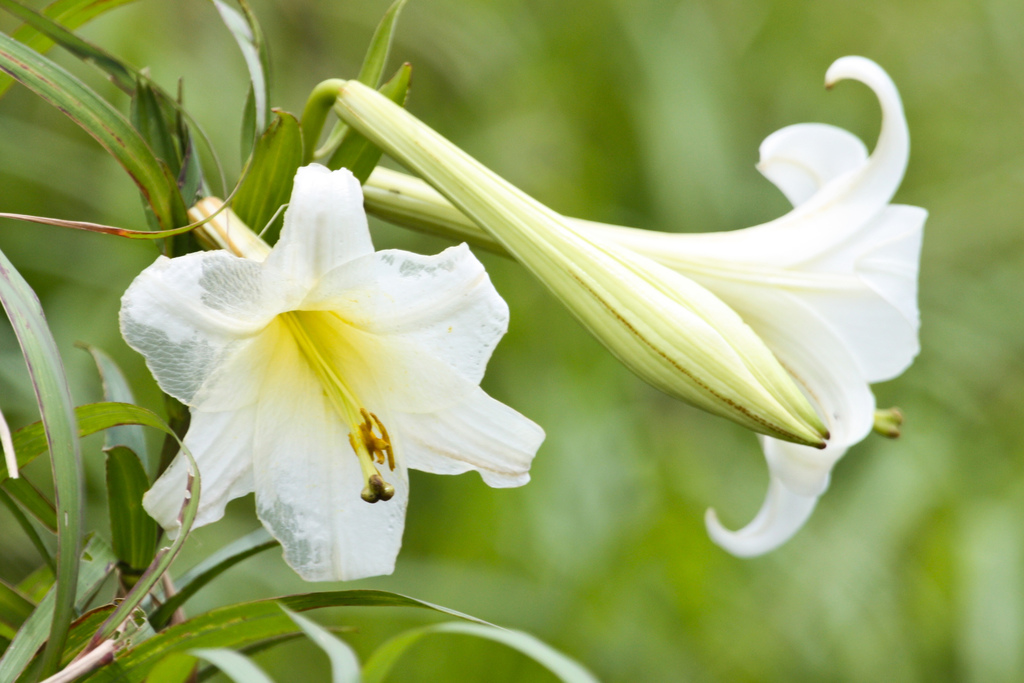
Wallich's Lily
Lilium wallichianum
Lilium wallichianum is an Asian species of bulbous plants in the lily family native to the Indian subcontinent and to Myanmar. It is native to India, as well as Nepal, Bhutan, and Myanmar.
Lilium wallichianum grows on slopes and grasslands at 1,200 to 2,000 m (3,900 to 6,600 ft), and in moist shade 1,100 to 2,000 m (3,600 to 6,600 ft) elevation. The bulbs are stoloniferous, with new bulbs capable of appearing some distance from the parent plant. The green stem tinged with purple grows up to 2 m (6.6 ft) high. The leaves are scattered, dark green, linear to lanceolate and up to 25 cm (9.8 in) long. Each stem bears up to four trumpet-shaped flowers, white to creamy-yellow, held horizontally and up to 20 cm (7.9 in) across. A fairly difficult species to grow successfully in the garden, it requires a moist slightly acidic soil with excellent drainage. The species prefers light dappled shade and blooms very late in the season.
Where it lives
Recorded sightings
—
geo-referenced records in GBIF, from museums, herbaria and field observers.
Drag the globe to turn it. Dots are where records exist, not a range map; darker means more records.
In the stacks
Searching the stacks…
Every page naming Lilium wallichianum in the Biodiversity Heritage Library →
This page is assembled live from iNaturalist, GBIF, Wikipedia, the Source Library and the Internet Archive. It is not yet part of the hand-edited codex. iNaturalist taxon 565787.