- Animals
- ›Arthropods
- ›Hexapods
- ›Insects
- ›Winged and Once-winged Insects
- ›True Bugs, Hoppers, Aphids, and allies
- ›True Bugs
- ›Pentatomomorph Bugs
- ›Stink Bugs, Shield Bugs, and Allies
- ›Stink Bugs
- ›Pentatominae
- ›Strachiini
- ›Murgantia
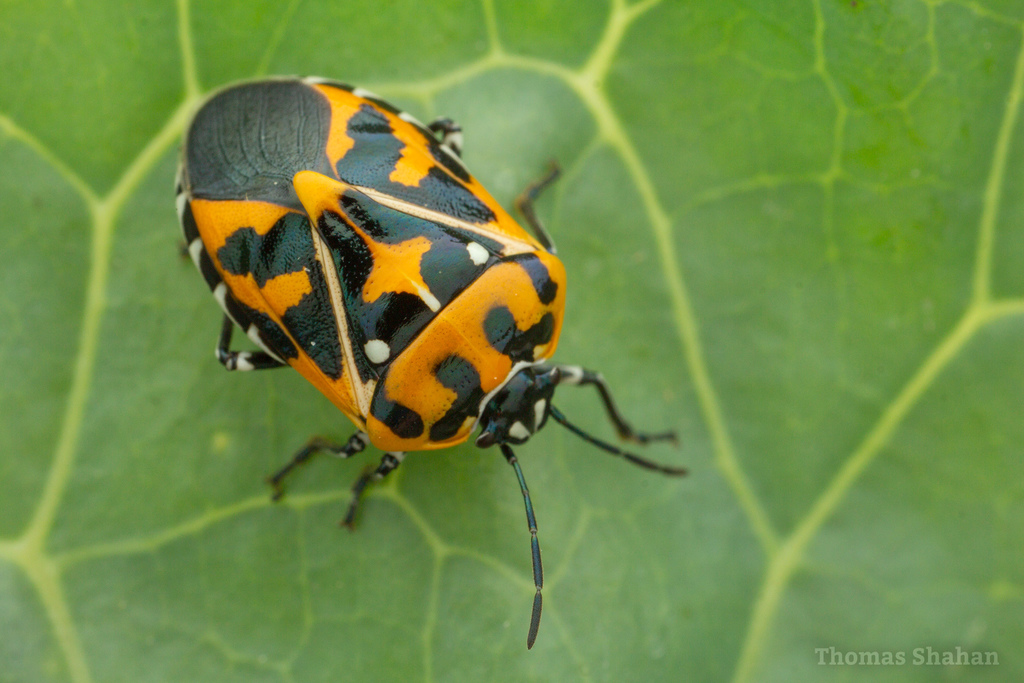
Harlequin Bug
Murgantia histrionica
The harlequin cabbage bug (Murgantia histrionica), also known as calico bug, fire bug or harlequin bug, is a black stinkbug of the family Pentatomidae, brilliantly marked with red, orange, yellow and white markings. It is a major pest of cabbage and related crops in the Brassicaceae, as well as the ornamental flower cleome throughout tropical and North America, especially the warmer parts of the United States. Nymphs are active during the summer and in the tropics the bug can achieve three to six generations a year. In the northern range there is only one generation annually and the insects overwinter as adults in crop residues or field edges. Organic control involves hand-picking the insects off the plants (they can be dropped into soapy water to drown them) and being especially careful to remove and destroy all the eggs, which are black-and-white striped, laid in clutches of twelve.
From the article Harlequin cabbage bug on Wikipedia (CC BY-SA), quoted section by section
What it does
Harlequin bugs are phytophagous insects. Adults and nymphs feed on the stems and leaves of plants such as cabbage, broccoli, kale, turnip, radish, horseradish, mustard and rapeseed, and often cause blotching by their piercing-sucking feeding. These plants are economically important and are abundant in crop fields but when they are not in production, harlequin bugs are able to feed on wild plants as well. Cruciferous plants such as cabbage produce mustard oil glycosides which give them a stinging flavor. This chemical compound is sequestered by harlequin bugs and stored in the prothorax as they feed. The adult bugs have been shown to be unpalatable to some species of birds thanks to this chemical defense, which could explain their warning coloration. As glucosinolates are often used by crucifers to reduce insect herbivory, their sequestration could also reduce attack rates by insect predators.
Wikipedia: “Feeding and chemical defense”
Listen
Looking for field recordings…
Where it lives
Recorded sightings
—
geo-referenced records in GBIF, from museums, herbaria and field observers.
Drag the globe to turn it. Dots are where records exist, not a range map; darker means more records.
In the stacks
Searching the stacks…
Every page naming Murgantia histrionica in the Biodiversity Heritage Library →
This page is assembled live from iNaturalist, GBIF, Wikipedia, the Source Library and the Internet Archive. It is not yet part of the hand-edited codex. iNaturalist taxon 56756.