- Plants
- ›Vascular Plants
- ›flowering plants
- ›Dicots
- ›honeysuckles, moschatels, and allies
- ›honeysuckle family
- ›bush honeysuckles and Weigela bushes
- ›Weigela
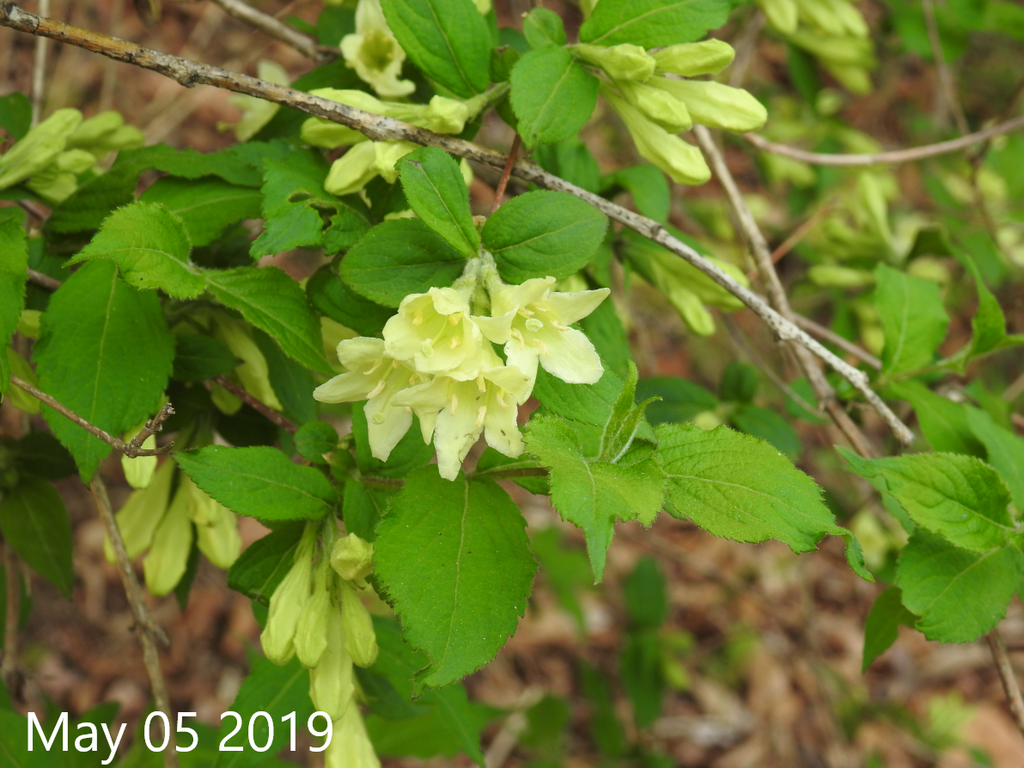
Korean weigela
Weigela subsessilis
Weigela subsessilis, the Korean weigela, is a species of flowering plant in the honeysuckle family native to the Korean Peninsula. It can be found on most of the mountains of Korea, except for the northern sides because the temperatures are very low. As the species is highly resistant to shade, cold, salt and even pollution, it is also found in deep forests or near the seas.
From the article Weigela subsessilis on Wikipedia (CC BY-SA), quoted section by section
Description
Weigela subsessilis is a deciduous, broad-leaved, shrubs, which grows from 2~3 meters tall. The species usually coexists with azaleas or royal azaleas, or sometimes clusters itself. It prefers sandy soil, which helps them survive also in barren land.
Foliage. The leaves of Weigela subsessilis has an opposite leaf arrangement, and has a wide egg-shaped body with a sharp tip. The width are up to 2 inches, while the length are up to 3 inches. The leaves have hair on each sides, and the ones on the bottom has spread hair on the leaf veins. It usually does not have petioles, and the edges are slightly toothed.
Flower and fruit. The flowers are produced on new growth from second-year wood as the leaves are expanding. Each inflorescence consists of clusters of three or four, even up to six flowers. When fully open, the flowers measure between 2.5 and 3.5 cm in length. As the flower buds enlarge, they assume a yellowish-green color that gradually changes through various shades of pink to a pale lavender when the flowers are in full bloom. Since inflorescences are profuse and individual flowers represent different stages of maturation, the overall effect of the shrub is a unique combination of pastel colors from pale yellowish-green to lavender. …
In human culture
The genus name, Weigela, is named after the German scientist Christian Ehrenfried Weigel. The species epithet, subsessilis, is from the term subsessile, which means "nearly, but not quite sessile." The root, sessilis is derived from Latin, which means low, dwarf in plants. A cultivar with buttery-yellow flowers is known as "Canary Weigela". The Korean name of the species is '병꽃나무' (byeongkkot-namu), which means "bottle-flower tree." In 1918, the Japanese botanist Nakai gave it this name, as the flowers seemed to look like plain, traditional Korean bottles, which were usually made from gourds.
Wikipedia: “Etymology”
Where it lives
Recorded sightings
—
geo-referenced records in GBIF, from museums, herbaria and field observers.
Drag the globe to turn it. Dots are where records exist, not a range map; darker means more records.
In the stacks
Searching the stacks…
Every page naming Weigela subsessilis in the Biodiversity Heritage Library →
This page is assembled live from iNaturalist, GBIF, Wikipedia, the Source Library and the Internet Archive. It is not yet part of the hand-edited codex. iNaturalist taxon 568858.