- Plants
- ›Vascular Plants
- ›flowering plants
- ›Dicots
- ›Soapberries, Cashews, Mahoganies, and Allies
- ›citrus family
- ›Zanthoxyloideae
- ›Zanthoxylum
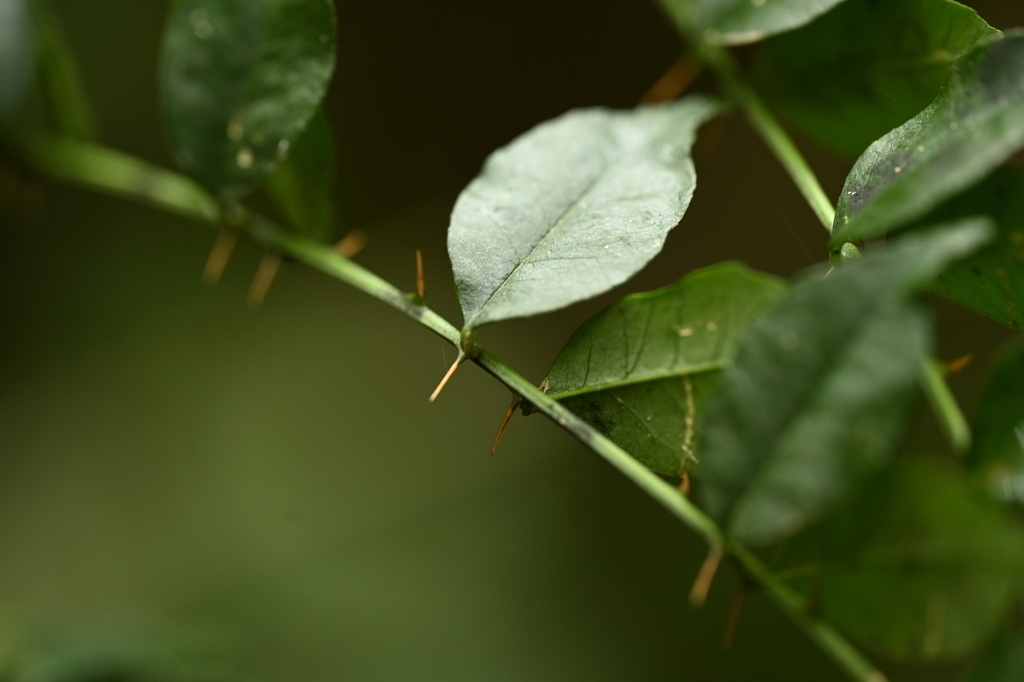
Zanthoxylum scandens
Zanthoxylum scandens is a species of woody plant in the family Rutaceae.
From the article Zanthoxylum scandens on Wikipedia (CC BY-SA), quoted section by section
Description
Zanthoxylum scandens is a woody plant, observed as a shrub or woody climber. It has a self-supporting growth form, with individual plants growing up to 24 metres (79 feet). Prickles can be found on its trunks, branches, branchlets, and leaf rachises. Flowers are tetramerous, with a perianth in two series. It sepals have been found as pale purplish green in color, ovate in shape, and about 0.5 millimetres (0.020 inches) in size. Male flowers have four stamens, are about three to four millimeters in size, and have a spot at their apex. Female flowers have three carpels with ligulate staminodes. Fruit follicles have been observed as purplish red in color, but grayish brown to black when dry. Seeds are about four to five millimeters in diameter. The species typically flowers from March to May, and fruits from to July to August.
Range & habitat
Zanthoxylum scandens is found in China (southern Anhui, Chongqing, Fujian, Guangdong, Guangxi, Guizhou, Hainan, Hubei, Hunan, Jiangxi, Sichuan, Yunnan, Zhejiang), India, Indonesia, Japan, Laos, Malaysia, Myanmar, Taiwan and Vietnam. Its preferred habitats are lowland forests, open forests, and thickets from an elevation at near sea level to 1,500 metres (4,921 feet).
Wikipedia: “Distribution and habitat”
Where it lives
Recorded sightings
—
geo-referenced records in GBIF, from museums, herbaria and field observers.
Drag the globe to turn it. Dots are where records exist, not a range map; darker means more records.
In the stacks
Searching the stacks…
Every page naming Zanthoxylum scandens in the Biodiversity Heritage Library →
This page is assembled live from iNaturalist, GBIF, Wikipedia, the Source Library and the Internet Archive. It is not yet part of the hand-edited codex. iNaturalist taxon 569173.