- Fungi Including Lichens
- ›Entomophthoromycota
- ›Entomophthoromycetes
- ›Insect Destroyers
- ›Entomophthoraceae
- ›Arthrophaga
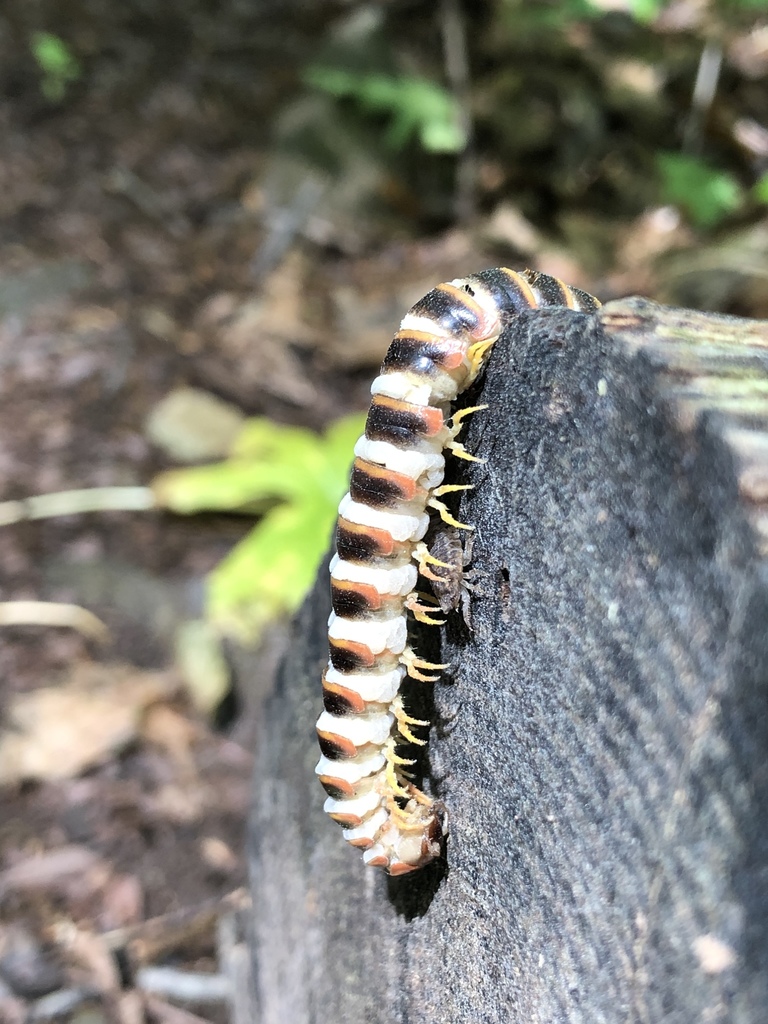
Arthrophaga myriapodina
Arthrophaga myriapodina is a fungus in the Entomophthorales that parasitiszes the millipedes Apheloria virginiensis corrugata, Boraria infesta, and Nannaria. It forces the infected millipede to climb to an elevated spot before killing it....
From the article Arthrophaga myriapodina on Wikipedia (CC BY-SA), quoted section by section
Description
Arthrophaga myriapodina forms distinct white to light brown pustules that emerge between the segments of a millipede. Its primary conidia are forcibly discharged, pear-shaped and contain 8–18 nuclei. Notably, no resting spore stage has been observed.
Wikipedia: “Morphology”
What it does
Arthrophaga myriapodina is found in eastern North America from May to October, usually 12 to 24 hours after rain.
== References ==
Wikipedia: “Ecology”
In human culture
Arthrophaga myriapodina was first collected by Roland Thaxter from North Carolina in 1886 on Boraria infesta, but he did not formally describe or name it. In 1916, A. T. Speare sent Thaxter additional specimens labelled as Entomophthora myriapodina, but the name was never validly published. Kathie Hodge, Ann E. Hajek, and Andrii P. Gryganskyi showed that A. myriapodina is distinct from related taxa including Entomophthora and formally named it as the type of a new genus.
Wikipedia: “Taxonomic history”
Where it lives
Recorded sightings
—
geo-referenced records in GBIF, from museums, herbaria and field observers.
Drag the globe to turn it. Dots are where records exist, not a range map; darker means more records.
In the stacks
Searching the stacks…
Every page naming Arthrophaga myriapodina in the Biodiversity Heritage Library →
This page is assembled live from iNaturalist, GBIF, Wikipedia, the Source Library and the Internet Archive. It is not yet part of the hand-edited codex. iNaturalist taxon 570425.