- Plants
- ›Vascular Plants
- ›flowering plants
- ›monocots
- ›Agaves, Orchids, Irises, and Allies
- ›iris family
- ›Crocoideae
- ›Watsonieae
- ›Lapeirousia
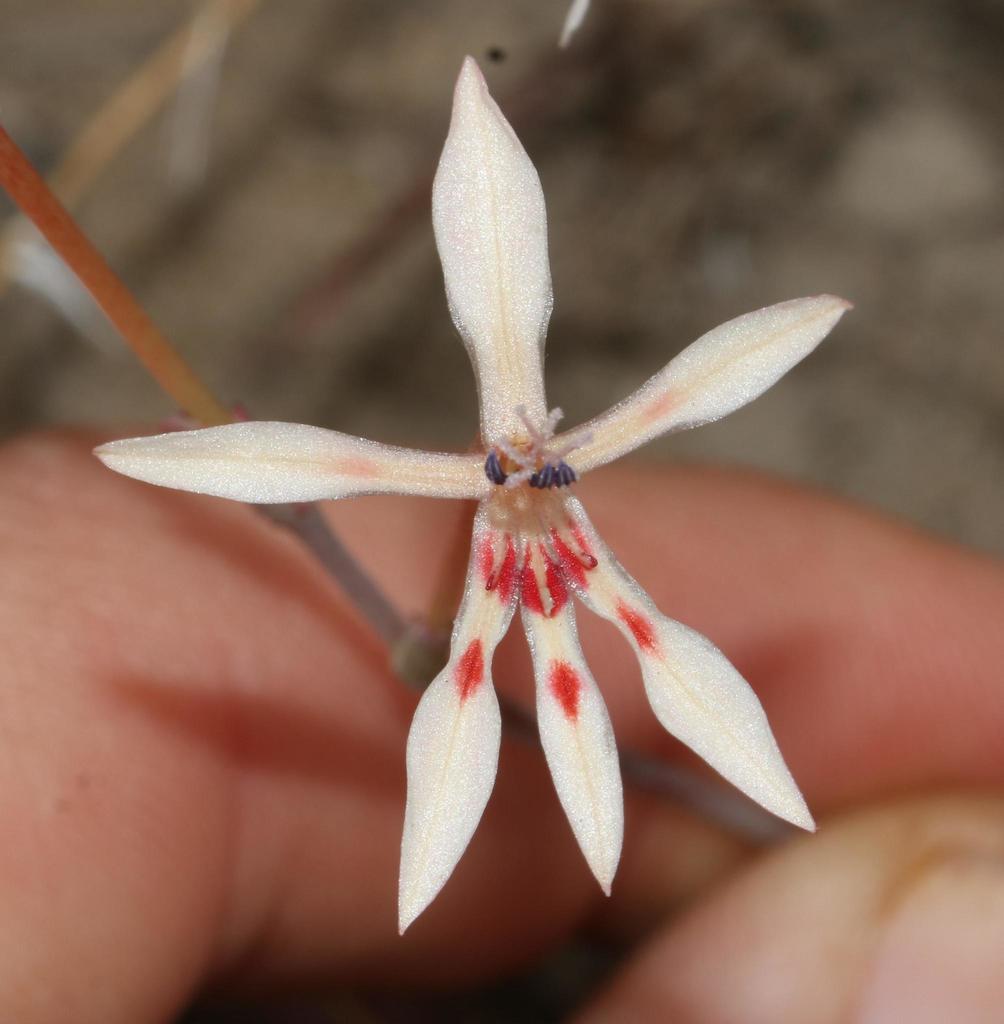
Long Kabong
Lapeirousia anceps
Lapeirousia anceps, also known as long kabong, is a species of geophyte in the genus Lapeirousia. It is native in the Cape provinces in South Africa.
From the article Lapeirousia anceps on Wikipedia (CC BY-SA), quoted section by section
Description
It grows between 100-300 millimeters long. The flowers colors range from white to light pink, and have red markings on the lower tepals. The flowers bloom in the spring. There are 5-7 ribbed lower leaves are usually longer and wider than the upper leaves. The upper leaves are crowded near the base.
Range & habitat
The range for Lapeirousia anceps goes from southern Namaqualand to Mossel Bay. It thrives in low rain, nutrient poor biomes. It is most commonly found in the months of October and November.
Wikipedia: “Distribution and habitat”
What it does
The long-proboscid fly (Moegistorhynchus longirostris), is a pollinator for the plant, using its long proboscid to get nectar.
== References ==
Wikipedia: “Ecology”
Where it lives
Recorded sightings
—
geo-referenced records in GBIF, from museums, herbaria and field observers.
Drag the globe to turn it. Dots are where records exist, not a range map; darker means more records.
In the stacks
Searching the stacks…
Every page naming Lapeirousia anceps in the Biodiversity Heritage Library →
This page is assembled live from iNaturalist, GBIF, Wikipedia, the Source Library and the Internet Archive. It is not yet part of the hand-edited codex. iNaturalist taxon 571306.