- Plants
- ›Vascular Plants
- ›flowering plants
- ›Dicots
- ›Mustards, Capers, and Allies
- ›mustard family
- ›Brassicoideae
- ›Arabodae
- ›Alysseae
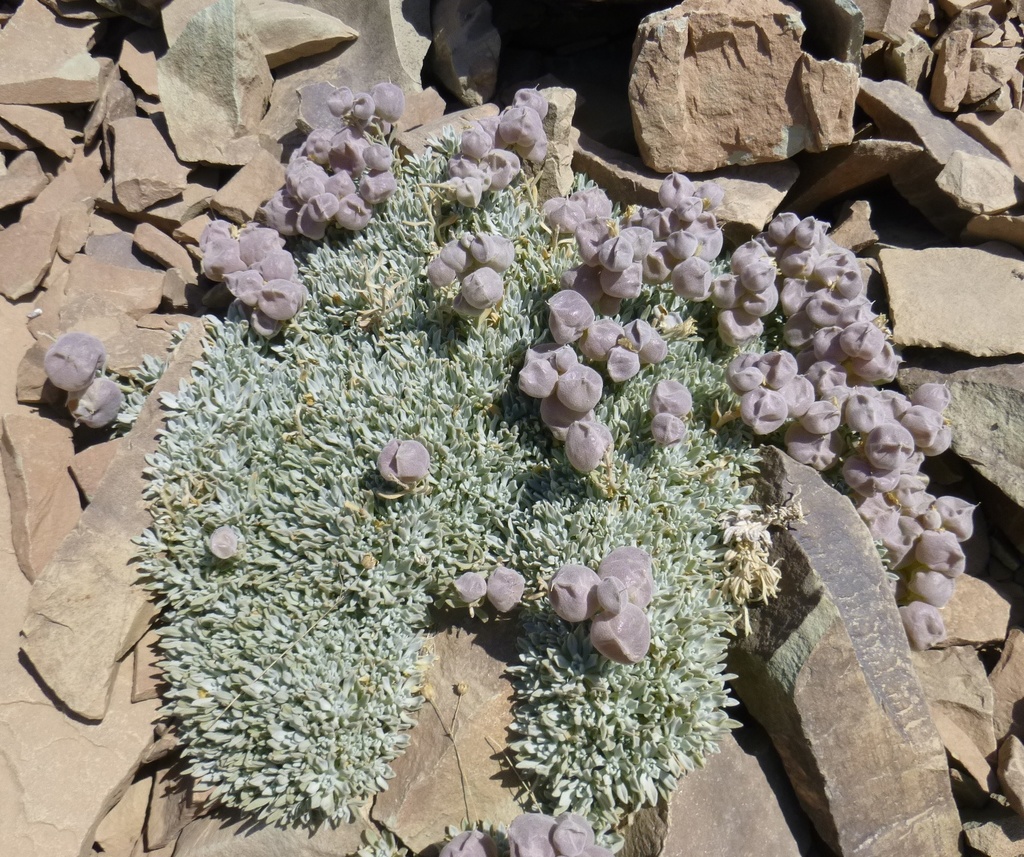
Physoptychis
Brassicaceae (/ˌbræsɪˈkeɪsii/) or Cruciferae (/kruːˈsɪfəri/) is a medium-sized and economically important family of flowering plants commonly known as the mustards, the crucifers, or the cabbage family. Most are herbaceous plants, some shrubs, with simple, although sometimes deeply incised, alternatingly set leaves without stipules or in leaf rosettes, with terminal inflorescences without bracts, containing flowers with four free sepals, four free alternating petals, two short and four longer free stamens, and a fruit with seeds in rows,...
2 branches of this genus, most-observed first
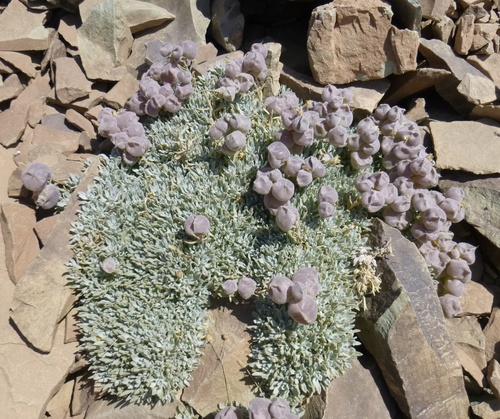
Physoptychis caspica
speciesPhysoptychis caspica
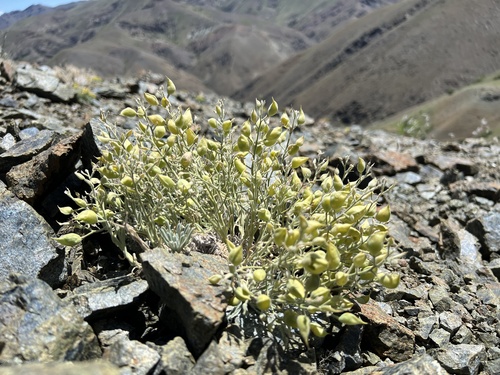
Physoptychis haussknechtii
speciesPhysoptychis haussknechtii
Where it lives
Recorded sightings
—
geo-referenced records in GBIF, from museums, herbaria and field observers.
Drag the globe to turn it. Dots are where records exist, not a range map; darker means more records.
In the stacks
Searching the stacks…
Every page naming Physoptychis in the Biodiversity Heritage Library →
This page is assembled live from iNaturalist, GBIF, Wikipedia, the Source Library and the Internet Archive. It is not yet part of the hand-edited codex. iNaturalist taxon 575976.