- Plants
- ›Vascular Plants
- ›flowering plants
- ›Dicots
- ›pinks, cactuses, and allies
- ›Amaranth family
- ›Amaranthoideae
- ›Amaranthus
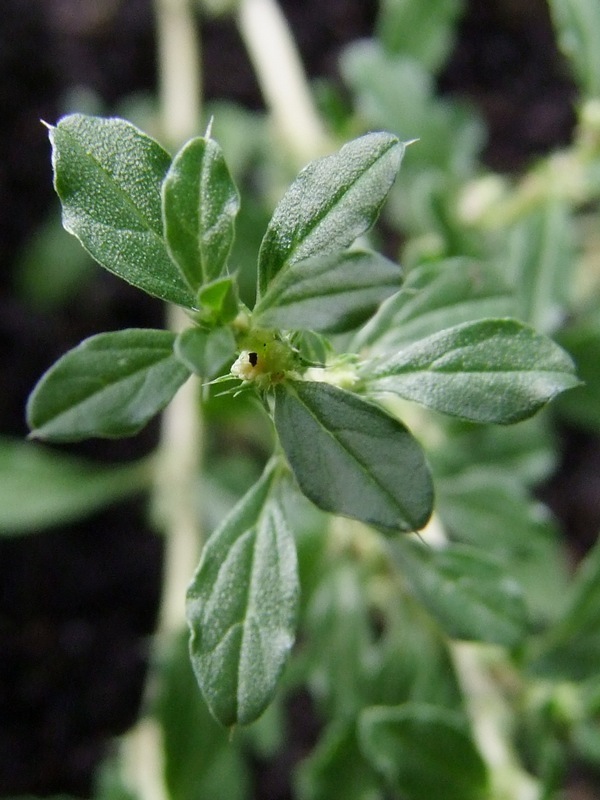
prostrate pigweed
Amaranthus albus
Amaranthus albus is an annual species of flowering plant native to the Americas. Its common names include common tumbleweed, tumble pigweed, tumbleweed, prostrate pigweed, pigweed amaranth, white amaranth and white pigweed.
From the article Amaranthus albus on Wikipedia (CC BY-SA), quoted section by section
Description
Amaranthus albus is an annual herb growing up to 50 centimetres (20 in) tall, forming many branches. Larger specimens turn into tumbleweeds when they die and dry out. The plant creates small, greenish flowers in clumps in the axils of the leaves. Male and female flowers are mixed together in the same clump.
Range & habitat
It is native to the tropical Americas, but is a widespread introduced species in other places, including Europe, Africa, and Australia.
Wikipedia: “Distribution and habitat”
At the table
In Cambodia, the leaves of the plant (which is known as phti sâ in the Khmer language) are used as pig feed, and are sometimes cooked and eaten by people.
Wikipedia: “Uses”
Where it lives
Recorded sightings
—
geo-referenced records in GBIF, from museums, herbaria and field observers.
Drag the globe to turn it. Dots are where records exist, not a range map; darker means more records.
In the stacks
Searching the stacks…
Every page naming Amaranthus albus in the Biodiversity Heritage Library →
This page is assembled live from iNaturalist, GBIF, Wikipedia, the Source Library and the Internet Archive. It is not yet part of the hand-edited codex. iNaturalist taxon 57893.