- Plants
- ›Vascular Plants
- ›flowering plants
- ›Dicots
- ›Legumes, Milkworts, and Allies
- ›Legumes
- ›Faboideae
- ›Hedysareae
- ›Alhagi
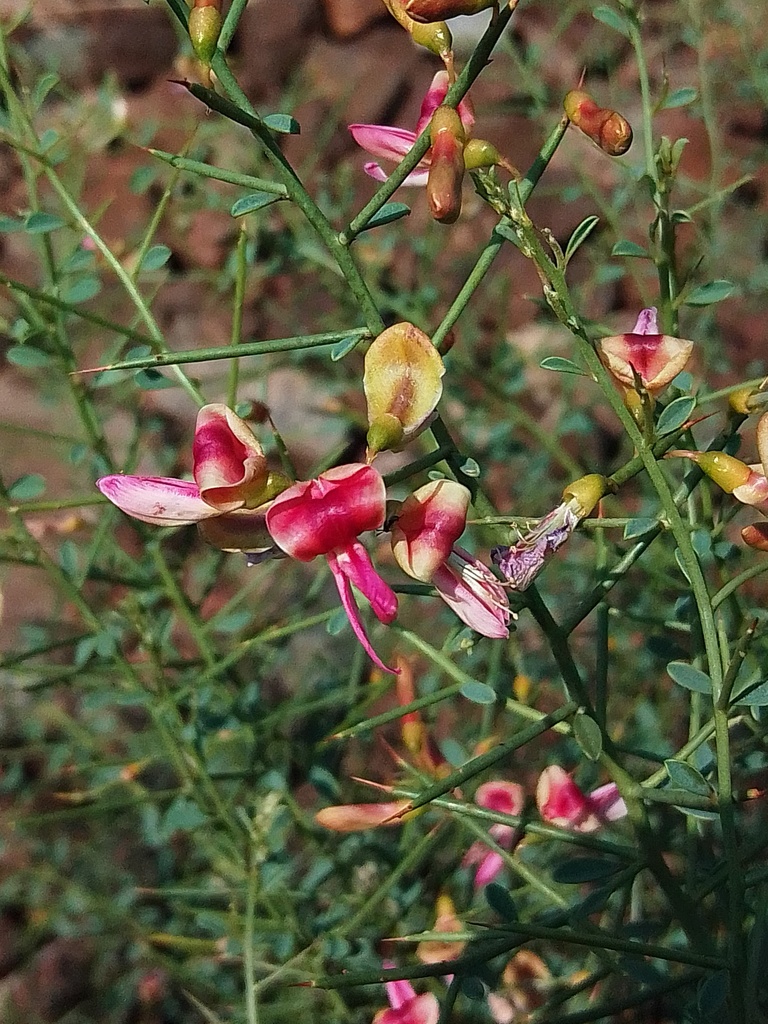
camelthorn
Alhagi pseudalhagi
Alhagi is a genus of Old World plants in the family Fabaceae. They are commonly called camelthorns or manna trees. There are four accepted species, which range from northern Africa and Greece through western and central Asia to India and northern China.
Alhagi species have proportionally the deepest root system of any plants - a 1 m (3 ft 3 in) high shrub may have a main root more than 15 m (49 ft) long; due to their deep root system Alhagi species are drought-avoiding plants that utilize ground water, adapting in that way perfectly to the hyper-arid environment.
From the article Alhagi on Wikipedia (CC BY-SA), quoted section by section
At the table
Alhagi in Persian is خارشُتُر (xâr-e šotor) which means "thistle of camels", as camels can eat it with its thorns. Its foliage is the habitat of a scale insect which produces Manna of hedysarum or Tarangabeen, which is used as a remedy for neonatal jaundice.
Wikipedia: “Uses in traditional medicine”
Where it lives
Recorded sightings
—
geo-referenced records in GBIF, from museums, herbaria and field observers.
Drag the globe to turn it. Dots are where records exist, not a range map; darker means more records.
In the stacks
Searching the stacks…
Every page naming Alhagi pseudalhagi in the Biodiversity Heritage Library →
This page is assembled live from iNaturalist, GBIF, Wikipedia, the Source Library and the Internet Archive. It is not yet part of the hand-edited codex. iNaturalist taxon 579570.