- Plants
- ›Vascular Plants
- ›flowering plants
- ›Dicots
- ›Gentians, Dogbanes, Madders, and Allies
- ›madder family
- ›Ixoroideae
- ›Gardenieae
- ›Catunaregam
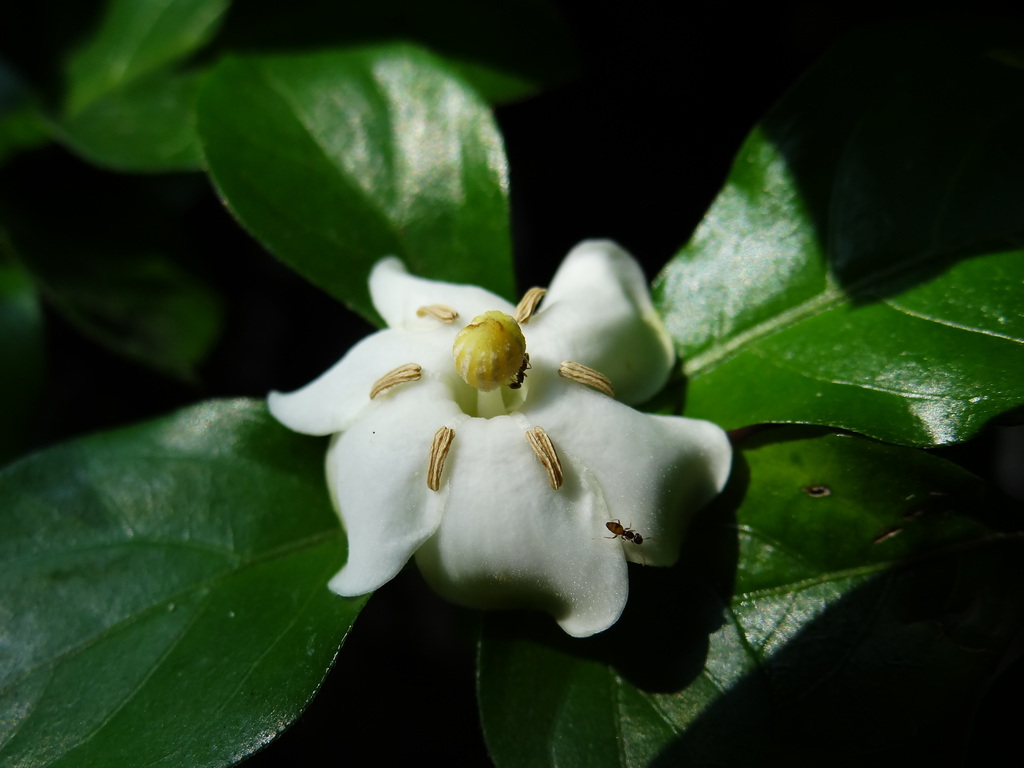
Mountain Pomegranate
Catunaregam spinosa
Catunaregam spinosa, the mountain pomegranate, is a flowering plant in the family Rubiaceae, found in South Asia and other Asian countries. Almost all parts of the plant are used as a traditional medicine in Ayurveda and fruits have been
reported to be used in medicine as well as in food. Various flavonoids, alkaloids, tannins, lignans, terpenoids, and volatile oils have been reported from this plant. Several studies have reported the modern pharmaceutical activities of C. spinosa such as piscicidal, molluscicidal, antioxidant, anti-inflammatory, antidiabetic, and antihyperlipidemic activities
From the article Catunaregam spinosa on Wikipedia (CC BY-SA), quoted section by section
In human culture
Known as "කුකුරුමාන් - kukuruman" in Sinhala,"karai"(காரை) in Tamil and "Madanphal or Mainphal" in Nepali. Known as "Manga/Manga Tree"(మంగ/మంగచెట్టు and పిండీతకము) in Telugu speaking regions of Andhra Pradesh and Telangana. మంగ used to be a commonly held first name for many women in this region. There were films like Mangamma Sapatham, Mangamma gari Manavaraalu, Mangamma gaari manavadu, ganga manga, and many local plays with the name మంగ given to the female protagonist. Known as "गेळफळ" (gelphal) or "पहील्या दिवशीचे फळ", translating as "first days flower" (as it appears white at first) and next day when it turns yellow it called "second days flower" (दुसर्या दिवशीचे फळ) in Marathi. The Lepcha of Sikkim call it rung gaong koong.
Wikipedia: “Culture”
Where it lives
Recorded sightings
—
geo-referenced records in GBIF, from museums, herbaria and field observers.
Drag the globe to turn it. Dots are where records exist, not a range map; darker means more records.
In the stacks
Searching the stacks…
Every page naming Catunaregam spinosa in the Biodiversity Heritage Library →
This page is assembled live from iNaturalist, GBIF, Wikipedia, the Source Library and the Internet Archive. It is not yet part of the hand-edited codex. iNaturalist taxon 581804.