- Plants
- ›Vascular Plants
- ›flowering plants
- ›Dicots
- ›dogwoods, hydrangeas, and allies
- ›Dogwood family
- ›Cornus
- ›Kraniopsis
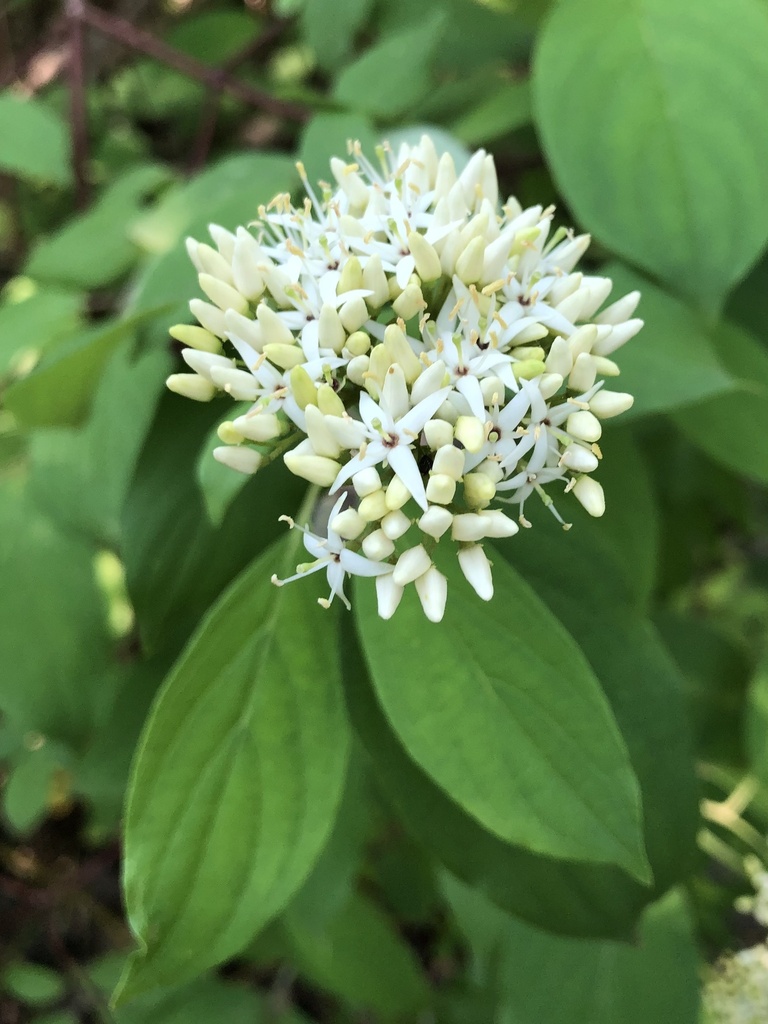
blue-fruited dogwood
Cornus obliqua
Cornus obliqua, the blue-fruited dogwood, silky dogwood, or pale dogwood, is a flowering shrub of eastern North America in the dogwood family, Cornaceae. It is sometimes considered a subspecies of Cornus amomum, which is also known as silky dogwood. It was first described in 1820 by Constantine Samuel Rafinesque. It is in the subgenus Kraniopsis.
From the article Cornus obliqua on Wikipedia (CC BY-SA), quoted section by section
Description
Cornus obliqua is a medium to large shrub that typically grows to a height of 6 to 12 feet (1.8 to 3.7 meters) and has a similar spread. The plant is characterized by its slender, arching stems and oval-shaped leaves. The leaves are simple, opposite, and arranged in an alternate pattern on the stems. They are dark green in color and turn shades of red and purple in the fall, creating a beautiful autumn display. The most distinctive feature of Cornus obliqua is its small, creamy white flowers. These flowers are borne in flat-topped clusters, known as cymes, and appear in late spring to early summer. The flowers are attractive to pollinators, particularly butterflies and native bees. Following the flowering period, the plant produces clusters of small, bluish-black drupes that provide food for various wildlife species, including birds and small mammals.
Range & habitat
Silky dogwood is native to a wide range of regions in eastern North America, spanning from eastern Canada to Florida and west to Texas. It can be found in various types of wetlands, including swamps, bogs, and riparian areas. Cornus obliqua is well adapted to wet conditions and often serves as a valuable species for stabilizing soil along streambanks and preventing erosion.
Wikipedia: “Distribution and habitat”
How it is grown
Cornus obliqua is often employed in landscaping for its aesthetic appeal. It is utilized in a variety of settings, including naturalized plantings, rain gardens, and wildlife gardens. Its striking flowers, colorful foliage, and attractive fruit make it a popular choice for adding visual interest to gardens and landscapes. The plant is relatively low maintenance, making it suitable for both amateur and experienced gardeners.
Wikipedia: “Landscaping and horticultural use”
Where it lives
Recorded sightings
—
geo-referenced records in GBIF, from museums, herbaria and field observers.
Drag the globe to turn it. Dots are where records exist, not a range map; darker means more records.
In the stacks
Searching the stacks…
Every page naming Cornus obliqua in the Biodiversity Heritage Library →
This page is assembled live from iNaturalist, GBIF, Wikipedia, the Source Library and the Internet Archive. It is not yet part of the hand-edited codex. iNaturalist taxon 58748.