- Plants
- ›Vascular Plants
- ›flowering plants
- ›Dicots
- ›carrots, ivies, and allies
- ›carrot family
- ›Apioideae
- ›Chervils, Carrots, Hedgeparsleys and Allies
- ›Scandicinae
- ›Osmorhiza
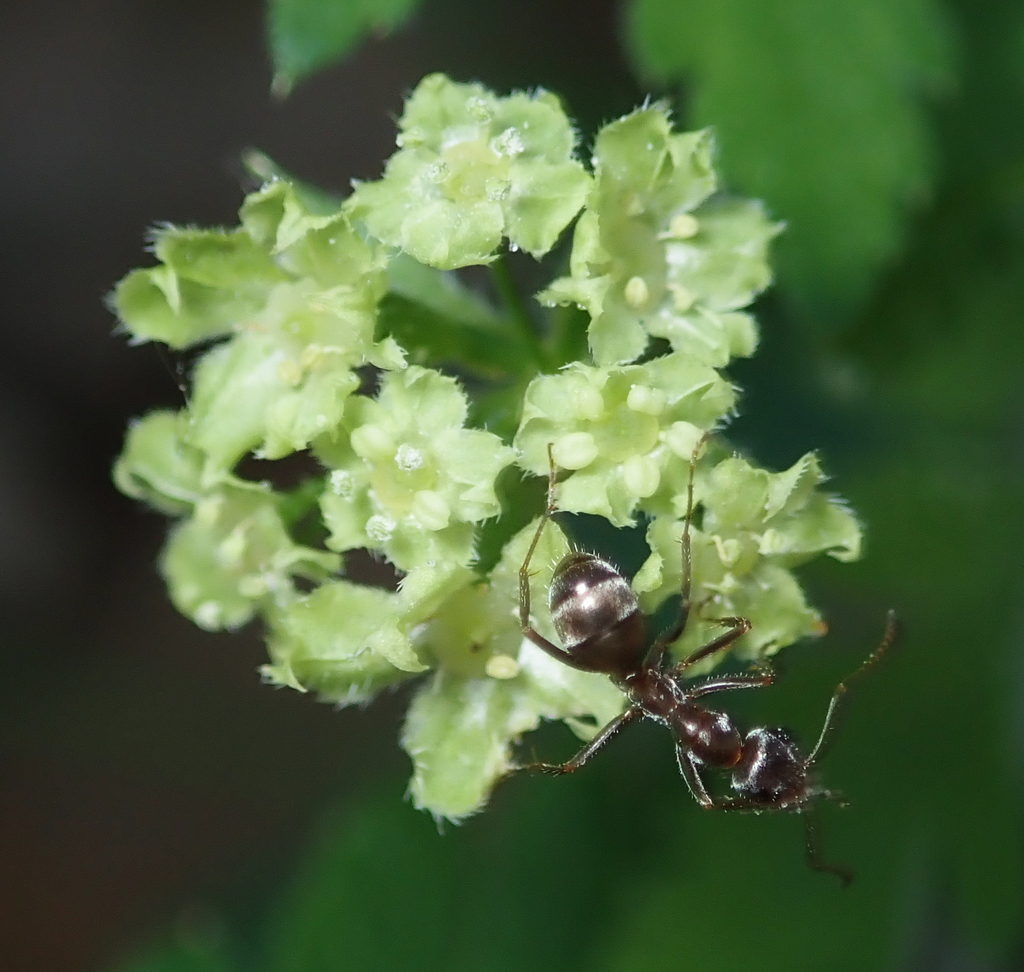
California sweet cicely
Osmorhiza brachypoda
Osmorhiza brachypoda is a species of flowering plant in the family Apiaceae known by the common name California sweetcicely.
From the article Osmorhiza brachypoda on Wikipedia (CC BY-SA), quoted section by section
Description
Osmorhiza brachypoda is a hairy, aromatic perennial herb growing 30–80 centimetres (12–31 in) tall. The green leaves have blades up to 20 centimeters long which are divided into toothed or lobed leaflets. The blade is borne on a long petiole. The inflorescence is a compound umbel of many tiny greenish yellow flowers at the tip of a stemlike peduncle. The narrow, elongated fruit is ribbed and bristly, measuring up to 2 centimeters long.
Range & habitat
It is native to mountainous and wooded areas of California and Arizona, at elevations from 200–2,000 meters (660–6,560 ft). Habitats include chaparral and woodlands and coniferous forests. It is found in the Southern California Coast Ranges, Transverse Ranges, Peninsular Ranges, and the central and southern Sierra Nevada foothills.
Wikipedia: “Distribution and habitat”
What it does
This is the only known host plant for the California endemic moth Greya suffusca.
Wikipedia: “Ecology”
Where it lives
Recorded sightings
—
geo-referenced records in GBIF, from museums, herbaria and field observers.
Drag the globe to turn it. Dots are where records exist, not a range map; darker means more records.
In the stacks
Searching the stacks…
Every page naming Osmorhiza brachypoda in the Biodiversity Heritage Library →
This page is assembled live from iNaturalist, GBIF, Wikipedia, the Source Library and the Internet Archive. It is not yet part of the hand-edited codex. iNaturalist taxon 58793.