- Plants
- ›Vascular Plants
- ›flowering plants
- ›Dicots
- ›Sunflowers, Bellflowers, Fanflowers, and Allies
- ›Sunflowers, Daisies, Asters, and Allies
- ›Asteroideae
- ›Chamomiles, yarrows, and allies
- ›Cotulinae
- ›Cotula
- ›Coronopifolia
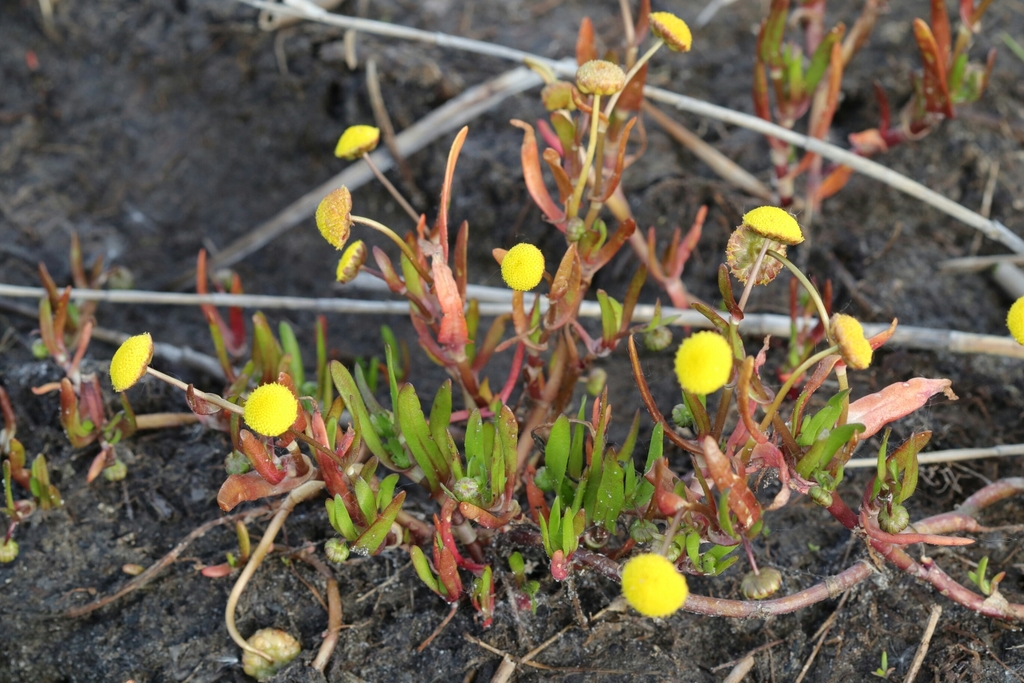
Brass Buttons
Cotula coronopifolia
The small marsh flower Cotula coronopifolia bears the common names brass buttons, golden buttons, and buttonweed. The flower heads are bright yellow discoid heads that look like thick buttons. Individual plants spread stems along the ground and send up the knobby flowers at intervals. The plant is native to southern Africa, but it has been introduced to other parts of the world (Europe, North + South America, etc.).
From the article Cotula coronopifolia on Wikipedia (CC BY-SA), quoted section by section
Description
The flower heads are bright yellow discoid heads that look like thick buttons. Individual plants spread stems along the ground and send up the knobby flowers at intervals. The plant is native to southern Africa, but it has been introduced to other parts of the world (Europe, North + South America, etc.). Brass buttons are common plants that occupy a specialized ecological niche. They prefer muddy, anoxic wetlands and brackish water. They are very salt-tolerant. The plant has fat, fleshy leaves that store water during times of saline inundation. The reddish stems and green, blade-shaped leaves are coated with a shiny cuticle to retain moisture. It can also be found in the wetter patches in vernal pool ecosystems. Brass buttons are common along beaches, salt marshes, and estuaries from California to Washington. It has been present in the British Isles since the late 1800s, especially on the Cheshire coast and is considered a neophyte naturalised plant. Although brass buttons is known to be invasive, its spread appears to be relatively slow. Its California Invasive Plant Council Inventory rating is "limited", that is, "invasive but their ecological impacts are minor on a statewide level or there was not enough information to justify a higher score. Their reproductive biology and other attributes result in low to moderate rates of invasiveness. …
Where it lives
Recorded sightings
—
geo-referenced records in GBIF, from museums, herbaria and field observers.
Drag the globe to turn it. Dots are where records exist, not a range map; darker means more records.
In the stacks
Searching the stacks…
Every page naming Cotula coronopifolia in the Biodiversity Heritage Library →
This page is assembled live from iNaturalist, GBIF, Wikipedia, the Source Library and the Internet Archive. It is not yet part of the hand-edited codex. iNaturalist taxon 58812.