- Plants
- ›Vascular Plants
- ›flowering plants
- ›Dicots
- ›Legumes, Milkworts, and Allies
- ›Legumes
- ›Acacias, Mimosas, Mesquites, and Allies
- ›Senegalia
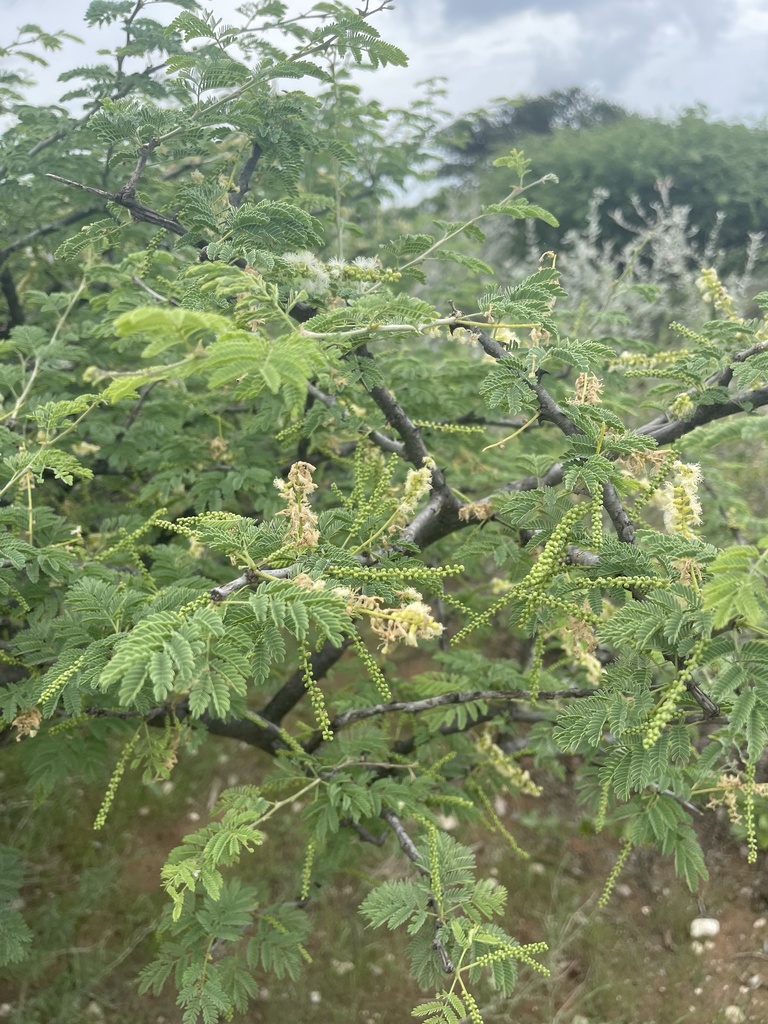
Gum Acacia
Senegalia senegal
Senegalia senegal (also known as Acacia senegal) is a small thorny deciduous tree from the genus Senegalia, which is known by several common names, including gum acacia, gum arabic tree, Sudan gum and Sudan gum arabic. In parts of India, it is known as kher, khor, or kumatiya. It is native to semi-desert regions of Sub-Saharan Africa, as well as Oman, Pakistan, and west coastal India. It grows to a height of 5–12 metres (16-40'), with a trunk up to 30 cm (1') in diameter. Sudan is the source of the world's highest quality gum arabic, known locally as hashab gum in contrast to the related, but inferior, gum arabic from red acacia, known as talah gum.
From the article Senegalia senegal on Wikipedia (CC BY-SA), quoted section by section
At the table
It has been reportedly used for its astringent properties, to treat bleeding, bronchitis, cough, diarrhea, dysentery, catarrh, gonorrhea, leprosy, typhoid fever and upper respiratory tract infections.
Wikipedia: “Traditional uses”
How it is grown
Like other legume species, S. senegal fixes nitrogen within Rhizobia or nitrogen-fixing bacteria living in root nodules. This nitrogen fixation enriches the poor soils where it is grown, allowing for the rotation of other crops in naturally nutrient-poor regions.
Wikipedia: “Agriculture”
Where it lives
Recorded sightings
—
geo-referenced records in GBIF, from museums, herbaria and field observers.
Drag the globe to turn it. Dots are where records exist, not a range map; darker means more records.
In the stacks
Searching the stacks…
Every page naming Senegalia senegal in the Biodiversity Heritage Library →
This page is assembled live from iNaturalist, GBIF, Wikipedia, the Source Library and the Internet Archive. It is not yet part of the hand-edited codex. iNaturalist taxon 594430.