- Plants
- ›Vascular Plants
- ›flowering plants
- ›Dicots
- ›Buttercups, Poppies, and Allies
- ›buttercup family
- ›Anemones, buttercups, larkspurs and allies
- ›globeflowers and pheasant's eyes
- ›Trollius
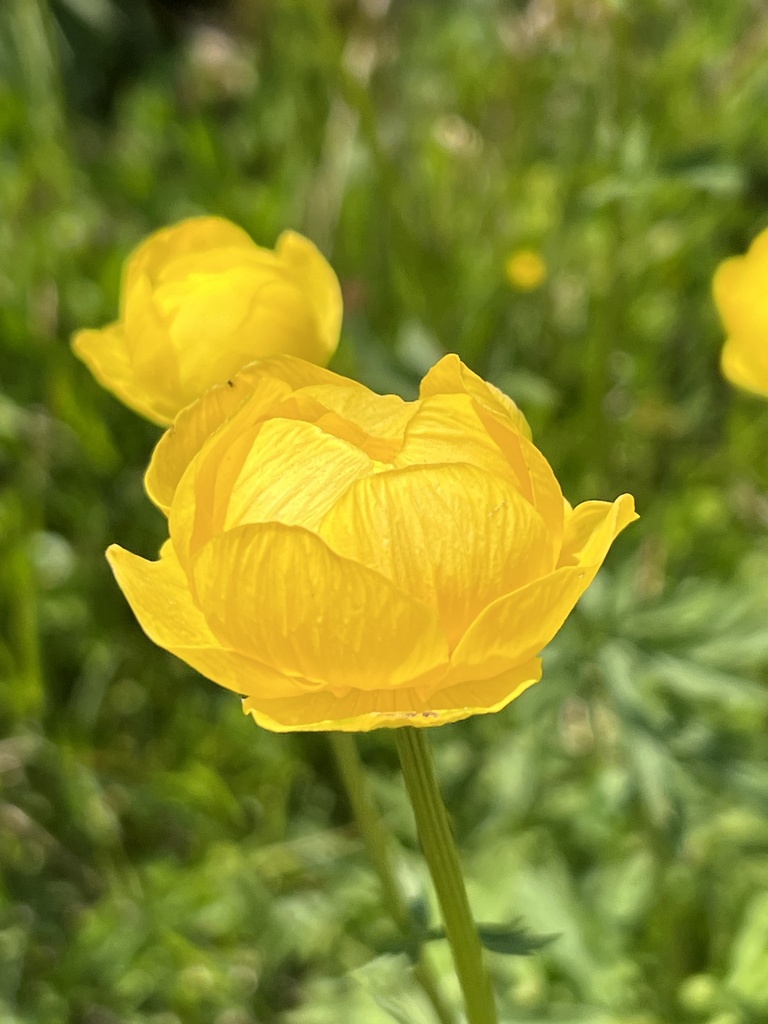
European Globeflower
Trollius europaeus
Trollius europaeus, the globeflower, is a perennial flowering plant of the family Ranunculaceae. The plant is native to Europe and Western Asia and is a protected species in Russia and Bulgaria.
In Udmurtia, this plant is one of the national symbols of the republic, with many different objects named after it.
From the article Trollius europaeus on Wikipedia (CC BY-SA), quoted section by section
Description
Trollius europaeus grows up to 60 cm (24 in) high with a bright yellow, globe-shaped flower up to 3 cm (1.2 in) across. The colourful petaloid sepals hide 5–15 inconspicuous true petals with nectaries at their base and, typically for the family, a large number of stamens. Each flower produces a large number of wrinkled follicles. The leaves are deeply divided into 3–5 toothed lobes. It grows in damp ground in shady areas, woodland and scrub, flowering between June and August. This species is pollinated mostly by seed-eating flies belonging to the genus Chiastocheta (Anthomyiidae).
Where it lives
Recorded sightings
—
geo-referenced records in GBIF, from museums, herbaria and field observers.
Drag the globe to turn it. Dots are where records exist, not a range map; darker means more records.
In the old herbals & bestiaries

In the stacks
Searching the stacks…
Every page naming Trollius europaeus in the Biodiversity Heritage Library →
This page is assembled live from iNaturalist, GBIF, Wikipedia, the Source Library and the Internet Archive. It is not yet part of the hand-edited codex. iNaturalist taxon 59552.