- Plants
- ›Vascular Plants
- ›flowering plants
- ›Dicots
- ›Woodsorrels, Quandongs, and Allies
- ›quandong family
- ›Sloanea
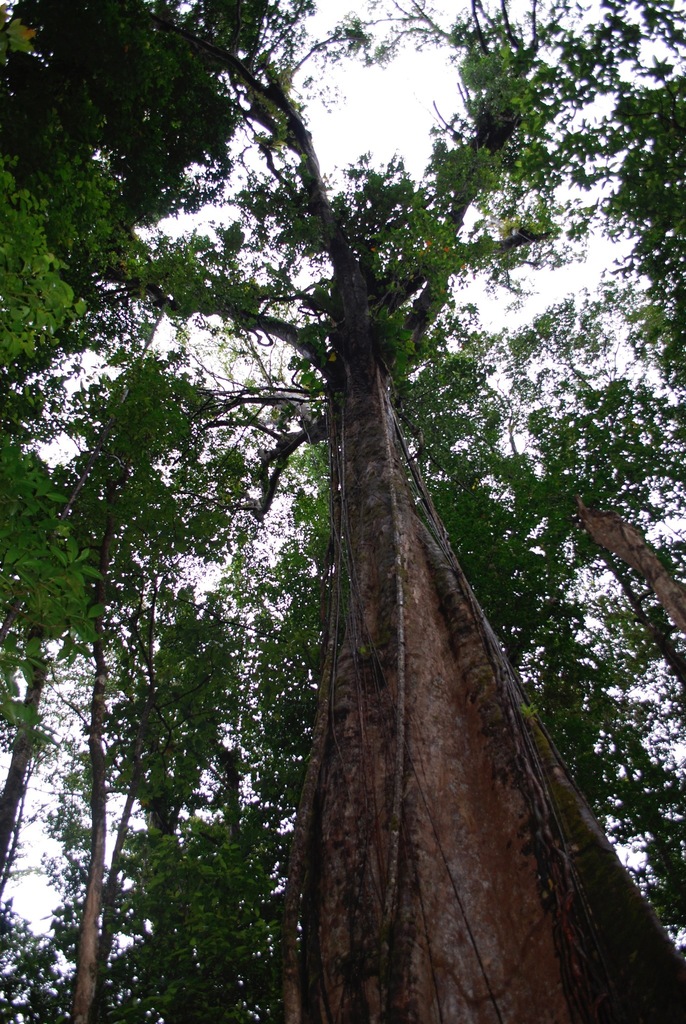
Sloanea caribaea
Sloanea caribaea is a tree native to the eastern Caribbean and northern South America. Its local names include acomat boucan (in Guadeloupe and Martinique), chataignier (in Saint Lucia and Saint Vincent), and chatannyé ti-fèy or chataignier 'ti feuille (in Dominica).
From the article Sloanea caribaea on Wikipedia (CC BY-SA), quoted section by section
Description
Sloanea caribaea is a very large tree, reaching heights of over 40 m (131 ft) tall. Its trunk's diameter can reach up to 2–4.9 m (6.5–16 ft). It has tall and broad buttress roots. Its bark is relatively smooth and brownish in color, and starts to peel off into thin strips over time. Sloanea caribaea is native to the Leeward Islands, the Windward Islands, Trinidad and Tobago, Colombia, Venezuela, and northern Brazil. It is the most common Sloanea species on Dominica, St. Lucia, St. Vincent, and Grenada.
What it does
On St. Lucia, Sloanea caribaea are habitats for wildlife such as Antillean fruit-eating bats and other Brachyphylla. On Dominica, the trees provide nesting areas for the Sisserou Parrot (Amazona imperialis) and Jaco Parrot (Amazona arausiaca).
Wikipedia: “Ecology”
Where it lives
Recorded sightings
—
geo-referenced records in GBIF, from museums, herbaria and field observers.
Drag the globe to turn it. Dots are where records exist, not a range map; darker means more records.
In the stacks
Searching the stacks…
Every page naming Sloanea caribaea in the Biodiversity Heritage Library →
This page is assembled live from iNaturalist, GBIF, Wikipedia, the Source Library and the Internet Archive. It is not yet part of the hand-edited codex. iNaturalist taxon 597396.