- Animals
- ›Arthropods
- ›Crustaceans
- ›Typical Crustaceans
- ›Malacostracans
- ›Decapods, Isopods, and allies
- ›Amphipods, Isopods, and Allies
- ›Amphipods
- ›Senticaudata
- ›Gammarida
- ›Gammaridira
- ›Gammaroidea
- ›Gammaridae
- ›Gammarus
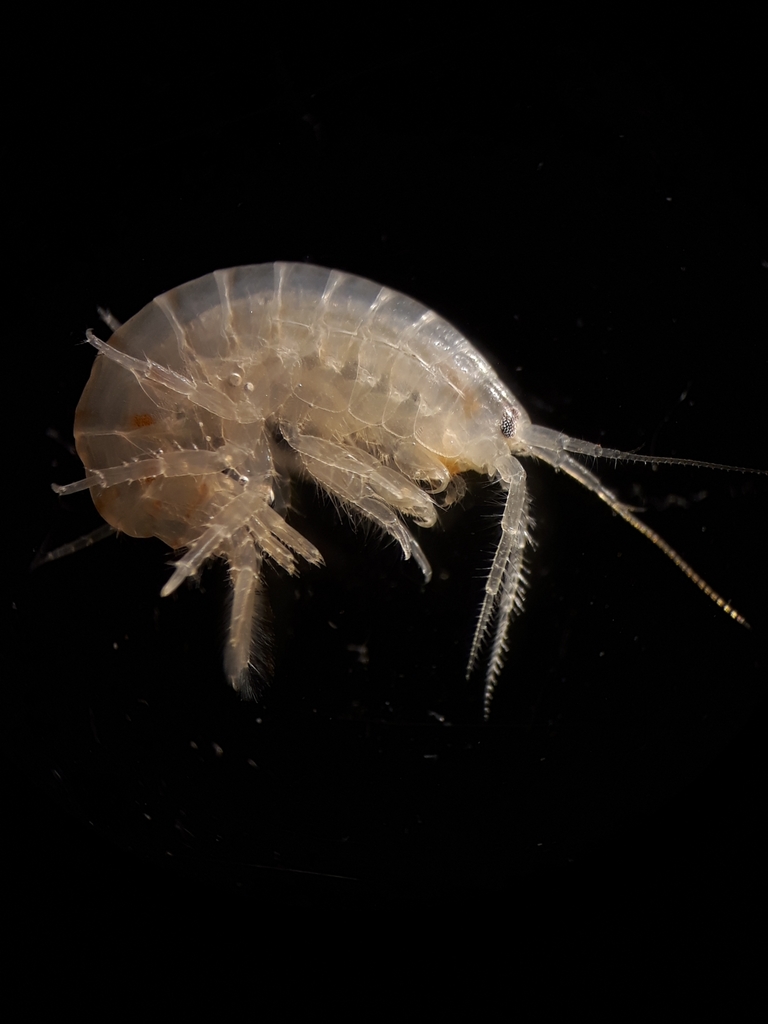
Gammarus pulex
Gammarus pulex is a species of crustacean found across much of Europe. It is a benthic (bottom-dwelling) amphipod, typically measuring 10–20 mm in length, that is greyish in color and lives in freshwater habitats.
From the article Gammarus pulex on Wikipedia (CC BY-SA), quoted section by section
Description
Adults of the species are generally a translucent gray color with brown or green markings which vary with habitat, age, and diet. An example of this includes G. pulex individuals that live in caves; these are affected by their environment and have much less coloration than those at the surface. Infection by the endo-parasitic worm P. laevis is especially prevalent in this species and is indicated by a bright orange color in their gills.
Sexual dimorphism. Gammarus pulex display sexual dimorphism at maturity. Males of the species grow to 21 mm (0.83 in) while females grow to about to 14 mm (0.55 in). Beyond size, males also possess a larger second gnathopod, which is a defining feature of mature males.
Anatomy. G. pulex has compound eyes, two pairs of antennae, and seven pairs of thoracic limbs. The first two thoracic limbs on the amphipod are called gnathopods for feeding and mating. G. pulex has gills on the abdomen to breathe, and, as a crustacean, has an open circulatory and nervous system. They are able to sense and respond to light, vibrations, and chemical cues from the environment.
Taxonomic history. Gammarus pulex was first described by Linnaeus in 1758 in his tenth edition of Systema Naturae, and is the type species for the genus Gammarus. Linnaeus was originally called the species Cancer pulex, using a vague and extremely general description of amphipods. …
Range & habitat
Gammarus pulex is found in most of Europe from the Atlantic to the Volga River drainage. It is native mostly to Western and Central Europe, but has been introduced to freshwater ecosystems outside its native range by human intervention, such as in parts of Ireland where it is replacing the native Gammarus duebeni. However, it has not been found in areas of northern Europe such as Norway and Scotland due to geographical barriers and competition.
Habitat. The primary habitat for Gammarus pulex is running freshwater systems with high oxygen levels, such as streams, rivers, springs, and sometimes lakes with in and outflow currents. Its habitat selection is influenced by the water flow, temperature, and presence of shelter. G. pulex prefers stoney substrates to allow for better camouflage from predators. During the day, individuals occupy more deep and shaded areas, while at night they tend to forage in the open areas.
Abundance. Gammarus pulex is widespread and abundant, expanding beyond its natural range and often outcompeting and displacing other native Gammarus species, such as is the case in northern Ireland with the native Gammarus duebeni. These invasions often occur through human intervention in the environment. While G. pulex remains abundant, local populations can decline due to their sensitivity to water quality and pollution. …
Wikipedia: “Distribution”
What it does
Gammarus pulex reproduce sexually, typically producing several broods per year depending on water temperature and food availability. Mating and fertilization occur immediately after the female molts and releases her eggs. Before mating, males will grasp females in a "precopulatory" position for hours or days, guarding her from other males. Females then carry developing embryos in a ventral brood pouch until they hatch into their juvenile forms. G. pulex usually lives about a year in temperate climates, but can survive through up to two winters.
Diet. Gammarus pulex is a detritivore, feeding on dead organic material. In natural environment, it primarily feeds on decomposing leaves and microorganisms such as fungi and bacteria. Specifically, G. pulex has been found to prefers conditioned leaves, leaves that have been colonized by microorganisms, likely due to improved the nutritional quality and digestibility. Juvenile G. pulex engage in coprophagy, as they feed on adult feces until they have matured enough to eat the conditioned leaves. This, along with the fact that they break down detritus into more accessible forms for the wider aquatic ecosystem, demonstrates the contributions G. pulex makes to nutrient cycling within their environments. In a laboratory setting with scarce resources, G. pulex also shown evidence of cannibalism. The feeding rates of G. …
Wikipedia: “Life cycle”
Where it lives
Recorded sightings
—
geo-referenced records in GBIF, from museums, herbaria and field observers.
Drag the globe to turn it. Dots are where records exist, not a range map; darker means more records.
In the stacks
Searching the stacks…
Every page naming Gammarus pulex in the Biodiversity Heritage Library →
This page is assembled live from iNaturalist, GBIF, Wikipedia, the Source Library and the Internet Archive. It is not yet part of the hand-edited codex. iNaturalist taxon 59805.