- Fungi Including Lichens
- ›Ascomycete Fungi
- ›Sac Fungi and Lichens
- ›Common Lichens
- ›rocktripes, bloodspot lichens, and allies
- ›rocktripes, bloodspot lichens, and allies
- ›Rocktripes, Toadskin Lichens, and allies
- ›Umbilicaria
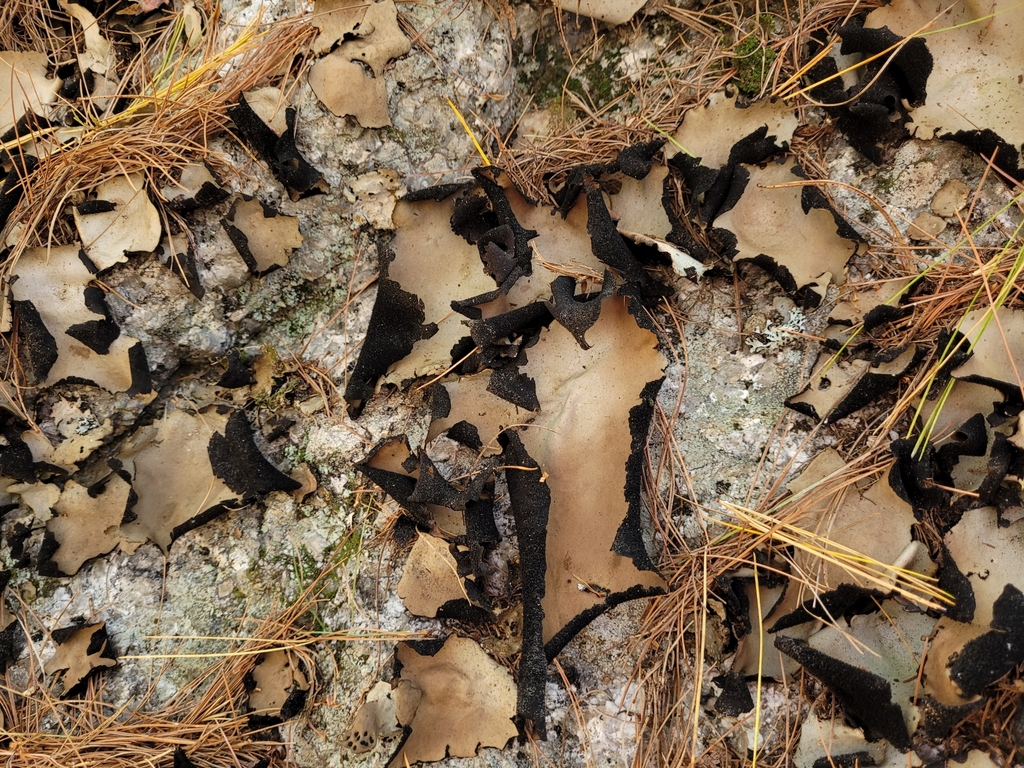
Smooth Rock Tripe
Umbilicaria mammulata
Umbilicaria mammulata, or smooth rock tripe, is a foliose lichen found on boulders and rock walls. It is one of the largest known lichens, typically growing to a size of 4 to 15 cm (1.6 to 5.9 in).
From the article Umbilicaria mammulata on Wikipedia (CC BY-SA), quoted section by section
Description
Umbilicaria mammulata is among the largest lichens in the world. The thallus of U. mammulata is usually 4 to 15 cm (1.6 to 5.9 in) in diameter, but specimens have been known to reach 63 cm (2.07 ft) in the Smoky Mountains of Tennessee. The smooth upper surface is a reddish-brown to grayish-brown color and the lower surface is pitch black.
What it does
This species is found on boulders and steep rock walls in forests and around lakes. It grows on several types of rock substrate, such as acidic rock, sandstone, quartz, and granitic rock. Like most lichens, U. mammulata is sensitive to air and water quality. If conditions are optimal, seeing rocks or cliffs covered in dinner plate-sized thalli is not unusual. However, it has been suggested that U. mammulata is not as sensitive to pH and water quality as it is to the frequency and duration of precipitation.
Wikipedia: “Ecology”
Where it lives
Recorded sightings
—
geo-referenced records in GBIF, from museums, herbaria and field observers.
Drag the globe to turn it. Dots are where records exist, not a range map; darker means more records.
In the stacks
Searching the stacks…
Every page naming Umbilicaria mammulata in the Biodiversity Heritage Library →
This page is assembled live from iNaturalist, GBIF, Wikipedia, the Source Library and the Internet Archive. It is not yet part of the hand-edited codex. iNaturalist taxon 59954.