- Plants
- ›Vascular Plants
- ›flowering plants
- ›Dicots
- ›sandalwoods, mistletoes, and allies
- ›sandalwood family
- ›Comandra
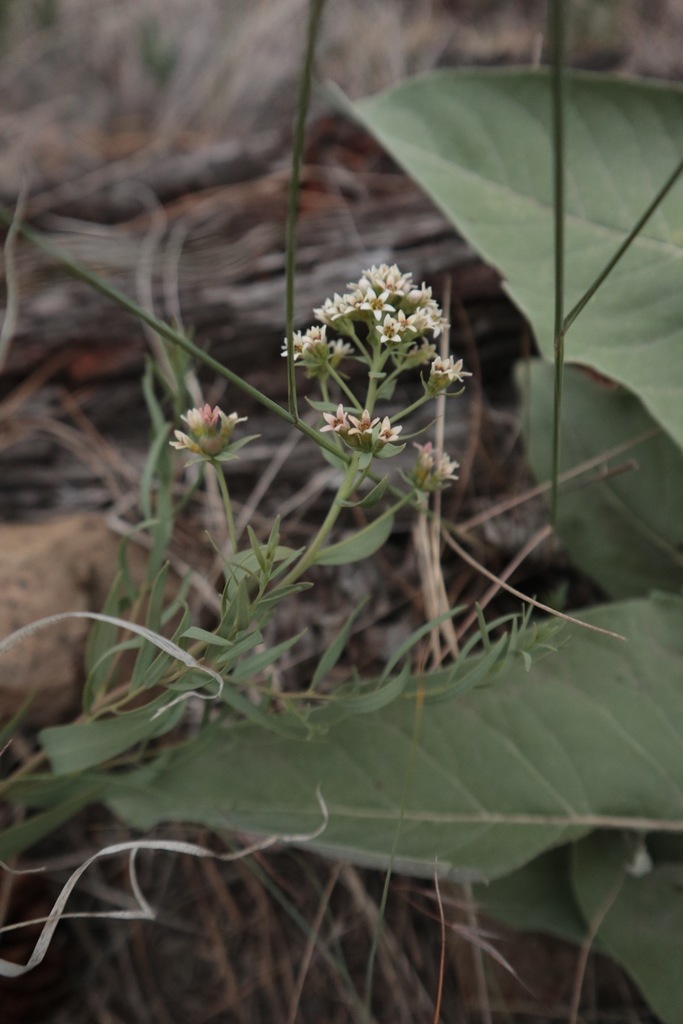
bastard toadflax
Comandra umbellata
Comandra is a monotypic genus containing the single species Comandra umbellata. Its common names include bastard toadflax, umbellate bastard toadflax, and common comandra. The plant has a disjunct distribution; its four subspecies occur in North America and the Mediterranean.
From the article Comandra on Wikipedia (CC BY-SA), quoted section by section
Description
Comandra is a perennial herb growing from rhizomes, often in drier or semi-sandy soils, to about 8 to 34 centimetres (3+1⁄4 to 13+1⁄2 in) tall. The leaves are up to 3.3 cm long and are alternately arranged. Growing in flat or roundish clusters, the flowers lack petals, but have five greenish-white sepals. The flowers contain both male and female structures, and are insect-pollinated. The fruit is a drupe 4–6 mm thick. Subspecies include:
Comandra umbellata subsp. californica – California bastard toadflax Comandra umbellata subsp. pallida – pale bastard toadflax, pine bastard toadflax Comandra umbellata subsp. umbellata Comandra umbellata is hemiparasitic; it is not holoparasitic as it obtains some nutrition through photosynthesis. It has a wide host range, parasitizing over 200 known plant species. These include: Acer, Antennaria, Aster, Betula, Carex, Solidago, Fragaria, Populus, Quercus, Rosa, Rubus, Vaccinium and some grasses. In Europe the common English name bastard toadflax is used for plants of the genus Thesium.
At the table
A decoction of the plant parts was made by the Navajo people for narcotic and other medicinal usage. In times of food shortage, the berries were used by Native Americans as a food source, and though small, they have a sweet taste. The fruit may contain toxic selenium if grown in soil rich in the element.
== References ==
Wikipedia: “Uses”
Where it lives
Recorded sightings
—
geo-referenced records in GBIF, from museums, herbaria and field observers.
Drag the globe to turn it. Dots are where records exist, not a range map; darker means more records.
In the stacks
Searching the stacks…
Every page naming Comandra umbellata in the Biodiversity Heritage Library →
This page is assembled live from iNaturalist, GBIF, Wikipedia, the Source Library and the Internet Archive. It is not yet part of the hand-edited codex. iNaturalist taxon 59991.