- Plants
- ›Vascular Plants
- ›flowering plants
- ›monocots
- ›lilies, supplejacks, and allies
- ›lily family
- ›true lily subfamily
- ›true lilies and allies
- ›Erythronium
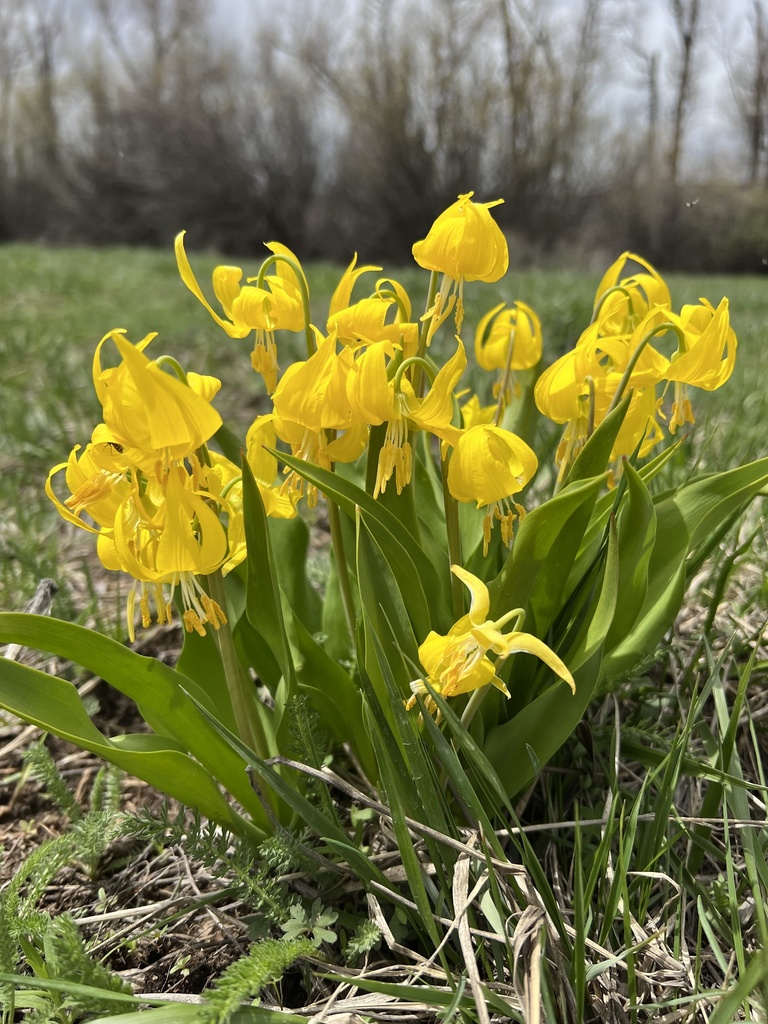
Glacier Lily
Erythronium grandiflorum
Erythronium grandiflorum is a North American species of plants in the lily family. It is known by several common names, including yellow avalanche lily, glacier lily, and dogtooth fawn lily. The Ktunaxa name for glacier lily is maxa.
From the article Erythronium grandiflorum on Wikipedia (CC BY-SA), quoted section by section
Description
Erythronium grandiflorum grows from a deep bulb (or corm) which is 3 to 5 centimeters wide. Its two green leaves are wavy-edged and up to 20 centimeters long. The stalk may reach 30 centimeters tall and bears one to three showy flowers. Each flower has bright lemon yellow petals, white stamens with large white to yellow to red anthers, and a white style.
Range & habitat
It is native to western North America from British Columbia and Alberta south to New Mexico and California, though it has not been reported from Arizona or Nevada. It can be found in subalpine mountain meadows, slopes, and clearings.
Wikipedia: “Distribution and habitat”
What it does
The flower is pollinated by bumblebees and other bees. The bulbs are an important and preferred food of the grizzly bear. Mule deer readily eat the foliage. After hummingbirds migrate 1,500 miles each year from Mexico to the Rocky Mountains of Colorado they collect energy from the nectar of the lilies, however, rising temperatures from global warming cause the flowers to bloom, and also to wither, earlier each year. As of 2023, the danger is foreseen that in 20 years the birds may arrive from their long migration to find their usually reliable nourishment unavailable because of premature withering.
Wikipedia: “Ecology”
At the table
The bulbs were traditionally an important food source for a number of western North American Indigenous Nations. They were harvested when the plants were in fruit and often pit cooked, then dried and stored. They can also be boiled.
Wikipedia: “Uses”
Where it lives
Recorded sightings
—
geo-referenced records in GBIF, from museums, herbaria and field observers.
Drag the globe to turn it. Dots are where records exist, not a range map; darker means more records.
In the stacks
Searching the stacks…
Every page naming Erythronium grandiflorum in the Biodiversity Heritage Library →
This page is assembled live from iNaturalist, GBIF, Wikipedia, the Source Library and the Internet Archive. It is not yet part of the hand-edited codex. iNaturalist taxon 60496.