- Plants
- ›Vascular Plants
- ›flowering plants
- ›Dicots
- ›Mustards, Capers, and Allies
- ›papaya family
- ›Vasconcellea
Chilean papaya
Vasconcellea chilensis
Vasconcellea chilensis is a species of flowering plant in the family Caricaceae. It is endemic to Chile. The plant has a chromosome count of 2n = 18.
It was previously placed in the genus Carica.
From the article Vasconcellea chilensis on Wikipedia (CC BY-SA), quoted section by section
Description
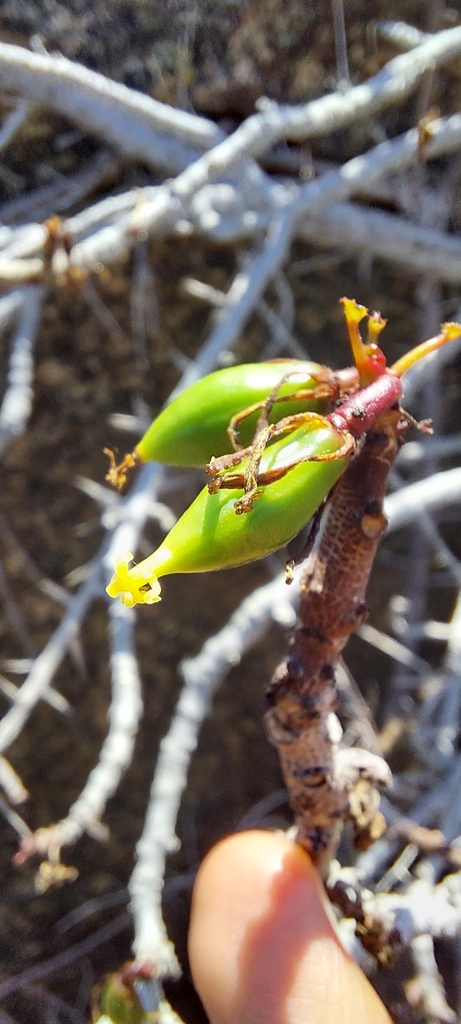
Monoecious or dioecious shrub, deciduous in summer, reaching a size of 1–3 m in height; It has a thick and succulent trunk, the exfoliating bark at the base of adult trees. Leaves very variable in shape, ovate, deltoid, some heart-shaped at the base and divided into 5 angular, membranous lobes; with 3–4 cm petiole. Flowers 5–6 mm long, red on the outside and green on the inside, male flowers are born in small clusters; solitary female flowers. The fruit is ovoid, brownish-green with oval seeds wrapped in mucilage
Where it lives
Recorded sightings
—
geo-referenced records in GBIF, from museums, herbaria and field observers.
Drag the globe to turn it. Dots are where records exist, not a range map; darker means more records.
In the stacks
Searching the stacks…
Every page naming Vasconcellea chilensis in the Biodiversity Heritage Library →
This page is assembled live from iNaturalist, GBIF, Wikipedia, the Source Library and the Internet Archive. It is not yet part of the hand-edited codex. iNaturalist taxon 606080.