- Animals
- ›Arthropods
- ›Hexapods
- ›Insects
- ›Winged and Once-winged Insects
- ›Flies
- ›Nematoceran Flies
- ›Crane Flies
- ›Typical Crane Flies
- ›Large Crane Flies
- ›Tipulinae
- ›Tipula
- ›Tipula
- ›Tipula oleracea
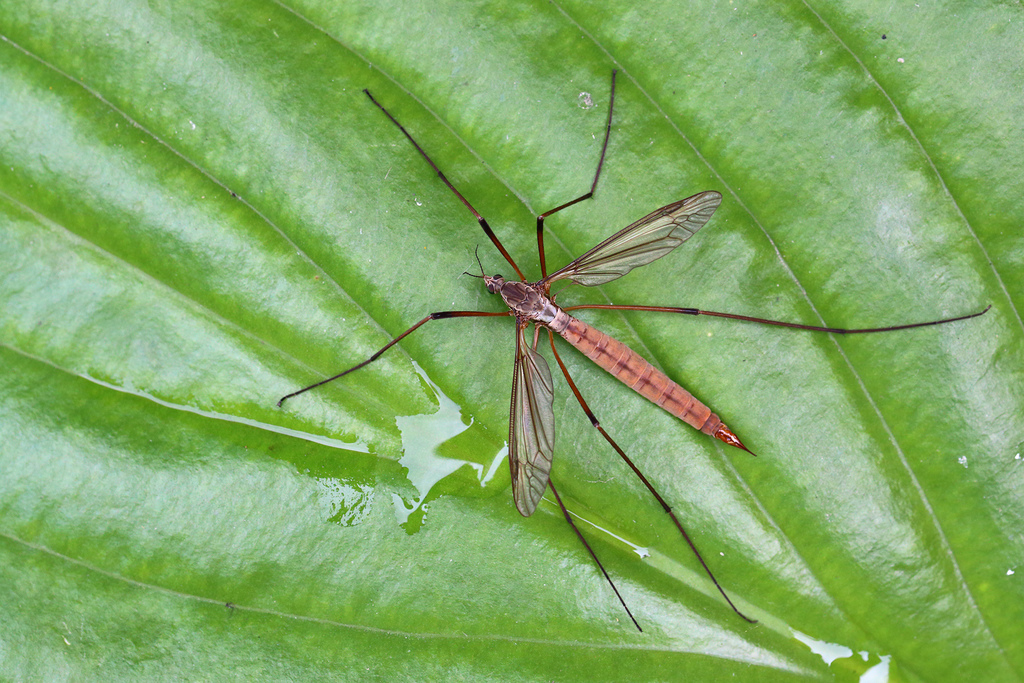
European Crane Fly
Tipula paludosa
Tipula paludosa, known as the European crane fly and its larva as leatherjacket, is a species in the genus Tipula, a genus of over 2,000 species distributed throughout the world. T. paludosa is native to northwestern Europe including Britain and Ireland, and also introduced to the northern aspects of North America, including Canada likely due to soil dispersion and other human-mediated activities. T. paludosa is often regarded as a pest of lawns, pastures, and hayfields, as its larvae cause significant damage to the roots, stems, and leaves of various plants, contributing to its invasiveness.
From the article Tipula paludosa on Wikipedia (CC BY-SA), quoted section by section
What it does
The life cycle of Tipula paludosa follows a seasonal pattern. The larvae hatch in mid-September and initially remain on the soil surface before moving deeper into the thatch and upper soil layers as they mature. During the winter, they remain underground and as the weather becomes warmer, they feed. Their feeding increases in spring. The larvae are an important food source for many birds, including crows. By mid-May, the larvae stop feeding, and enter a nonfeeding stage in June and go just below the soil surface, where they remain throughout the summer. In late August, the larvae pupate, and soon after, the adult crane flies emerge, and mate almost immediately. They then lay eggs in moist soil within 24 hours of emerging, which begins the cycle again. While the adult flies do not feed and have a lifespan of only about two weeks, their larvae are a serious ecological and economical threat to lawns, pastures, and crops.
Wikipedia: “Life cycle”
Listen
Looking for field recordings…
Where it lives
Recorded sightings
—
geo-referenced records in GBIF, from museums, herbaria and field observers.
Drag the globe to turn it. Dots are where records exist, not a range map; darker means more records.
In the stacks
Searching the stacks…
Every page naming Tipula paludosa in the Biodiversity Heritage Library →
This page is assembled live from iNaturalist, GBIF, Wikipedia, the Source Library and the Internet Archive. It is not yet part of the hand-edited codex. iNaturalist taxon 61917.