- Animals
- ›Arthropods
- ›Hexapods
- ›Insects
- ›Winged and Once-winged Insects
- ›Flies
- ›Brachyceran Flies
- ›Cyclorrhaphan Flies
- ›Aschizan Flies
- ›Hover Flies
- ›Drone Flies and Allies
- ›Brachyopini
- ›Spheginina
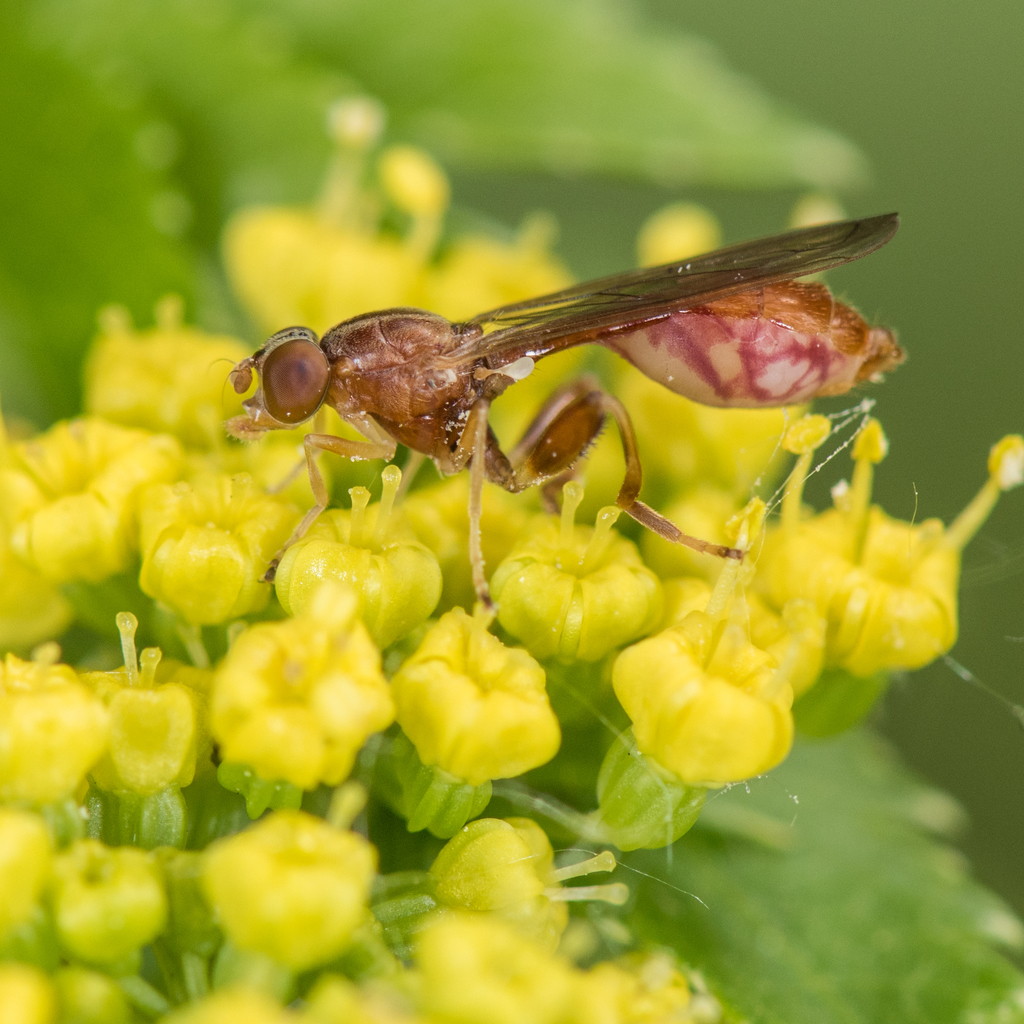
Pufftails
Sphegina
Sphegina is a genus of small, slender hoverflies. They are widespread throughout Eurasia and North America. In flight they seem to have long hind legs which they often carry hanging down, making them resemble sphecid or ichneumonid wasps. Adult Sphegina are usually found in damp and shady habitats close to water in forested areas, and several species can often be found together. They often feed on white and yellow flowers of Apiaceae, Ranunculaceae, Asteraceae, and Rosaceae like Crataegus, Sorbus, and Sorbaria. Larvae nest in the sap of living and dead trees or in decaying cambium under tree bark lying in water or other damp conditions. The larvae of some species have been discovered in the tunnels of other xylophagous insects.
Sphegina generally have a face strongly concave and bare in both sexes, antennal basoflagellomere oval with a long dorsal and pilose arista; eyes bare and dichoptic in both sexes; postpronotum pilose; metasternum and katepisternum non-pilose; ventral scutellar fringe absent; alula narrow or absent; postmetacoxal bridge complete and broad; metaleg much longer than pro- and mesoleg and with incrassate femur; abdomen petiolate. Sphegina are similar to the species of their sister group Neoascia but are distinguished by the following characters: face oblique, nearly straight, laterally pilose; katepisternum usually pilose; basoflagellomere usually elongate, longer than wide; arista bare and about as long as basoflagellomere.
14 branches of this genus, most-observed first
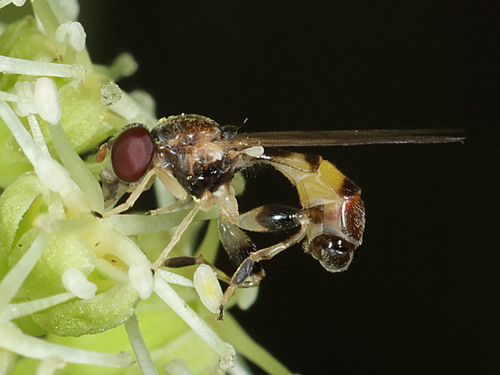
Sphegina
subgenusSphegina
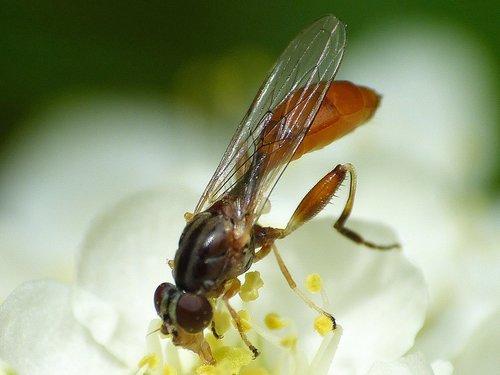
Asiosphegina
subgenusAsiosphegina
Sphegina nigra
speciesSphegina nigra
Sphegina fasciata
speciesSphegina fasciata
Sphegina tricoloripes
speciesSphegina tricoloripes
Sphegina varidissima
speciesSphegina varidissima
Sphegina abrasa
speciesSphegina abrasa
Sphegina melancholica
speciesSphegina melancholica
Sphegina spiniventris
speciesSphegina spiniventris
Sphegina alaoglui
speciesSphegina alaoglui
Sphegina obscurifacies
speciesSphegina obscurifacies
Sphegina nigerrima
speciesSphegina nigerrima
Sphegina varifacies
speciesSphegina varifacies
Sphegina sublatifrons
speciesSphegina sublatifrons
Where it lives
Recorded sightings
—
geo-referenced records in GBIF, from museums, herbaria and field observers.
Drag the globe to turn it. Dots are where records exist, not a range map; darker means more records.
In the stacks
Searching the stacks…
Every page naming Sphegina in the Biodiversity Heritage Library →
This page is assembled live from iNaturalist, GBIF, Wikipedia, the Source Library and the Internet Archive. It is not yet part of the hand-edited codex. iNaturalist taxon 62042.