- Plants
- ›Vascular Plants
- ›flowering plants
- ›Dicots
- ›Mints, Plantains, Olives, and Allies
- ›bignonia family
- ›Jacarandeae
- ›Jacaranda
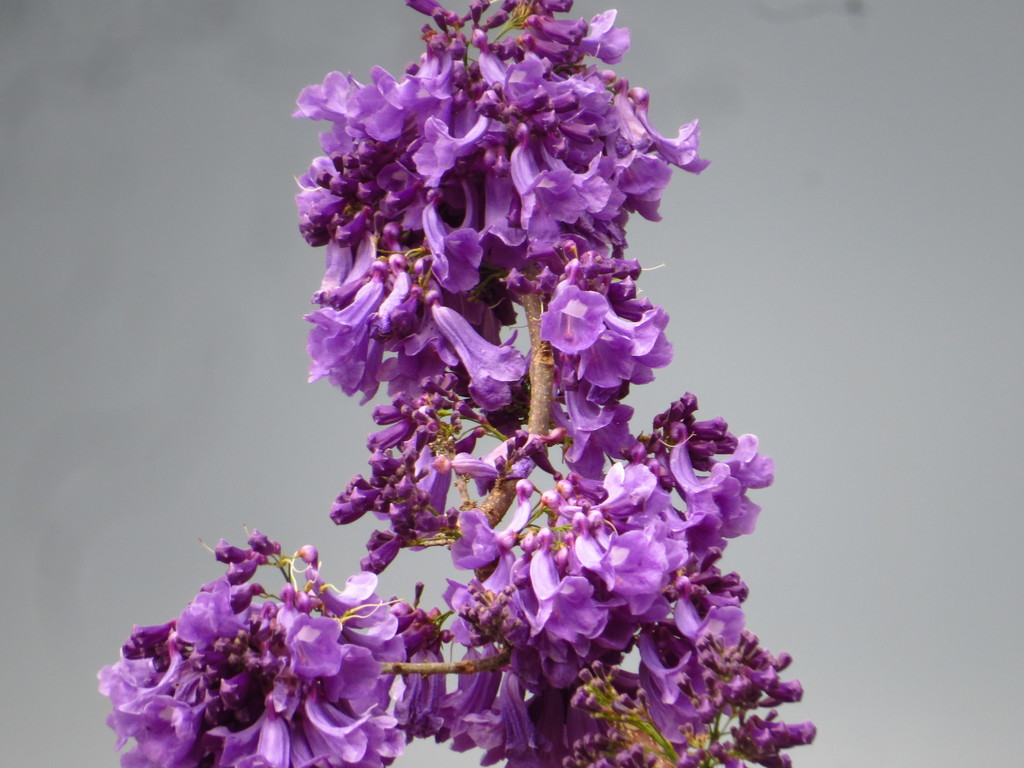
Jacaranda caucana
Jacaranda caucana is a species of flowering tree first described by Swiss-born botanist Henri François Pittier in 1917. It is native to Costa Rica, Panama, the Dominican Republic, Venezuela and Colombia.
From the article Jacaranda caucana on Wikipedia (CC BY-SA), quoted section by section
Description
Jacaranda caucana is medium-sized with a straight trunk. The crown is wide and round with fern-like leaves that almost reach the ground. The leaves are small, pointed and divided into leaflets and subleaflets. During the dry season large, purple flowers are produced. The fruits are "woody capsules". The deep purple flowers mean it is commonly used as an ornamental tree in gardens.
Where it lives
Recorded sightings
—
geo-referenced records in GBIF, from museums, herbaria and field observers.
Drag the globe to turn it. Dots are where records exist, not a range map; darker means more records.
In the stacks
Searching the stacks…
Every page naming Jacaranda caucana in the Biodiversity Heritage Library →
This page is assembled live from iNaturalist, GBIF, Wikipedia, the Source Library and the Internet Archive. It is not yet part of the hand-edited codex. iNaturalist taxon 628651.