- Plants
- ›Vascular Plants
- ›flowering plants
- ›Dicots
- ›Sunflowers, Bellflowers, Fanflowers, and Allies
- ›Sunflowers, Daisies, Asters, and Allies
- ›Asteroideae
- ›asters and allies
- ›Machaerantherinae
- ›Lessingia
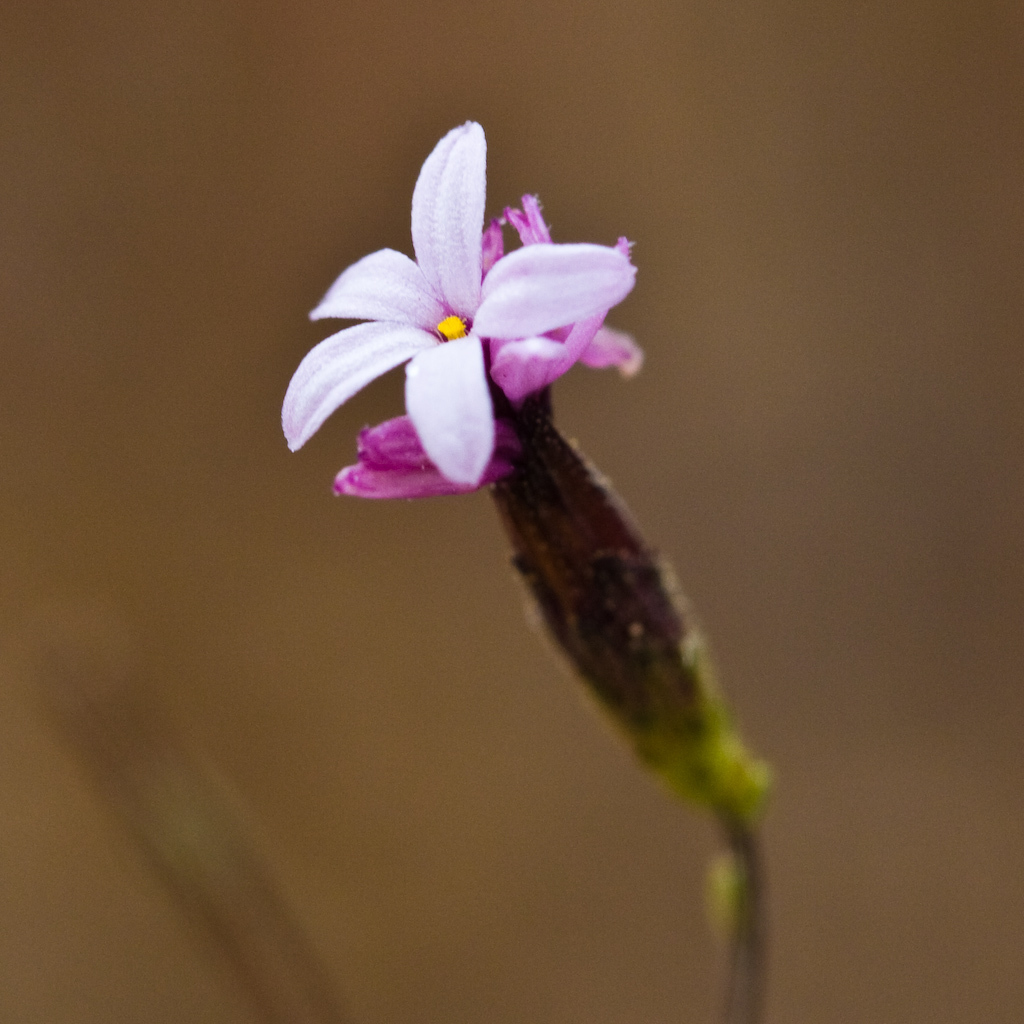
Mount Tamalpais lessingia
Lessingia micradenia
Lessingia micradenia is a rare species of flowering plant in the family Asteraceae known by the common name Mt. Tamalpais lessingia. It is endemic to the San Francisco Bay Area of California, where it occurs in areas with serpentine soils. The species is divided into two rare varieties, each with a limited occurrence on opposite sides of the Bay Area. Lessingia micradenia var. glabrata is found in several locations across Santa Clara County south of San Jose, while var. micradenia is known only from a few spots around Mount Tamalpais in Marin County.
This is a slender annual herb growing erect and varying in size from just a few centimeters to over half a meter tall, with spreading branches. It is often hairy or woolly in texture. The upper leaves are small and pointed, no more than 2 centimeters long, and the lower leaves are longer and wither early. The petite flower heads appear singly or in clusters. Each head is lined with purple-tipped, glandular phyllaries. The head is discoid, containing no ray florets but a few funnel-shaped, lobed disc florets in shades of light purple to nearly white. The fruit is an achene with pappus of five distinct whitish points.
Where it lives
Recorded sightings
—
geo-referenced records in GBIF, from museums, herbaria and field observers.
Drag the globe to turn it. Dots are where records exist, not a range map; darker means more records.
In the stacks
Searching the stacks…
Every page naming Lessingia micradenia in the Biodiversity Heritage Library →
This page is assembled live from iNaturalist, GBIF, Wikipedia, the Source Library and the Internet Archive. It is not yet part of the hand-edited codex. iNaturalist taxon 63002.