- Animals
- ›Chordates
- ›Vertebrates
- ›Cartilaginous Fishes
- ›Sharks and Rays
- ›Sharks
- ›Galean Sharks
- ›Carpet Sharks
- ›Wobbegongs
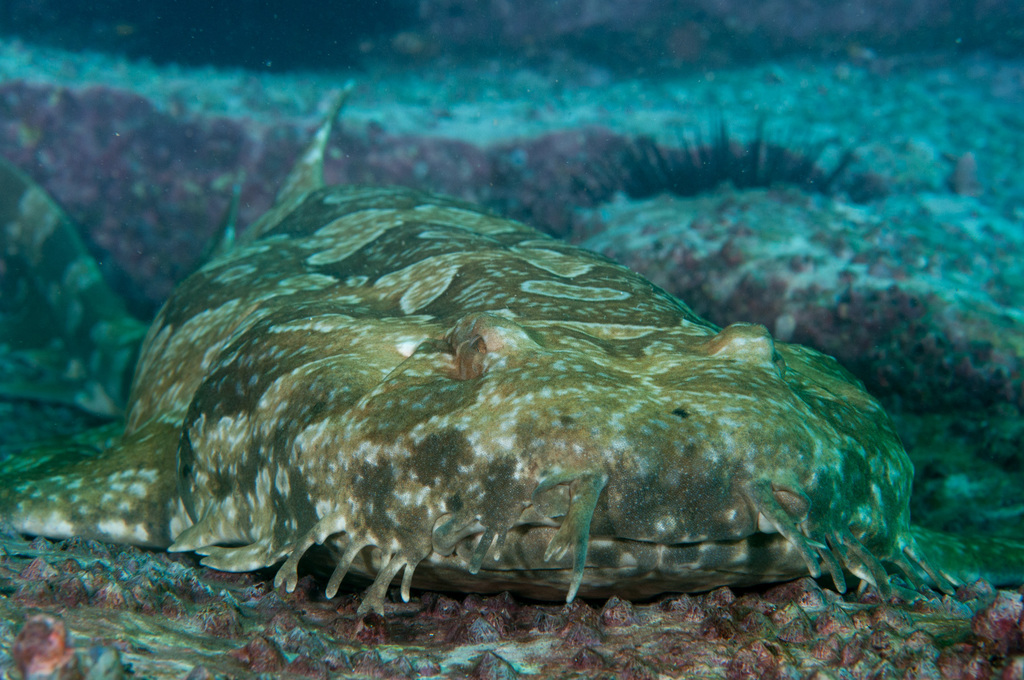
Typical Wobbegongs
Orectolobus
Orectolobus is a genus of carpet sharks in the family Orectolobidae. They are commonly known as wobbegongs, although this name also applies to the other members of the family. They are found in shallow temperate and tropical waters of the western Pacific Ocean and eastern Indian Ocean, chiefly around Australia and Indonesia, although one species (the Japanese wobbegong, O. japonicus) occurs as far north as Japan.
They have a mottled or spotted cryptic pattern, and have elongated dermal lobes in the region near the mouth. Most have a maximum length of 1.25 m (4.1 ft) or less, but two species, O. halei and O. maculatus, reach about 3 m (9.8 ft) (earlier reports of similar-sized O. ornatus is due to confusion with O. halei). These sluggish ambush predators are typically seen resting on the seafloor, and at least some species are nocturnal. While usually harmless to humans, they have been known to bite, but generally only if stepped on, approached too closely, or provoked.
10 branches of this genus, most-observed first · about 10 known species
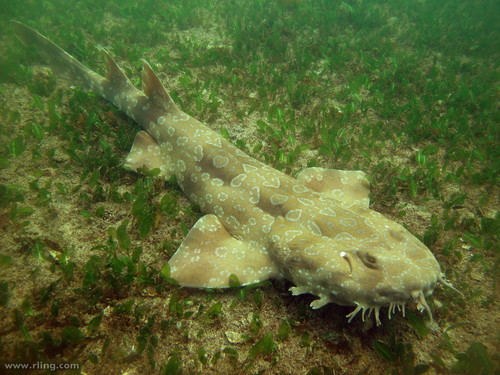
Spotted Wobbegong
speciesOrectolobus maculatus
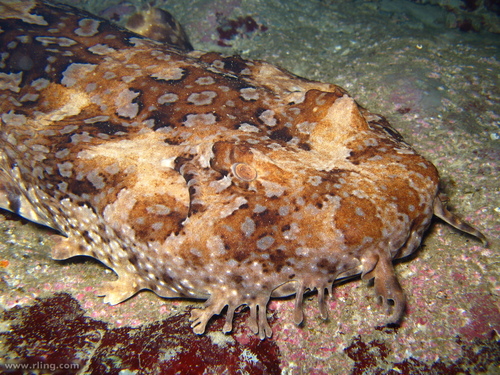
Gulf Wobbegong
speciesOrectolobus halei
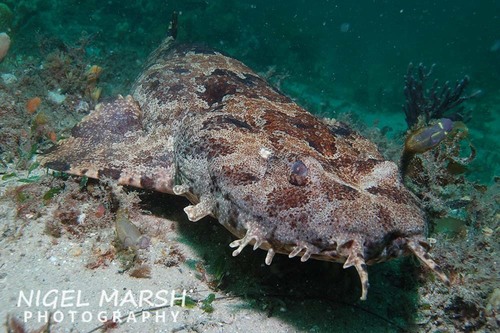
Ornate Wobbegong
speciesOrectolobus ornatus

Western Wobbegong
speciesOrectolobus hutchinsi

Northern Wobbegong
speciesOrectolobus wardi

Japanese Wobbegong
speciesOrectolobus japonicus

Indonesian Wobbegong
speciesOrectolobus leptolineatus
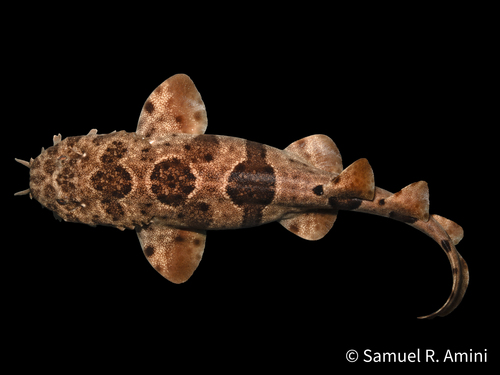
Network Wobbegong
speciesOrectolobus reticulatus

Dwarf Spotted Wobbegong
speciesOrectolobus parvimaculatus

Floral Banded Wobbegong
speciesOrectolobus floridus
Where it lives
Recorded sightings
—
geo-referenced records in GBIF, from museums, herbaria and field observers.
Drag the globe to turn it. Dots are where records exist, not a range map; darker means more records.
In the stacks
Searching the stacks…
Every page naming Orectolobus in the Biodiversity Heritage Library →
This page is assembled live from iNaturalist, GBIF, Wikipedia, the Source Library and the Internet Archive. It is not yet part of the hand-edited codex. iNaturalist taxon 63636.