- Plants
- ›Vascular Plants
- ›flowering plants
- ›Dicots
- ›Legumes, Milkworts, and Allies
- ›Legumes
- ›Acacias, Mimosas, Mesquites, and Allies
- ›Mimoseae
- ›Anadenanthera
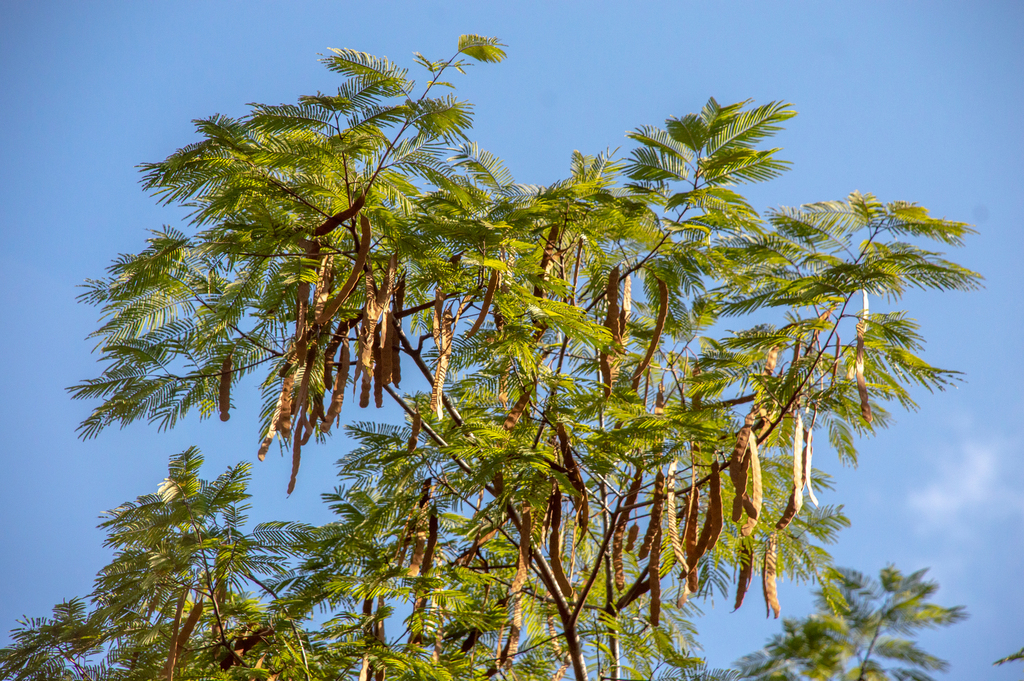
Anadenanthera peregrina
Anadenanthera peregrina, also known as yopo, jopo, cohoba, cojoba, parica or calcium tree, is a perennial tree in the family Fabaceae native to the Caribbean and South America. It grows up to 20 m (70 ft) tall, and has a thorny bark. Its flowers grow in small, pale yellow to white spherical clusters resembling Acacia (e.g. wattle) inflorescences. It is an entheogen which has been used in healing ceremonies and rituals for thousands of years in northern South America and the Caribbean. Although the seeds of the yopo tree were originally gathered from the wild, increased competition between tribes over access to the seeds led to it being intentionally cultivated and transported elsewhere.
From the article Anadenanthera peregrina on Wikipedia (CC BY-SA), quoted section by section
In medicine
Archaeological evidence shows Anadenanthera beans have been used as hallucinogens for thousands of years. The oldest clear evidence of use comes from pipes made of puma bone (Puma concolor) found with Anadenanthera beans presumably of the sister species A. colubrina, at Inca Cueva, a site in the Humahuaca gorge at the edge of the Puna of Jujuy Province, Argentina. The pipes were found to contain the hallucinogen DMT, one of the compounds found in Anadenanthera beans. Radiocarbon testing of the material gave a date of 2130 BC, suggesting that Anadenanthera use as a hallucinogen is over 4,000 years old. Additionally, evidence from eastern Puerto Rico indicates that cojoba seeds were ground using coral milling tools in contexts dated to A.D. 1150–1250, providing the first direct evidence of cojoba processing in the West Indies. Snuff trays and tubes similar to those commonly used for yopo were found in the central Peruvian coast dating back to 1200 BC, suggesting that insufflation of Anadenanthera beans is a more recent method of use. Archaeological evidence of insufflation use within the period 500-1000 AD, in northern Chile, has been reported. Some Indigenous peoples of the Orinoco basin in Colombia, Venezuela, and Brazil prepare yopo snuff for ritual and healing purposes. …
Wikipedia: “Traditional usage”
Toxicity
The beans (sometimes called seeds) and falling leaves are hallucinogenic and are toxic to cattle.
Where it lives
Recorded sightings
—
geo-referenced records in GBIF, from museums, herbaria and field observers.
Drag the globe to turn it. Dots are where records exist, not a range map; darker means more records.
In the stacks
Searching the stacks…
Every page naming Anadenanthera peregrina in the Biodiversity Heritage Library →
This page is assembled live from iNaturalist, GBIF, Wikipedia, the Source Library and the Internet Archive. It is not yet part of the hand-edited codex. iNaturalist taxon 63700.