- Animals
- ›Arthropods
- ›Hexapods
- ›Insects
- ›Winged and Once-winged Insects
- ›Flies
- ›Brachyceran Flies
- ›Cyclorrhaphan Flies
- ›Schizophoran Flies
- ›Calyptrate Flies
- ›Bot Flies, Blow Flies, and Allies
- ›Blow Flies
- ›Fly Pirates
- ›Cordylobia
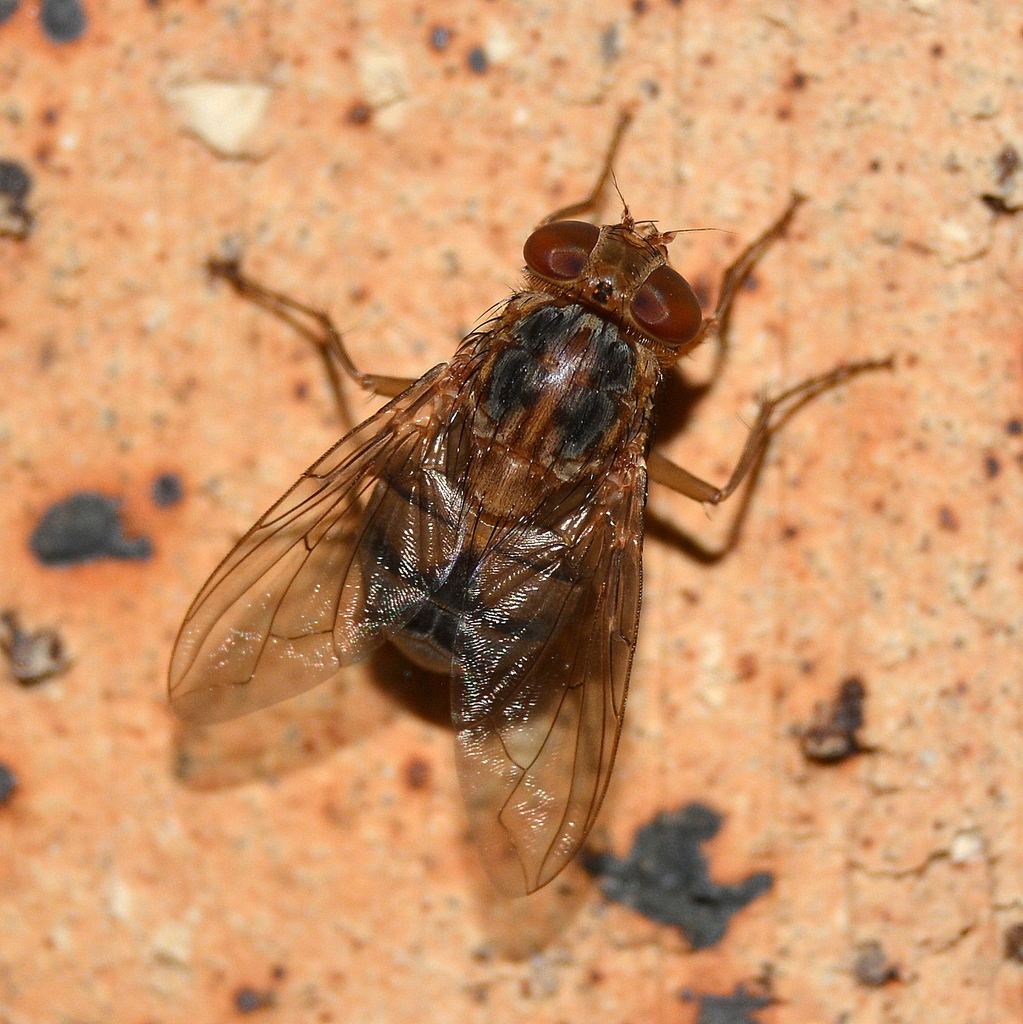
Skin Maggot-fly
Cordylobia anthropophaga
Cordylobia anthropophaga, the mango fly, tumbu fly, tumba fly, putzi fly, or skin maggot fly, is a species of blow-fly common in East and Central Africa and Southern Africa. It is a parasite of large mammals (including humans) during its larval stage. C. anthropophaga is found in the tropics of Africa and is a common cause of myiasis in humans in the region.
Its specific epithet anthropophaga derives from the Greek word anthropophagos, "human eater".
From the article Cordylobia anthropophaga on Wikipedia (CC BY-SA), quoted section by section
What it does
Female tumbu flies deposit around 300 eggs in sandy soil, often contaminated with feces. The hatched larvae can remain viable in the soil for 9–15 days, when they need to find a host to continue developing. If a larva finds a host, it penetrates the skin and takes 8–12 days developing through three larval stages before it reaches the prepupal stage. It then leaves the host, drops to the ground, buries itself, and pupates. It then becomes an adult fly able to reproduce and begin the cycle all over again.
Wikipedia: “Life cycle”
In human culture
The larvae of the tumbu fly, Cordylobia anthropophaga, were first described in Senegal in 1862, and Émile Blanchard first described the adult and gave it its name in 1872. In 1903, Grünberg placed the tumbu fly in a new genus, Cordylobia.
Wikipedia: “History of discovery”
Listen
Looking for field recordings…
Where it lives
Recorded sightings
—
geo-referenced records in GBIF, from museums, herbaria and field observers.
Drag the globe to turn it. Dots are where records exist, not a range map; darker means more records.
In the stacks
Searching the stacks…
Every page naming Cordylobia anthropophaga in the Biodiversity Heritage Library →
This page is assembled live from iNaturalist, GBIF, Wikipedia, the Source Library and the Internet Archive. It is not yet part of the hand-edited codex. iNaturalist taxon 659433.