- Animals
- ›Molluscs
- ›Cephalopods
- ›Octopuses, Squids, and Cuttlefishes
- ›Squids and Cuttlefishes
- ›Sepiida
- ›Sepiina
- ›Sepioidea

Cuttlefishes
Sepiidae
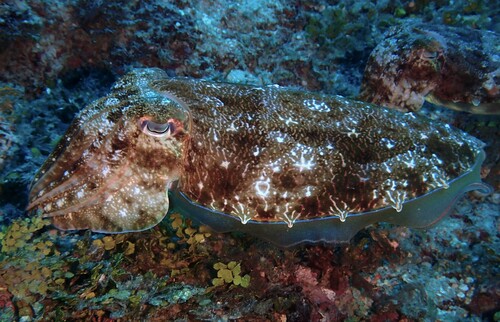
Cuttlefish, or cuttles, are marine molluscs of the family Sepiidae. They belong to the class Cephalopoda which also includes squid, octopuses, and nautiluses. Cuttlefish have a unique internal shell, the cuttlebone, which is used for control of buoyancy. They have large, W-shaped pupils, eight arms, and two tentacles furnished with denticulated suckers, with which they secure their prey. They generally range in size from 15 to 25 cm (6 to 10 in), with the largest species, the giant cuttlefish (Sepia apama), reaching 50 cm (20 in) in mantle length and more than 10.5 kg (23 lb) in mass.
Cuttlefish eat small molluscs, crabs, shrimp, fish, octopuses and other cuttlefish. Their predators include dolphins, larger fish (including sharks), seals, seabirds, and other cuttlefish. The typical life expectancy of a cuttlefish is about 1–2 years. Studies are said to indicate cuttlefish to be among the most intelligent invertebrates. Cuttlefish also have one of the largest brain-to-body size ratios of all invertebrates.
13 branches of this family, most-observed first
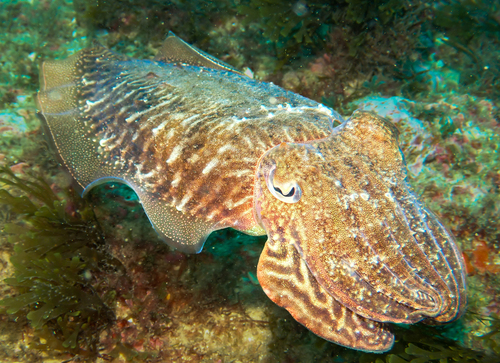
Sepia
genusSepia

Ascarosepion
genusAscarosepion
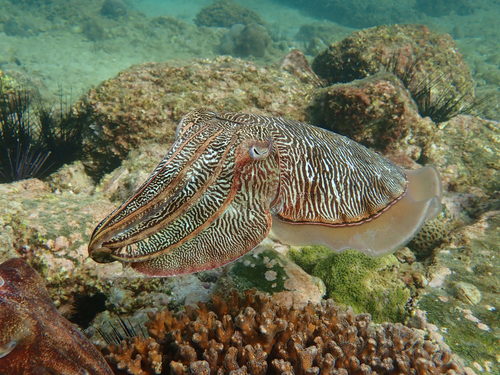
Acanthosepion
genusAcanthosepion

Rhombosepion
genusRhombosepion

Spineless Cuttlefishes
genusSepiella

Decorisepia
genusDecorisepia
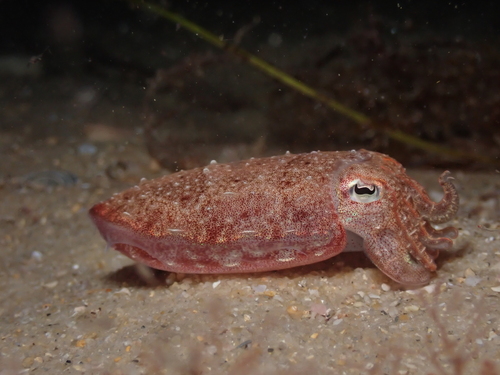
Doratosepion
genusDoratosepion
Spathidosepion
genusSpathidosepion
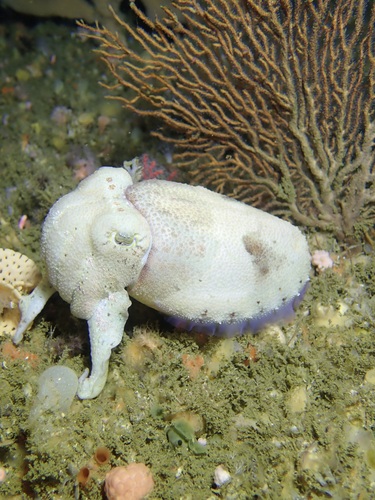
Hemisepius
genusHemisepius
Erythalassa
genusErythalassa
Digitosepia
genusDigitosepia
Aurosepina
genusAurosepina
Lusepia
genusLusepia
Where it lives
Recorded sightings
—
geo-referenced records in GBIF, from museums, herbaria and field observers.
Drag the globe to turn it. Dots are where records exist, not a range map; darker means more records.
In the stacks
Searching the stacks…
Every page naming Sepiidae in the Biodiversity Heritage Library →
This page is assembled live from iNaturalist, GBIF, Wikipedia, the Source Library and the Internet Archive. It is not yet part of the hand-edited codex. iNaturalist taxon 67960.